Bangle Breakage Meaning Quiz
How much do you know about Bangle Superstitions?
From North India to South India, meanings vary wildly. Test your understanding of the physics, folklore, and regional customs surrounding broken bangles.
Question Text Here
Quiz Complete!
Your message here
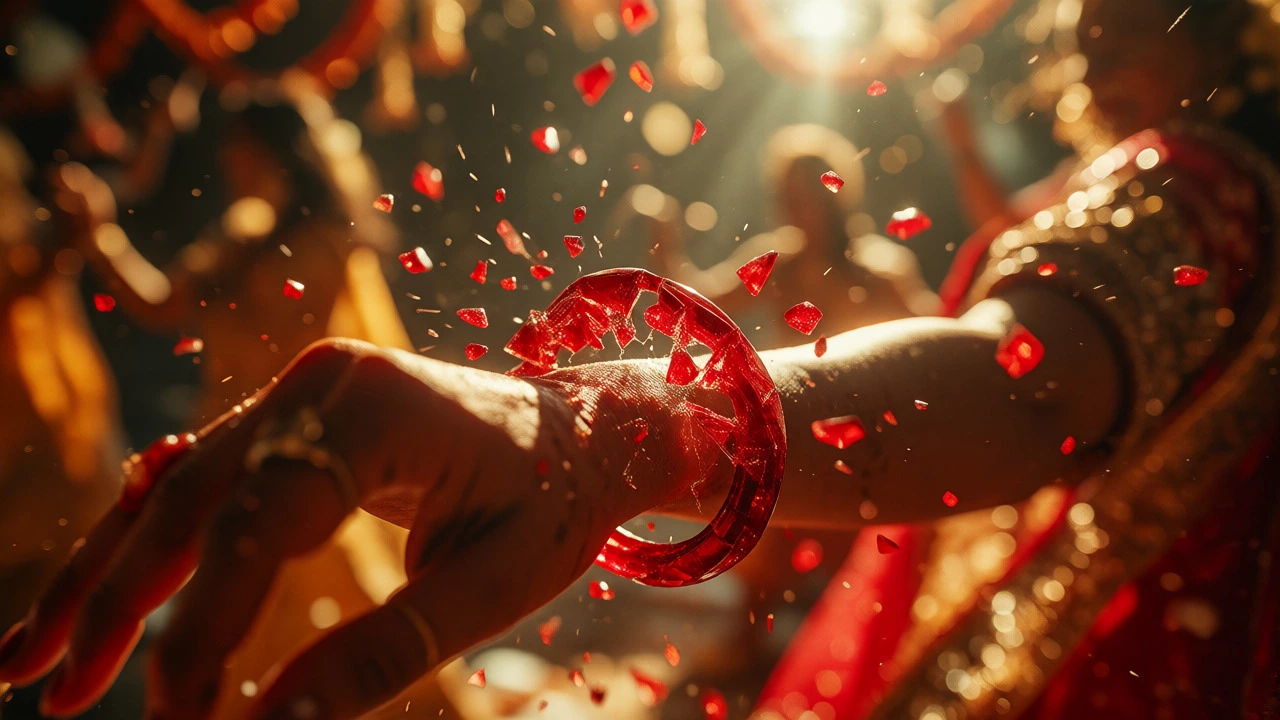
You’re at a wedding, the dhol is beating, and suddenly-crack. A woman’s wrist snaps. The music might stop for a second. People look. Some smile nervously; others cross their fingers. In India, breaking a glass bangle isn’t just an accident. It’s a moment loaded with history, fear, hope, and tradition.
If you’ve ever wondered what it actually means when your bangle breaks, you’re not alone. This question pops up constantly in family groups, temple forums, and between friends over chai. Is it bad luck? A sign of danger? Or just physics doing its thing on fragile glass?
The Short Answer: What Does It Mean?
- Cultural Belief: Many traditional families view broken bangles as a warning sign or a release of negative energy.
- Religious Context: In some Hindu traditions, it signifies the end of a cycle or a shift in marital status (widowhood), though this is changing.
- Practical Reality: Glass bangles are brittle. They break because they hit something hard, wear out, or suffer from thermal shock.
- Regional Variation: Meanings differ wildly between North and South India, and even between communities within the same city.
- Modern View: Younger generations largely see it as a minor inconvenience, not a cosmic omen.
The Physics Behind the Crack
Let’s get the obvious stuff out of the way first. Glass bangles are made by cutting hollow tubes of colored glass into rings. They have no clasp. They rely entirely on the elasticity of your wrist to slip over your hand. Once on, they are static. If you bump them against a granite countertop, a metal pot, or another bangle, the impact exceeds the material's tensile strength. Snap.
This isn't magic. It’s materials science. Borosilicate glass is stronger than soda-lime glass, but both are brittle. When stress concentrates at a single point-like a microscopic scratch that deepens over months-the structure fails instantly. So, if your bangle broke while you were washing dishes, don’t panic. You probably just hit the sink edge harder than usual.
Superstitions: Why We Fear the Break
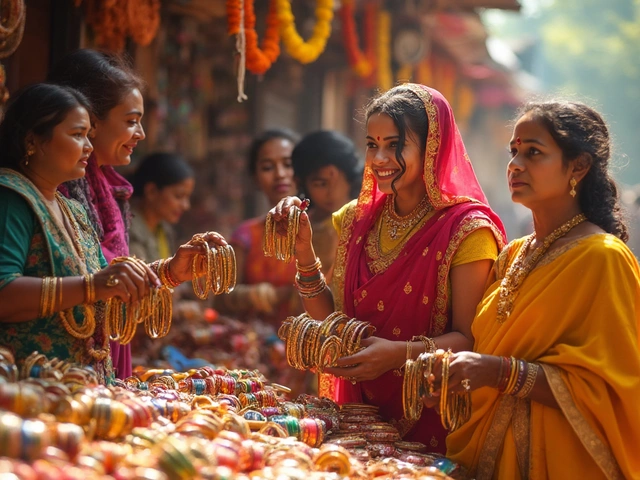
Why does a simple object carry so much weight? Because for centuries, bangles weren't just jewelry. They were identity markers. In many parts of India, particularly among married women, wearing bangles is tied to Saubhagya-a concept encompassing marital bliss, prosperity, and the well-being of the husband.
Here is where the superstition kicks in. If the bangle represents the bond of marriage, then breaking it feels like a crack in that bond. Common beliefs include:
- The Shield Theory: Some believe the bangle absorbed a negative energy or evil eye (nazar) meant for the wearer. By breaking, it "took the bullet."
- The Warning Signal: Elders often say a sudden break warns of upcoming health issues or financial strain for the household.
- The Cycle End: In stricter orthodox interpretations, a widow removes her bangles. Therefore, a broken bangle can be misinterpreted as a premature sign of separation or loss.
It’s important to note that these fears are amplified by social conditioning. If you grow up hearing "Don't let it fall!" every time you put on a new set, your brain wires the sound of cracking glass to anxiety.
Regional Differences: Not All Cracks Are Equal
India is diverse, and so are its interpretations. What scares a Punjabi mother-in-law might be shrugged off by a Tamil auntie.
| Region/Community | Common Belief | Action Taken |
|---|---|---|
| North India (Punjab/Haryana) | Strong link to marital longevity. Breaking one is seen as bad luck. | Replace immediately. Sometimes perform a small prayer. |
| South India (Tamil Nadu/Karnataka) | Less emphasis on glass bangles for daily wear (gold/silver preferred). Glass is often festive. | Often ignored. Seen as practical wear-and-tear. |
| Bengal | Shakha-Pola (white conch and red coral) are sacred. Breaking them is significant. | Consult elders. May involve specific rituals depending on family priest. |
| Maharashtra | Green glass bangles are auspicious for married women. Breaking is avoided. | Replace quickly to maintain appearance of continuity. |
In Maharashtra, for instance, green bangles symbolize fertility and life. If they break, some families worry about conception or child health. In contrast, in parts of Gujarat, bangles are colorful and abundant; breaking one is just a reason to go shopping.
Rituals and Remedies: What Do People Actually Do?
If you do subscribe to the belief system, what’s the fix? There is no single "official" rulebook, but common practices emerge from oral traditions.
- Immediate Replacement: The most common action is simply buying a new bangle. The logic is to restore completeness. Leaving a gap on the wrist is considered inauspicious by many.
- Disposal Method: Don’t throw broken shards in the regular trash. Some traditions suggest wrapping them in cloth before disposal to prevent them from being stepped on or causing harm to others.
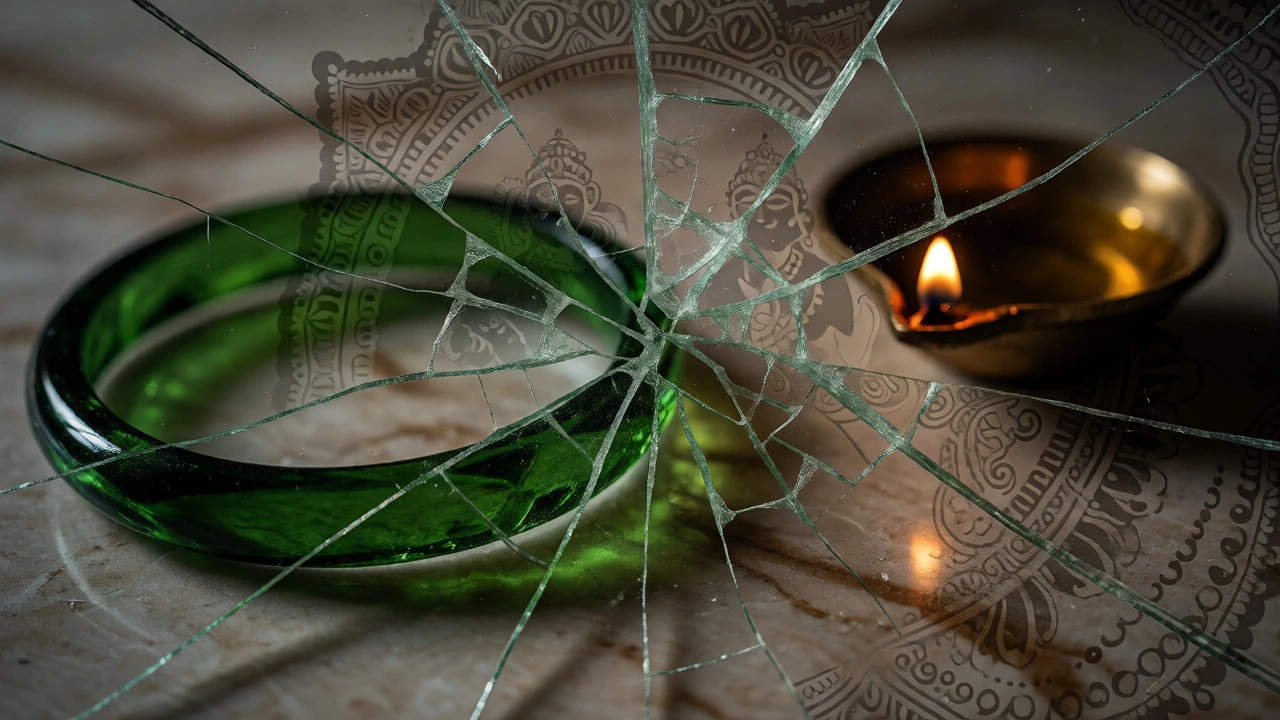
- Prayer or Puja: For those who feel uneasy, lighting a diya (lamp) or offering a small prayer to Goddess Lakshmi or Parvati helps calm the mind. It’s less about appeasing gods and more about resetting your own peace of mind.
- Avoiding Auspicious Days: Some avoid buying new bangles on Tuesdays or Saturdays if the break happened on those days, believing the timing amplifies the omen.
Interestingly, there is a counter-belief. Some tantric or folk traditions argue that breaking a bangle is actually good-it releases trapped negativity. If you felt stressed or sick recently, the break might be interpreted as relief rather than doom.

The Widow Connection: Historical Weight
We can’t talk about broken bangles without addressing the elephant in the room: widowhood. Historically, in many Hindu communities, widows were expected to remove their bangles, sindoor, and other symbols of marriage. A widow’s bare wrists signaled her change in social status.
Because of this historical context, the sight of a broken bangle triggers a subconscious association with loss. It’s a visual shorthand for "something has ended." However, modern society has shifted. Widows today often choose to wear bangles if they wish. The rigid rules of the past are softening, especially in urban centers like Mumbai, Delhi, and Bangalore. The fear is fading, replaced by a pragmatic understanding that glass is fragile.
Psychological Comfort vs. Superstition
Is it all nonsense? Not necessarily. Human beings are pattern-seeking animals. If you associate a stressful event (a fight, an illness) with a broken bangle, your brain links the two. This is confirmation bias. You remember the times the bangle broke before bad news arrived, but forget the hundreds of times it broke and nothing happened.
However, dismissing it entirely misses the cultural value. These objects connect us to our ancestors. When a grandmother tells you to replace the bangle, she’s sharing care, concern, and tradition. Ignoring that advice can cause family friction. Balancing personal rationality with respect for tradition is key.
How to Prevent Breakage (If You Want To)
If you hate the hassle of replacing bangles, here are practical tips to extend their life:
- Wear Gloves: Use rubber gloves for dishwashing. Protects hands and bangles.
- Check for Scratches: Inspect bangles regularly. A deep scratch is a weak point waiting to fail.
- Size Matters: If bangles are too tight, they are under constant tension. If too loose, they bang around. Get the right fit.
- Storage: Store unused bangles in padded boxes. Don’t toss them in a drawer where they knock against each other.
Ultimately, whether you see a cracked bangle as a divine message or a shopping opportunity depends on your worldview. But now you know the layers behind that sharp crack.
Is it bad luck if my bangle breaks unexpectedly?
In traditional Indian culture, yes, it is often viewed as bad luck or a warning sign. However, practically speaking, it is usually due to accidental impact or material fatigue. Most modern Indians consider it a minor inconvenience rather than a serious omen.
What should I do with broken bangle pieces?
Wrap the shards in paper or cloth before throwing them away to ensure safety for sanitation workers. Some traditions suggest disposing of them away from the house or burying them, but standard waste disposal is acceptable for most people.
Does the color of the bangle matter if it breaks?
Yes, in some regions. Red and green bangles are associated with marriage and fertility, so their breakage may carry more emotional weight. White bangles (often worn by widows or during mourning) breaking might be seen differently, sometimes as a positive sign of moving forward.
Can I wear a broken bangle temporarily?
You can, but it is generally advised to replace it soon. Wearing a broken bangle can be physically uncomfortable (sharp edges) and socially noticeable. From a superstitious standpoint, leaving it unreplaced is thought to prolong any perceived negative energy.
Why do bangles break more often in winter?
Thermal shock plays a role. Moving from a cold outdoor environment to a hot indoor space (or vice versa) can create stress in the glass. Additionally, dry skin in winter makes slipping bangles on and off more difficult, increasing the chance of accidental drops or impacts.