Indian Bangle Count Guide
Select your context to find the traditional bangle count and styling tips.
Select a context and click "Get Recommendation" to see traditional counts and advice.
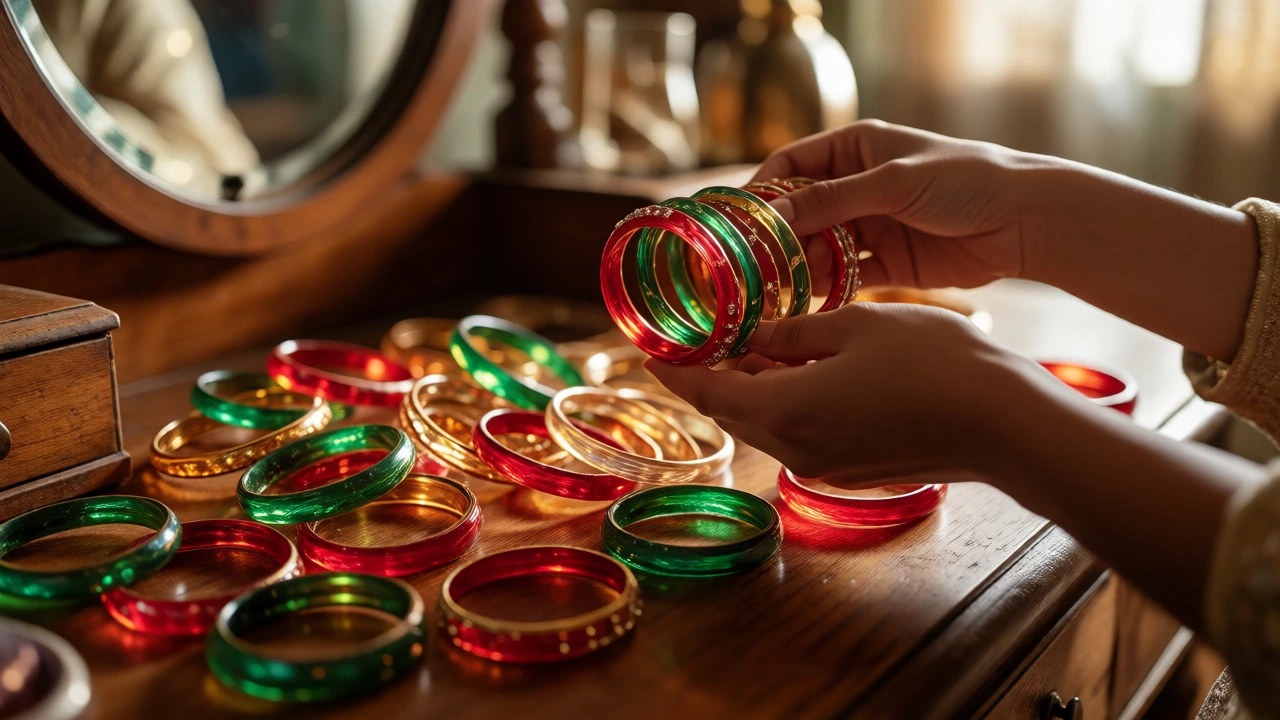
You’re standing in front of the mirror, a pile of colorful glass bangles spread across your dressing table. You want to look perfect for the wedding, but you’re stuck on a basic question that confuses even seasoned shoppers: how many bangles do you wear in each hand? There is no single universal number. The answer depends entirely on whether you are a bride, a widow, a working professional, or observing specific regional rituals. Getting this wrong can feel awkward at social gatherings, so let’s break down the actual counts and the logic behind them.
The General Rule: Symmetry vs. Asymmetry
In most modern urban settings in India, the goal is balance. If you wear five bangles on your right wrist, you typically wear five on your left. This creates visual harmony. However, traditionalists often argue that symmetry isn't always required. In some communities, wearing an odd number of bangles is considered auspicious because odd numbers are associated with positive energy flow in certain folk beliefs. But here is the practical reality: if you wear an odd number, it becomes difficult to stack them evenly without one sliding off or looking lopsided. Most women today prefer even numbers-4, 6, 8, or 10-because they sit securely against each other.
If you are new to wearing Indian bangles, start with a small set. Try three on each hand. It feels light, looks minimal, and lets you get used to the sound and weight. Once you are comfortable, you can increase the count. Never force yourself into a heavy stack just because tradition says so. Comfort should never be sacrificed for aesthetics.
Bridal Counts: The Heavy Tradition
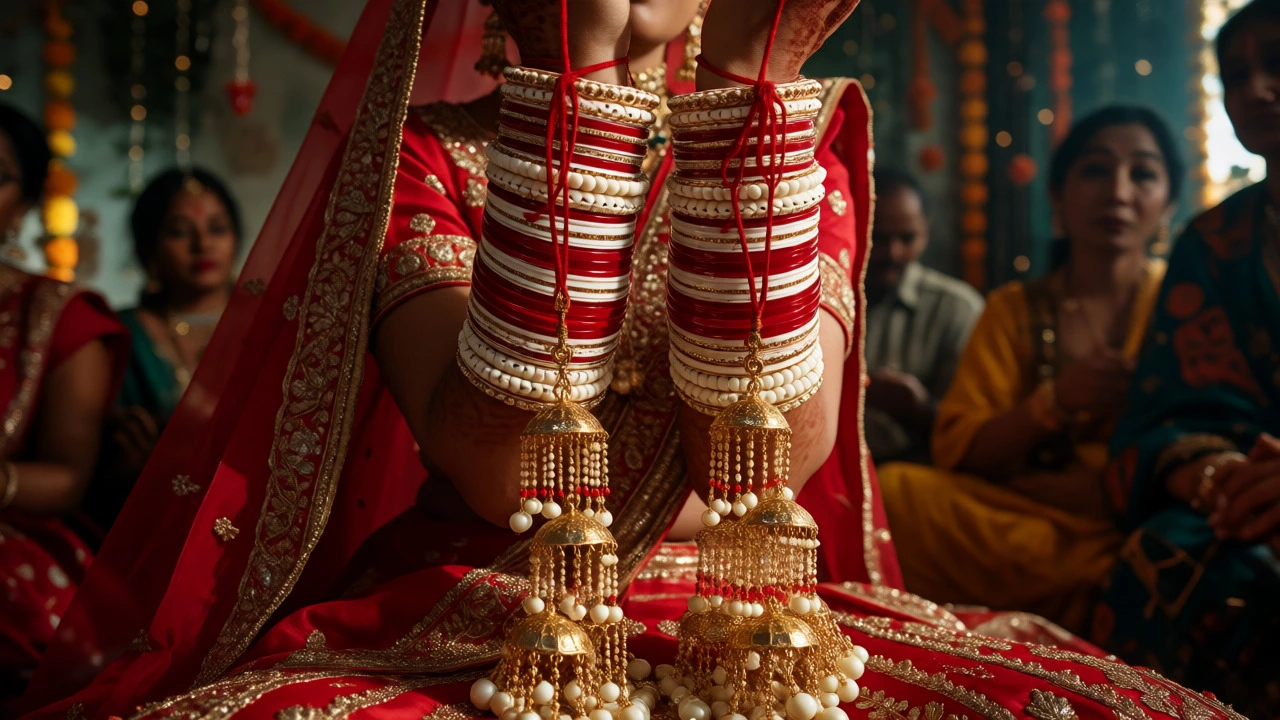
Weddings are where the numbers skyrocket. For a North Indian bride, specifically during the Chooda ceremony, the rule is strict. She wears red and white ivory bangles. The standard count is usually 21 bangles on each hand. Yes, twenty-one. These are tied tightly with red thread (kalire) that hangs from them. Wearing fewer than this might not meet family expectations, especially in Punjabi or Rajasthani weddings.
For South Indian brides, the approach is different. They often wear gold bangles called Valayal. Here, the count is lower, often ranging from 3 to 7 thick gold bangles per hand. Why the difference? Gold is expensive and heavy. Stacking ten thin glass bangles is easy; stacking ten thick gold ones is physically demanding and financially impractical for most families. If you are attending a wedding as a guest, check what the bride is wearing. Match her vibe. If she has heavy gold, don’t show up with a dozen fragile glass bangles that will clatter loudly every time you move.
| Context | Region/Style | Bangles Per Hand | Material Preference |
|---|---|---|---|
| Daily Wear | Pan-India Urban | 2-5 | Glass, Metal, Plastic |
| North Indian Bride | Punjab/Rajasthan | 21+ (Chooda) | Ivory, Red Glass |
| South Indian Bride | Tamil Nadu/Karnataka | 3-7 | Gold |
| Maharashtrian Married Woman | Maharashtra | Varies (often paired with Mangalsutra) | Glass, Gold |
| Widow (Traditional) | Various | 0 or 1 simple metal | Silver, Iron |
Regional Nuances You Can’t Ignore
India is huge, and customs vary wildly within 100 kilometers. In Maharashtra, married women traditionally wear green glass bangles alongside their Mangalsutra. There isn’t a fixed number like "must wear 10." Instead, the focus is on the presence of green bangles, which symbolize prosperity and longevity of the husband. Some women wear two green bangles on each side of a central black bead Mangalsutra. Others fill the entire wrist. Ask your mother-in-law or auntie. In these cases, family preference outweighs general internet advice.
In Bengal, unmarried girls often wear red and white bangles made of shell or plastic. After marriage, the style shifts towards more ornate designs, sometimes including gold. The count remains flexible, but the color palette changes significantly. If you are a non-Indian marrying into an Indian family, ask about color restrictions before worrying about the count. Wearing the wrong color (like all black in some conservative households) can be seen as inauspicious, regardless of how many bangles you have.

Practical Tips for Stacking Without Pain
Have you ever tried to put on 15 bangles and ended up with a bruised wrist? That’s common. Here is how to make it easier. First, use a lubricant. A little oil, lotion, or even soap helps the bangles slide over your knuckles without breaking. Second, order matters. Put on the largest diameter bangles first, then work your way down to the smallest. If you try to squeeze a tight bangle under a loose one, it gets stuck.
Also, consider the noise. If you work in a quiet office or library, 20 bangles clicking together can be distracting. In Mumbai corporate offices, I see many women wearing just one or two sleek metal cuffs or a single pair of thin glass bangles. It’s respectful of the environment while still honoring tradition. You don’t need to wear 21 bangles to prove you are married. One well-chosen pair of gold-plated bangles is often more elegant and practical.
When to Break the Rules
Tradition is important, but it shouldn’t become a prison. If you have arthritis, wearing 20 bangles is painful. If you are pregnant, swelling wrists might make tight stacks uncomfortable. In these scenarios, reduce the count. No one will judge you for wearing three bangles instead of ten if you explain that your hands hurt. Modern fashion also encourages mixing materials. Try pairing one metal cuff with four glass bangles. This reduces the total weight while keeping the layered look intact.
Remember, the number of bangles is a form of self-expression, not a rigid law. The core intent of wearing bangles in Indian culture is to celebrate femininity, marital status, or festive joy. If you feel good, confident, and comfortable, you are doing it right. Don’t let outdated expectations ruin your experience. Experiment with counts until you find what suits your lifestyle and body type.
Is it bad luck to wear an even number of bangles?
No, it is not bad luck. While some superstitions favor odd numbers, even numbers are widely accepted and often preferred for stability and ease of wearing. Most modern women wear even numbers like 4, 6, or 8 without any negative consequences.
Can unmarried girls wear bangles?
Yes, absolutely. Unmarried girls often wear bangles, though the styles may differ. In some regions, they avoid red bangles reserved for married women, opting for colors like blue, pink, or yellow. The count is usually lower, around 2-5 per hand, for daily wear.
Why do widows remove their bangles?
In traditional Hindu customs, removing bangles signifies the end of the marital state and mourning. Widows often stop wearing colored glass bangles and may wear only silver or iron rings, or nothing at all, depending on the community's strictness. Modern practices are becoming more flexible.
How do I keep my bangles from breaking?
Glass bangles are fragile. To prevent breakage, apply oil or lotion to your hand before putting them on. Avoid knocking them against hard surfaces. When storing them, wrap them in soft cloth rather than tossing them into a drawer where they can bang against each other.
Do I need to wear bangles on both hands equally?
Not necessarily. While symmetry is common, it is not mandatory. Some people wear heavier stacks on their dominant hand or prefer different styles on each wrist for a trendy, asymmetrical look. Personal comfort and aesthetic choice take precedence over strict equality.