Bangle Meaning Calculator
Understanding your bangle tradition isn't about numbers—it's about meaning. Select your context below to learn how your choices reflect cultural significance.
Your Cultural Context
Your Meaningful Choice:
There’s no single rule for how many bangles a married woman should wear in India-it’s not about counting, it’s about meaning. The number of bangles you see on a woman’s wrist isn’t random. It’s shaped by region, family tradition, religious customs, and even the time of day. In some parts of India, a bride wears seven bangles on each arm. In others, she wears just two. And in many homes, the number changes after marriage, after childbirth, or even after a loss. The real question isn’t how many, but why.
Why Bangles Matter More Than the Number
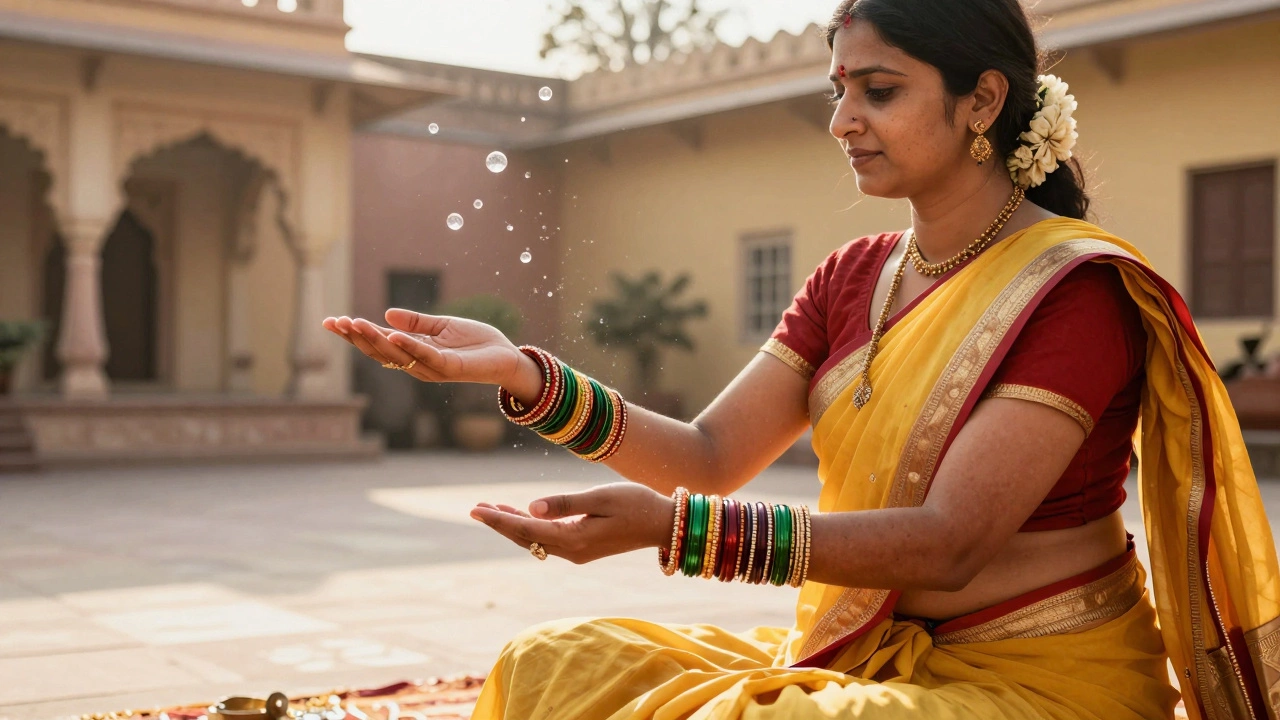
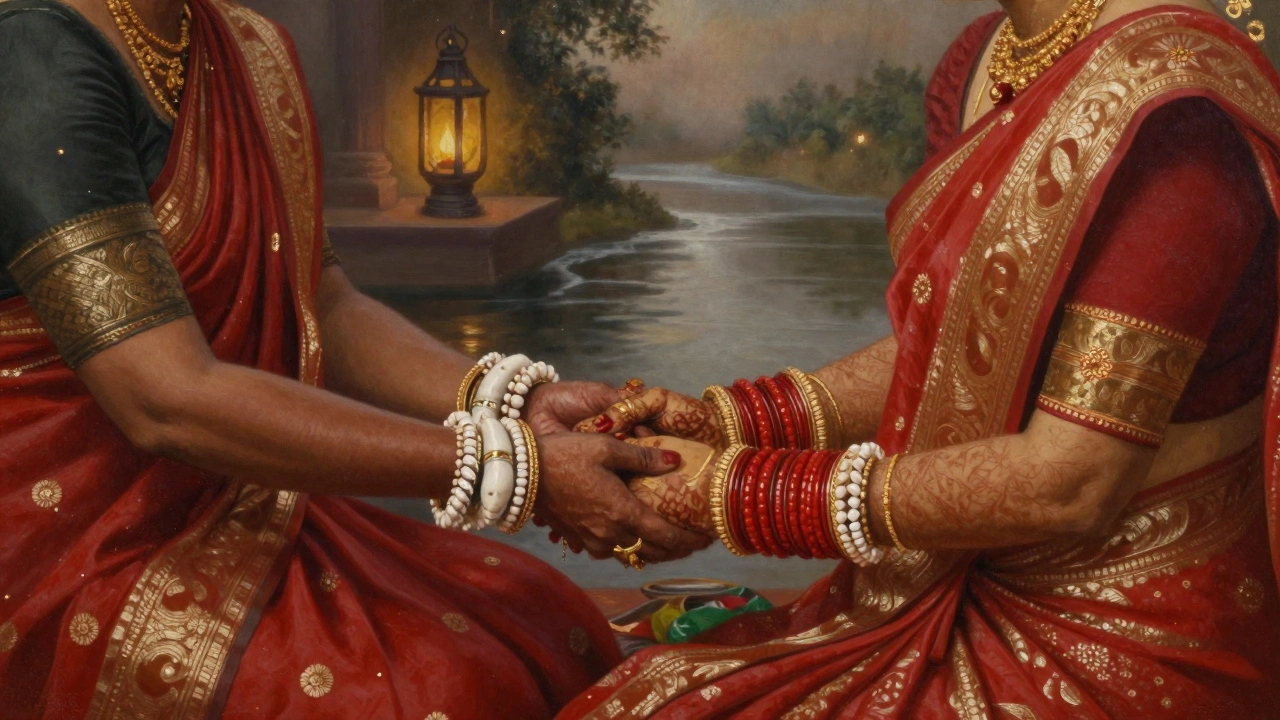
Bangles aren’t just jewelry in Indian culture. They’re symbols. A married woman wearing bangles signals her status, her connection to her husband, and her place in the family. The sound of glass bangles clinking together is called chhan chhan, and it’s believed to bring good fortune and ward off negative energy. That’s why you’ll often hear them in the morning when a woman gets dressed, or when she walks into a room. It’s not decoration-it’s a reminder.In many North Indian families, especially in Punjab and Haryana, a bride wears at least seven glass bangles on each wrist. Seven is considered lucky. It represents the seven vows taken during the wedding ceremony. But if she loses one, it’s not replaced right away. Some families wait until the next festival, or until a child is born. Others never replace it-because the bangle that broke is now part of her story.
Regional Differences: No One Rule Fits All
If you travel across India, you’ll see how different the rules can be. In West Bengal, married women often wear only two thick gold bangles, called shakha paula. One is white (shakha), made from conch shell, and the other is red (paula), made from coral. These are worn from the wedding day and never removed. If one breaks, it’s not fixed-it’s replaced with a new pair during a special ritual.In South India, especially in Tamil Nadu and Kerala, married women wear a mix of gold and glass. They might wear three to five gold bangles on each arm, sometimes with intricate designs of gods or flowers. Glass bangles are added during festivals. The number isn’t fixed, but the gold ones are permanent. A woman who removes them is seen as breaking a sacred bond.
In Gujarat and Rajasthan, women wear dozens of bangles-sometimes over 20 on each wrist. These are mostly colorful glass bangles, stacked high. The more you wear, the more prosperous your family is thought to be. But here too, it’s not just about quantity. The colors matter. Red means fertility. Green means luck. Yellow means happiness. If a woman’s bangles turn dull or break, it’s seen as a sign to visit a temple or perform a small ritual.
What About Gold vs. Glass?
Gold bangles and glass bangles serve different roles. Gold is for life. Glass is for celebration. A married woman in most parts of India will wear gold bangles every day. They’re heavy, solid, and meant to last. They’re often passed down from mother to daughter. Glass bangles, on the other hand, are worn during festivals, weddings, or special occasions. They’re fragile, bright, and loud. When they break, it’s not a tragedy-it’s a signal.Some families believe that a broken glass bangle brings good luck. Others think it means someone is jealous. In rural areas, women might tie a small red thread around the broken piece and keep it in a small box. It becomes a talisman. In cities, women simply replace them. But the ritual of replacing them is never rushed. It’s done with care, sometimes with a priest’s blessing.
Life Events Change the Number
The number of bangles a woman wears doesn’t stay the same forever. It changes with her life. After the birth of her first child, many women add one more bangle to each wrist. In some communities, they wear a special bangle made from silver or ivory to mark motherhood. If a husband passes away, a widow removes all her bangles. In many places, she also stops wearing red or bright colors. The silence of her bare wrists speaks louder than any words.There’s also a difference between daily wear and ceremonial wear. A woman might wear just two gold bangles to the market, but put on ten glass ones for Diwali. During pregnancy, she might wear extra bangles made of copper or brass, believed to help with circulation and ease labor. These aren’t fashion choices-they’re traditions tied to belief systems passed down for centuries.
Modern Times and Changing Norms
Today, fewer women wear bangles every day. Many work in offices, drive cars, or use smartphones. Glass bangles can break easily. Gold ones can be heavy. So many women now wear just one or two-sometimes silicone or metal bangles that look like traditional ones but won’t shatter. Some wear them only on Sundays. Others wear them only during religious events.But here’s the thing: even when the number changes, the meaning doesn’t disappear. A woman who wears one gold bangle every morning still believes in its power. A young bride who chooses only three glass bangles instead of seven isn’t rejecting tradition-she’s rewriting it on her own terms. Tradition isn’t about following rules. It’s about carrying meaning forward, even if the shape changes.

What’s the Right Number?
There is no right number. The answer depends on where you’re from, what your family believes, and what feels true to you. If your mother wore seven, you might wear seven. If your grandmother wore two, you might wear two. If you live in Mumbai and work as a software engineer, you might wear one gold bangle and call it enough. None of these choices are wrong.What matters is that you understand why you wear them. If you wear bangles because your grandmother did, because you feel connected to your roots, because the sound reminds you of home-that’s what counts. The number is just a number. The meaning is what lasts.
What to Do If You’re Not Sure
If you’re marrying into an Indian family and aren’t sure how many bangles to wear, ask the women in the family. Don’t guess. Don’t assume. Every household has its own way. Some families have a small ritual where the mother-in-law gives the bride her first set of bangles. Others let the bride choose. There’s no rulebook. But there’s always a story.And if you’re a woman who’s never worn bangles before but wants to start, begin with one. Gold, if you can. Or a simple glass one in red or green. Wear it on your left wrist-the one closest to your heart. Let it become part of your rhythm. Don’t worry about matching a number. Worry about matching your truth.
Is there a religious rule about how many bangles a married woman must wear?
No, there is no religious rule in Hinduism, Sikhism, or other major Indian faiths that specifies an exact number. The number of bangles worn is based on regional customs, family traditions, and personal choice-not scripture. While some texts mention bangles as symbols of marital status, they don’t dictate quantity.
Do widows still remove their bangles in modern India?
In many rural and traditional communities, yes. Widows often remove glass and gold bangles as a sign of mourning. But in cities and among younger generations, this practice is fading. Many widows now choose to keep wearing bangles, especially gold ones, as a personal symbol of their marriage and identity. The change reflects broader shifts in how widowhood is viewed in India today.
Can a woman wear bangles if she’s not married?
Yes, absolutely. Unmarried women wear bangles too-especially during festivals, weddings, or cultural events. In some regions, young girls wear glass bangles from childhood. The difference is that married women often wear gold bangles daily, while unmarried women typically wear glass or decorative ones for special occasions. There’s no taboo, just different meanings.
Why do bangles make a sound, and is that important?
The sound, called chhan chhan, is believed to ward off evil spirits and bring positive energy. It’s also a subtle way for others to know a married woman is nearby. In crowded homes or temples, the sound serves as a quiet announcement of her presence. Today, many women still value the sound-not because they believe in spirits, but because it feels like home.
Are bangles only worn by Hindu women?
No. Sikh, Christian, and Muslim women in India also wear bangles, especially in regions where the tradition is strong. In Punjab, Sikh brides wear glass bangles just like Hindu brides. In Kerala, Christian women wear gold bangles during weddings. The practice is cultural as much as religious, and has been adopted across communities over centuries.