Key Takeaways for Quick Reference
- 14k gold consists of 58.3% pure gold and 41.7% other metals.
- Its value is based on the current "spot price" of 24k gold.
- You won't get the full market value when selling to a jeweler because they need a profit margin.
- The weight of the piece is the biggest factor in determining the total cash value.
First, let's clear up what we're actually talking about. When you see the stamp "14k," it's telling you the purity. 14k Gold is an alloy consisting of 14 parts pure gold and 10 parts other metals. In percentage terms, that means it is 58.3% pure gold. Unlike 24k Gold, which is 100% pure and often too soft for everyday wear, 14k gold is mixed with metals like copper, silver, or zinc to make it durable enough for a ring you'll wear every day. This mix is why 14k gold is the standard for most jewelry in the US and many other parts of the world.
How to Calculate the Actual Value of Your 14k Gold
To figure out the 14k gold value, you can't just look at the price of gold on the news. That price is for pure, 24k gold. To get your number, you need three pieces of information: the current spot price of gold, the weight of your item, and the purity percentage.
Here is the simple formula you can use at home:
(Spot Price of 24k Gold ÷ 24) × 14 × Weight of Item = Melt Value
For example, let's say the spot price of gold is $2,300 per ounce. If your ring weighs 5 grams, you first find the price per gram of pure gold, then multiply it by 0.583 (the purity of 14k). If you do the math, you'll find the "melt value," which is the raw value of the gold content. But keep in mind, this is the theoretical maximum. If you take that ring to a shop, they aren't going to pay you the full melt value because they have to cover their overhead and make a profit.
| Purity (Karat) | Gold Percentage | Durability | Common Use Case |
|---|---|---|---|
| 24k | 99.9% | Very Low (Soft) | Investment Bars, Coins |
| 18k | 75.0% | Medium | High-end Luxury Jewelry |
| 14k | 58.3% | High | Everyday Engagement Rings |
| 10k | 41.7% | Very High | Budget-friendly Jewelry |
Why 14k Gold is Often Preferred Over 18k or 24k
You might think more gold always equals more value, but in the world of jewelry, that's not always true. Pure gold is incredibly soft-you can practically dent it with your fingernail if you try hard enough. That's why Alloying is the process of mixing pure gold with other metals to increase hardness and change color.
If you have a diamond engagement ring, 14k gold is often the smarter choice. Because it contains more alloy metals, the prongs holding the diamond are much stronger. In an 18k ring, those prongs are more likely to bend over time, which could lead to your diamond falling out. So, while 14k is worth less per gram than 18k, it provides a higher functional value for items that face a lot of wear and tear.
The Difference Between Melt Value and Retail Value
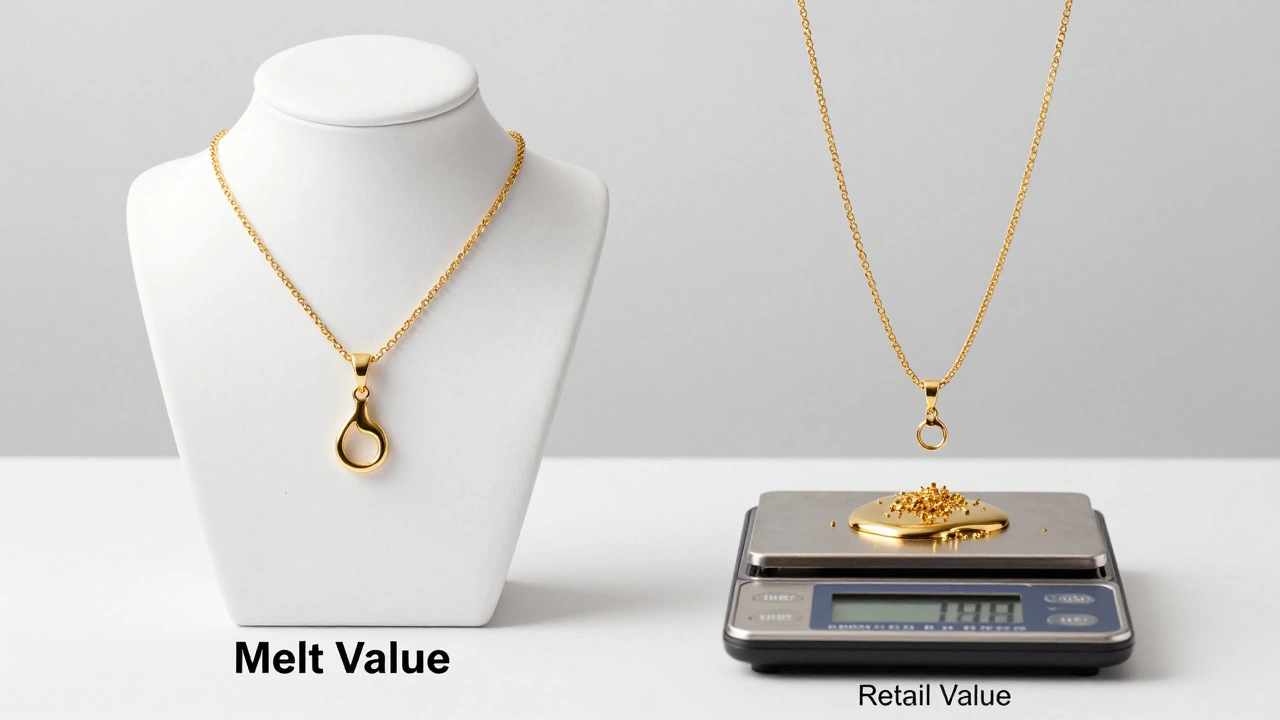
This is where most people get tripped up. If you buy a 14k gold chain from a high-end brand, you aren't just paying for the gold. You're paying for the design, the brand name, and the craftsmanship. This is called the retail markup. If a chain costs $1,000 at a store, the actual gold inside it might only be worth $400.
When you go to sell that chain, the buyer doesn't care about the brand-they care about the Melt Value, which is the value of the gold based solely on its weight and purity, ignoring the craftsmanship. This is why selling jewelry to a pawn shop or a gold buyer often feels like a rip-off. You're moving from a retail environment to a commodity environment.
Common Pitfalls When Determining Gold Value
Not all gold is created equal, and some items can trick you. For instance, have you heard of Gold Plating? This is when a cheap metal (like copper or brass) is covered in a thin layer of gold. These items might look like 14k gold, but they have almost zero melt value. Always check for the hallmark-the tiny stamp that says "14k" or "585." If the stamp is missing, don't assume it's gold.
Another common mistake is ignoring the weight of gemstones. If you have a 14k gold ring with a large sapphire, the jeweler will weigh the whole thing and then subtract the estimated weight of the stone. You aren't getting paid for the gold that isn't there. If you're selling, it's often better to have a professional gemologist value the stone separately, as the gold buyer will likely give you a very low price for the gem.
Where to Sell 14k Gold for the Best Price
If you've decided to cash in on your jewelry, you have a few options, and each has a different payout structure. Pawn Shops are the fastest, but usually offer the lowest percentages of the melt value-sometimes only 50-60%. They are built for quick loans, not fair market trades.
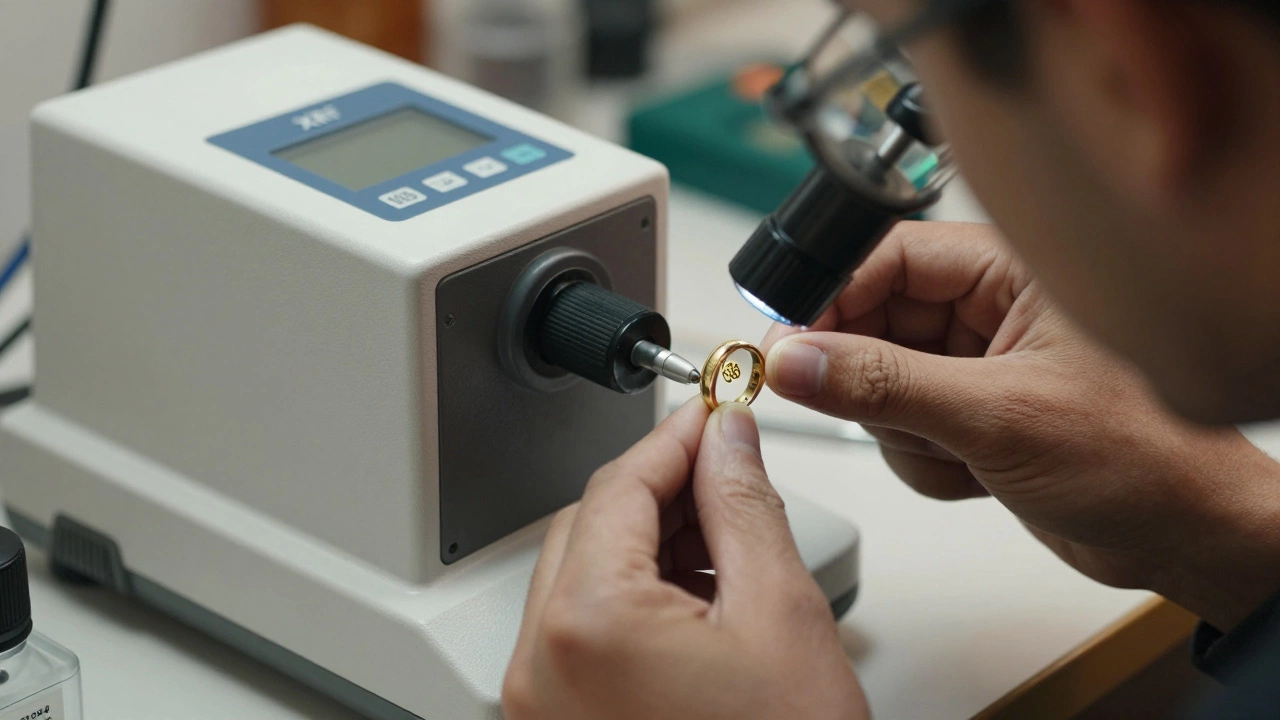
Reputable Gold Buyers or specialized refineries usually offer a better rate, perhaps 80-90% of the melt value. They have the equipment to test the gold accurately using an XRF scanner, which tells them the exact purity without having to scratch the metal. If you have a large collection, selling to a refinery is almost always the most profitable route because they cut out the middleman.
Is 14k gold real gold?
Yes, it is real gold, but it is an alloy. It contains 58.3% pure gold mixed with other metals to make it stronger. This is why it is a favorite for engagement rings and daily jewelry.
Why is 14k gold cheaper than 18k gold?
It's simply because it contains less pure gold. 18k gold is 75% pure, while 14k is only about 58%. Since pure gold is the expensive part, the piece with the lower percentage is worth less in raw materials.
Does 14k gold tarnish?
Pure gold doesn't tarnish, but the alloy metals in 14k gold (like copper) can oxidize over time. This is why some old 14k jewelry looks a bit dull or develops a patina, though it can usually be polished back to a shine.
How can I tell if my jewelry is 14k gold?
Look for a hallmark stamp. 14k gold is usually stamped as "14k", "14kt", or "585". If there is no stamp, you can take it to a jeweler for an acid test or an XRF scan to confirm the purity.
Is 14k gold better than 10k gold?
In terms of value, yes, because it has more gold content. In terms of color, 14k has a richer, more yellow glow. However, 10k is slightly more durable and much cheaper, making it a better choice for people with very active lifestyles or tight budgets.
Next Steps for Your Gold
Depending on what you want to do, your path varies. If you're just curious about the value, download a gold price app to track the daily spot price. If you're planning to sell, start by weighing your items on a digital gram scale and calculating the melt value using the formula above. This prevents you from being underpaid at a shop. If you're looking to buy, remember that while 14k gold holds its value well, you're paying a premium for the design. If your goal is purely investment, stick to 24k gold bars or coins instead of jewelry.