Indian Bangle Etiquette Guide
Navigate the complexities of Indian bangle traditions. Select your context below to see recommended styling tips.
(Not Exact Count)
Recommendation
SymmetricalSelect options above to generate advice.
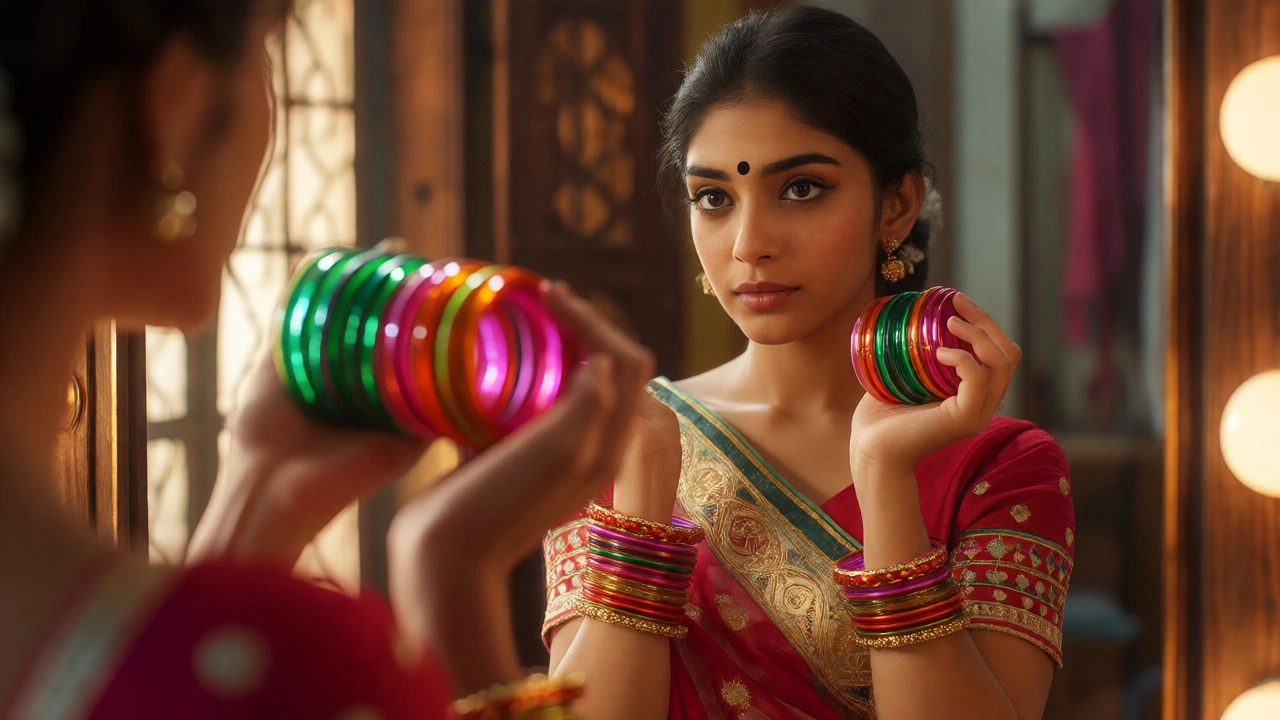
You are getting ready for a wedding. You have your saree draped perfectly, your binda is centered, and you reach for your box of glass bangles. You start sliding them onto your right wrist. Then you pause. Should you put some on the left too? Or does that look weird? If you have ever stood in front of a mirror holding two stacks of colorful glass, wondering if you are breaking a rule or just missing out on tradition, you are not alone. This question comes up constantly, especially among younger generations navigating modern fashion versus ancestral customs.
The short answer? Yes, many Indian women wear bangles on both arms. But it is rarely random. It depends entirely on where you live, what you are celebrating, and which community traditions you follow. In some regions, wearing bangles on only one arm is considered incomplete, while in others, asymmetry is the point. Let’s break down exactly when, why, and how to wear Indian bangles so you never feel unsure again.
Quick Summary / Key Takeaways
- Regional Variation: North India often favors symmetry (both arms), while South India may focus on specific wrists depending on marital status.
- Marital Status: Married women traditionally wear more bangles than unmarried women, often filling both wrists completely.
- Festival vs. Daily Wear: Festivals like Karva Chauth or Diwali often require full sets on both arms; daily wear can be minimal.
- Material Matters: Glass bangles are common for daily wear, while gold or diamond bangles might be reserved for special occasions or specific hands.
- No Hard Rules: Modern Indian fashion increasingly allows personal choice over strict adherence to regional norms.
The Right Hand vs. The Left Hand: What Does It Mean?
In many parts of India, the hand you choose isn’t just about aesthetics-it’s symbolic. Historically, the right hand was associated with action, giving, and performing rituals, while the left hand was linked to receiving and introspection. This distinction influences how bangles are worn during religious ceremonies.
For instance, in many Hindu households, a married woman wears her primary set of bangles on the right hand because she uses this hand to offer prayers, touch elders’ feet, and perform puja. However, this doesn’t mean the left hand stays bare. Often, a lighter stack or different style goes on the left. In contrast, some communities believe that filling both wrists signifies abundance and completeness. A woman with empty space on her wrists might even be seen as unlucky or incomplete in certain orthodox circles.
It is crucial to understand that these interpretations vary wildly by state. In Punjab, you might see women wearing heavy white ivory-style bangles on both arms after marriage. In Bengal, red and white shell bangles (shakha pola) are strictly worn on the left hand by married women, while other decorative bangles might go on the right. There is no single "Indian" rule; there are hundreds of local customs.
Regional Differences: From Kashmir to Kanyakumari
India’s diversity means that bangle-wearing habits change every few hundred kilometers. Understanding these differences helps you respect context when attending events outside your home region.
| Region | Common Practice | Key Materials | Symbolism |
|---|---|---|---|
| North India (Punjab, Haryana) | Symmetrical stacks on both arms | Glass, Ivory, Metal | Prosperity and marital status |
| West India (Maharashtra, Gujarat) | Heavy stacks on both arms | Glass, Gold, Lac | Auspiciousness and beauty |
| South India (Tamil Nadu, Kerala) | Often focused on one or both, varies by caste/community | Gold, Diamond, Glass | Wealth and divine protection |
| East India (Bengal, Odisha) | Specific ritual bangles on left, decorative on right | Shell, Coral, Gold | Marital sanctity |
In Maharashtra, for example, the concept of chudiyan (bangles) is deeply tied to auspiciousness. Women often wear dozens of glass bangles on both wrists, creating a jingling sound that is considered pleasant and auspicious. The noise itself is part of the tradition-it signals presence and vitality. Conversely, in some tribal communities across Central India, bangles might be made of bamboo or bone, and the number worn might indicate age group rather than marital status.
If you are attending a destination wedding in Rajasthan, expect to see massive, colorful stacks on both arms. These are often paired with large kadas (thick metal bangles) for structural support. Trying to mimic this with thin glass bangles alone might look sparse. Matching the density of the region’s style shows cultural awareness.
Married vs. Unmarried: Is There a Difference?
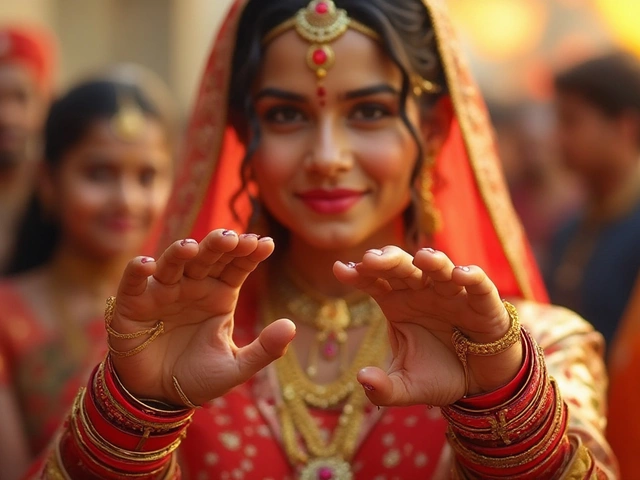
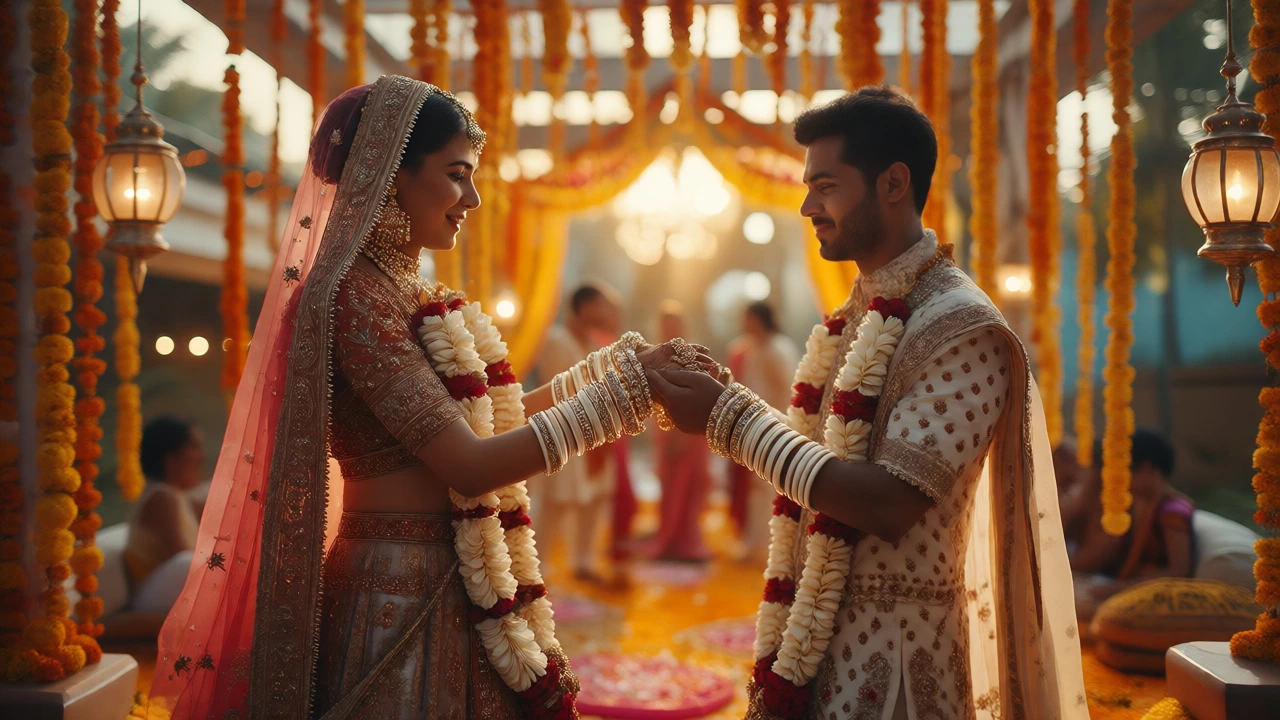
This is perhaps the most sensitive aspect of bangle etiquette. Traditionally, an unmarried girl might wear fewer bangles, often opting for slim metallic bands or simple glass pieces. Once married, the expectation shifts dramatically. In many families, a newlywed bride is expected to fill both wrists completely with bangles within days of the wedding.
Why the sudden increase? It stems from ancient beliefs that filled wrists protect the husband’s life and ensure the wife’s well-being. An empty wrist was sometimes viewed as a sign of widowhood or bad luck. While modern urban women may not subscribe to this superstition, family pressure remains strong. Grandmothers and aunties will often insist that you add more bangles until your arms make a satisfying clinking sound.
However, times are changing. Many working professionals find heavy bangles impractical for typing or driving. They might opt for a single thick gold kada on one hand and a delicate chain bracelet on the other. This compromise respects tradition without sacrificing comfort. The key is communication-if you are visiting conservative relatives, adding a few extra bangles to your outfit can prevent awkward comments.
Festivals and Rituals: When Symmetry is Non-Negotiable
There are specific occasions where wearing bangles on both arms isn’t just a style choice-it’s a requirement. During festivals like Karva Chauth, Diwali, or Durga Puja, women dress in their finest attire, which almost always includes full bangle sets on both wrists.
During Karva Chauth, for example, the fast is broken only after seeing the moon through a sieve, and the entire ensemble is scrutinized. Missing bangles on one arm could be interpreted as a lack of devotion or preparation. Similarly, during bridal rituals, the groom’s family might gift bangles specifically designed to be worn symmetrically. Ignoring this can lead to misunderstandings about respect for the ceremony.
Even outside major festivals, regional fairs like the Pushkar Fair or Onam celebrations involve specific dress codes. At Onam in Kerala, women wear the Kasavu saree and often pair it with gold bangles on both wrists to match the opulence of the occasion. Checking local guidelines before attending such events saves you from feeling out of place.
Modern Interpretations: Breaking the Rules
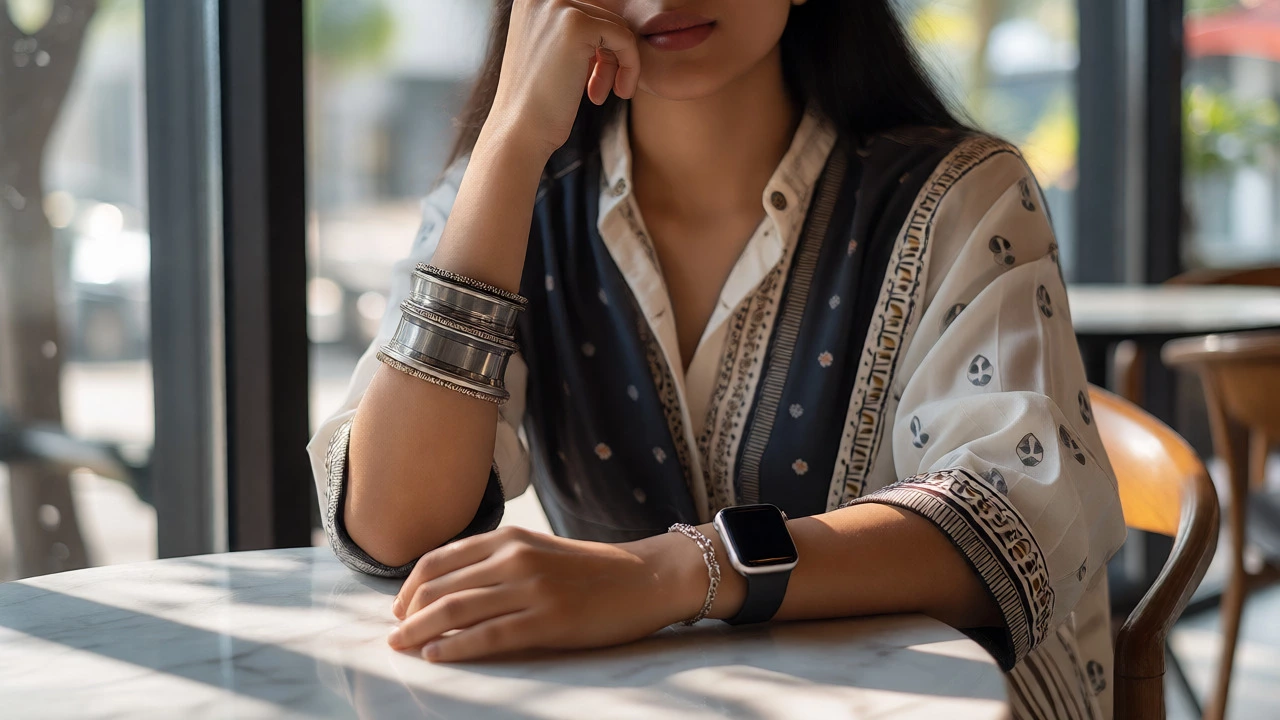
Let’s be honest-strict adherence to tradition is fading in metropolitan cities like Mumbai, Delhi, and Bangalore. Younger generations view bangles as accessories first, symbols second. Asymmetry has become a deliberate fashion statement. You might see a woman wearing three thick silver cuffs on her right arm and nothing on her left, or mixing glass bangles with leather bracelets.
This trend is fueled by fusion fashion designers who blend Western minimalism with Indian motifs. Brands now sell "stackable" sets meant to be mixed and matched rather than worn in uniform rows. Social media influencers play a big role here, showcasing outfits where one arm holds a watch and a single bangle, while the other features a dramatic fan of colored glass.
Does this offend traditionalists? Sometimes. But context matters. If you are going to office, asymmetric bangles are chic and professional. If you are at a temple, covering both wrists might show more reverence. The freedom to choose is the biggest shift in recent decades. You are no longer bound by your grandmother’s rules unless you choose to honor them.
Practical Tips for Choosing Your Look
If you are still unsure, use this simple decision tree:
- Check the Occasion: Is it a formal ritual? Go symmetrical. Is it casual brunch? Asymmetry is fine.
- Consider Comfort: Can you type or drive comfortably? If not, reduce the count or switch materials.
- Respect Local Norms: Are you in a conservative household? Add bangles to both arms to avoid scrutiny.
- Mix Textures: Combine glass, metal, and fabric bangles for a contemporary look that still feels Indian.
Remember, the sound of bangles is part of the experience. If you prefer silence, opt for rubber-lined glass or solid metal cuffs. If you love the jingle, layer multiple thin glass bangles. Your choice reflects your personality, not just your heritage.
Is it compulsory to wear bangles on both hands in India?
No, it is not universally compulsory. Practices vary significantly by region, religion, and family tradition. While many North Indian and Maharashtrian women wear bangles on both hands, some South Indian or Bengali traditions may emphasize one hand for specific ritual bangles. Modern fashion also allows for single-arm styling.
Which hand do married women usually wear bangles on?
Traditionally, married women wear bangles on both hands. In some communities, specific auspicious bangles (like Shakha Pola in Bengal) are worn exclusively on the left hand, while decorative bangles go on the right. However, most mainstream Indian customs encourage filling both wrists to symbolize marital bliss and prosperity.
Can I wear bangles on only one arm for work?
Absolutely. Many professional women prefer minimalist jewelry for practicality. Wearing a single elegant bangle or a cuff on one arm is stylish and acceptable in corporate settings. It avoids the noise distraction of multiple bangles while still maintaining a connection to traditional aesthetics.
What does it mean if my bangles break?
Superstitions vary, but many believe a broken bangle absorbs negative energy or signifies a change in fortune. Some say it protects the wearer from harm. Practically, glass bangles are fragile and break due to impact. Most women simply replace them without attaching deep spiritual meaning, though older generations might advise caution afterward.
Are black bangles considered unlucky?
In some traditional Hindu contexts, black is associated with mourning or Saturn (Shani), leading some to avoid black bangles for weddings. However, this belief is weakening. Black bangles are popular in modern fashion and are commonly worn by non-Hindu communities or those following specific astrological remedies. Context and community norms dictate whether they are appropriate.