
Nose Pin Style Finder
Select your face shape to discover which nose pin styles will best complement your natural bone structure.
Recommendations
Remember: Confidence is the real accessory. Try clip-ons first if you're unsure about commitment!
You catch a glimpse of someone in a coffee shop, and your eyes drift to their face. Specifically, to the small glint of metal on their nostril. Did it make them look more attractive? Or did it clash with their vibe? This isn't just about jewelry; it's about psychology, culture, and personal style colliding. The short answer is yes, but with a massive asterisk. A nose pin is a form of body jewelry worn through a piercing in the nostril or septum can elevate a look from basic to bold instantly. But if you pick the wrong size for your face shape or choose a style that fights your outfit, it can feel out of place.
We’re going to break down exactly why this piece of jewelry works, who it suits best, and how to wear it so you don’t just follow a trend-you own it. Because let’s be honest, nobody wants to wonder if they look ridiculous when they walk into a room.
The Psychology of Facial Jewelry
Why do we find certain accessories appealing? It often comes down to symmetry and focal points. Human brains are wired to notice faces. When you add a nose ring to the center of the face, you create a new anchor point for the eye. It draws attention away from asymmetries you might worry about (like one eye being slightly smaller) and toward the feature you’ve chosen to highlight.
Think about it like this: if you have striking eyes, a subtle stud near the inner corner of the eye or on the nose can frame them beautifully. If you have a strong jawline, a hoop can soften the angles. It’s not magic; it’s visual balance. Studies in evolutionary psychology suggest that facial adornments signal health and status, which subconsciously reads as attractive. In many cultures, particularly in South Asia, the nose pin has been a symbol of marital status and beauty for centuries. Today, it’s evolved into a universal statement of individuality.
Face Shapes and Nose Pin Styles
This is where most people get it wrong. They buy what looks good on Instagram models, not what works for their bone structure. Your face shape dictates the style that will actually enhance your features rather than overwhelm them.
If you have an oval face, you hit the jackpot. Almost any style works here because your proportions are naturally balanced. You can experiment with delicate studs, medium hoops, or even larger circular rings without worrying too much about distortion.
For those with a round face, the goal is usually to elongate. A long, dangling chain or a vertical drop design can help stretch the appearance of the face vertically. Avoid wide, horizontal hoops that sit flat against the cheek, as these can make a round face appear wider.
Square faces benefit from curves. Since you likely have a strong jawline, a circular hoop or a curved barbell softens those angular edges. Sharp, geometric designs might emphasize the squareness too much, unless that’s the edgy look you’re going for.
If you have a heart-shaped face (wider forehead, narrower chin), balance is key. A simple stud or a small hoop keeps the focus central without adding bulk to the upper face. Large, heavy dangles might pull the eye upward too aggressively, making the chin look even smaller.
| Face Shape | Best Styles | Styles to Avoid | Visual Goal |
|---|---|---|---|
| Oval | Studs, Hoops, Chains | None really | Maintain balance |
| Round | Drops, Vertical Bars | Wide Horizontal Hoops | Elongate |
| Square | Circular Hoops, Curved Barbells | Sharp Geometric Studs | Soften Angles |
| Heart | Small Studs, Tiny Hoops | Heavy Dangles | Broaden Lower Face |
| Long | Horizontal Hoops, Wide Studs | Long Drops | Shorten/Widthen |
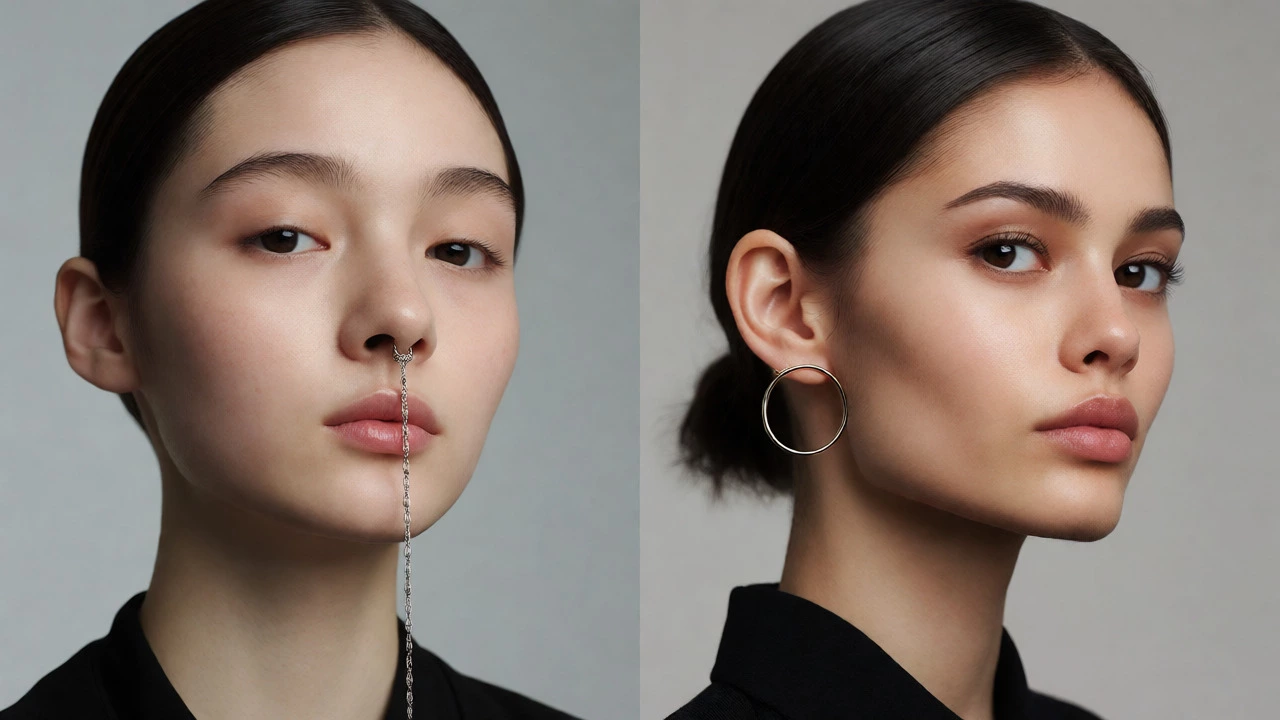
Cultural Context vs. Modern Fashion
You can’t talk about nose pins without talking about context. In India, the nath (large hoop) is traditional bridal wear, while smaller nathni or studs are everyday wear. Wearing a large nath to a casual brunch might feel overdressed, whereas wearing a tiny diamond stud to a wedding might feel underdressed.
In Western contexts, the nose ring gained popularity in the 1960s and 70s through counterculture movements. Today, it’s mainstream. However, the "attractiveness" factor still shifts based on setting. A subtle gold stud is generally perceived as professional and chic in corporate environments. A large, colorful gemstone hoop might read as artistic or rebellious. Neither is bad, but understanding the social code helps you control the narrative.
Consider the material too. Gold feels warm and traditional. Silver or white gold feels modern and crisp. Titanium is hypoallergenic and sleek, often associated with a punk or minimalist aesthetic. The metal color should complement your skin tone. Warm undertones glow with yellow gold; cool undertones shine with silver or platinum.
The Impact of Size and Placement
It’s not just about the style; it’s about the scale. A tiny 2mm stud is barely noticeable from across the room-it’s a secret detail for up-close interactions. A 10mm hoop is a statement. Which one is "more attractive" depends entirely on your intent.
Placement matters significantly. A standard nostril piercing sits on the side wing of the nose. A high nostril piercing sits closer to the bridge, creating a more dramatic, fashion-forward look. A septum piercing goes through the cartilage dividing the nostrils, offering a completely different visual weight. Septum rings are currently trending heavily among Gen Z and Millennials because they can be flipped up and hidden easily, offering versatility.
If you’re worried about commitment, start with a clip-on or a magnetic fake nose ring. This lets you test the "attractiveness" factor on yourself before you commit to a needle. Many people find that seeing themselves with the accessory changes their posture and confidence, which is half the battle.
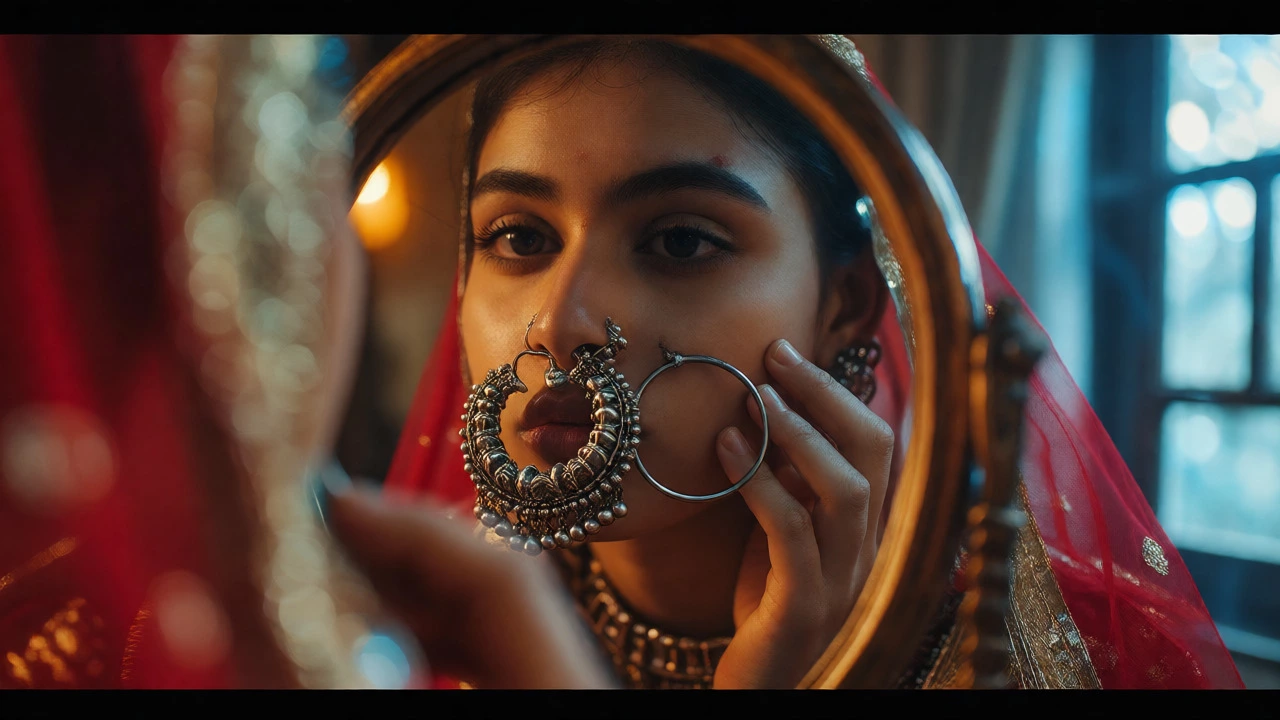
Confidence Is the Real Accessory
Here’s the hard truth: no piece of jewelry saves a lack of confidence. But conversely, a nose pin can amplify existing confidence. When you feel good about your look, you stand taller, make better eye contact, and smile more. These non-verbal cues are universally rated as highly attractive traits.
If you’re self-conscious about your nose-maybe you think it’s too big or too small-a well-chosen nose pin can actually draw positive attention to it. Instead of hiding your nose, you celebrate it. That shift in mindset is powerful. People aren’t looking at your nose and judging its dimensions; they’re looking at your face and noticing the effort you put into your presentation.
Also, consider maintenance. A clean, healthy piercing heals well and looks intentional. An irritated, red, or infected piercing distracts from the jewelry itself. Proper aftercare isn’t just hygiene; it’s part of the aesthetic. Keep it clean, rotate it gently during healing, and choose high-quality metals like implant-grade titanium or 14k gold to avoid reactions.
Trends for 2026
Fashion cycles move fast, but nose jewelry tends to stick around because it’s semi-permanent. Currently, minimalism is still strong. Think thin gauge wires, tiny solitaire diamonds, or plain gold balls. However, there’s a resurgence of vintage-inspired pieces. Filigree work, oxidized silver, and organic shapes are gaining traction. These pieces tell a story and feel less mass-produced.
Another trend is the "stacked" look. Combining a nostril stud with a small helix earring or a second nostril piercing creates a curated cluster. It shows you’ve thought about your overall jewelry composition, not just one isolated item. This complexity adds depth to your face, making it more interesting to look at.
Ultimately, the question "is it attractive?" isn’t answered by a rulebook. It’s answered by you looking in the mirror and feeling like yourself-but a slightly more polished version. If you hesitate, try it on. Take photos. Look at them a day later. If you still like it, you’ve got your answer.
Does a nose pin suit everyone?
Generally, yes, but the style must match your face shape. While anyone can wear a nose pin, choosing the right size and type (stud vs. hoop) ensures it complements your features rather than clashing with them. For example, hoops suit oval and heart-shaped faces well, while drops may flatter rounder faces.
Are nose pins considered unprofessional in the workplace?
In most modern workplaces, small, subtle nose studs are perfectly acceptable. Large hoops or dangling chains might be seen as casual or creative depending on the industry. Conservative fields like law or finance may prefer invisible or very small studs, while tech and creative industries are generally open to bolder styles.
Which side of the nose is traditionally pierced?
In many Asian cultures, particularly in India, the left nostril is traditionally pierced due to Ayurvedic beliefs linking it to female reproductive health. In Western fashion, there is no strict rule; people pierce either side based on preference or aesthetics. Some believe the left side is more "feminine" and the right more "masculine," but this is largely subjective now.
How do I know if a nose ring will suit me?
The best way is to try on clip-on versions first. Look at your face shape in the mirror and see if the jewelry balances your features. If you have a strong jaw, a curve might soften it. If you have a long face, a horizontal element might widen it. Social media filters also allow you to virtually try on different styles quickly.
Do nose pins hurt to get pierced?
Most people describe the pain as a sharp pinch that lasts only a few seconds. The nostril has nerve endings, so it can be sensitive, but it heals relatively quickly compared to other piercings. Using a needle instead of a gun reduces trauma and pain, leading to a smoother healing process.