Italian Nose Pin Style Finder
Select Your Face Shape
Choose the option that best describes your face structure to get a tailored recommendation.
Your Perfect Match
Select a face shape above to see your personalized Italian nose pin recommendation.
You’ve probably scrolled past it on Instagram or spotted it at a wedding: a delicate, curved piece of jewelry that hugs the side of your nostril without piercing through to the other side. It’s elegant, subtle, and often labeled as an "Italian nose pin." But here’s the twist-despite the name, this style isn’t actually from Italy. So, what exactly is an Italian nose pin, why does it carry that name, and how do you choose the right one for your face shape?
If you’re looking to add a touch of traditional charm to your look without committing to a heavy, full-ring Nath is a traditional Indian nose ring worn by brides and women in South Asian cultures, often featuring intricate gold work, pearls, and stones, the Italian nose pin might be your perfect match. In this guide, we’ll break down the design, history, materials, and styling tips so you can wear it with confidence.
What Exactly Is an Italian Nose Pin?
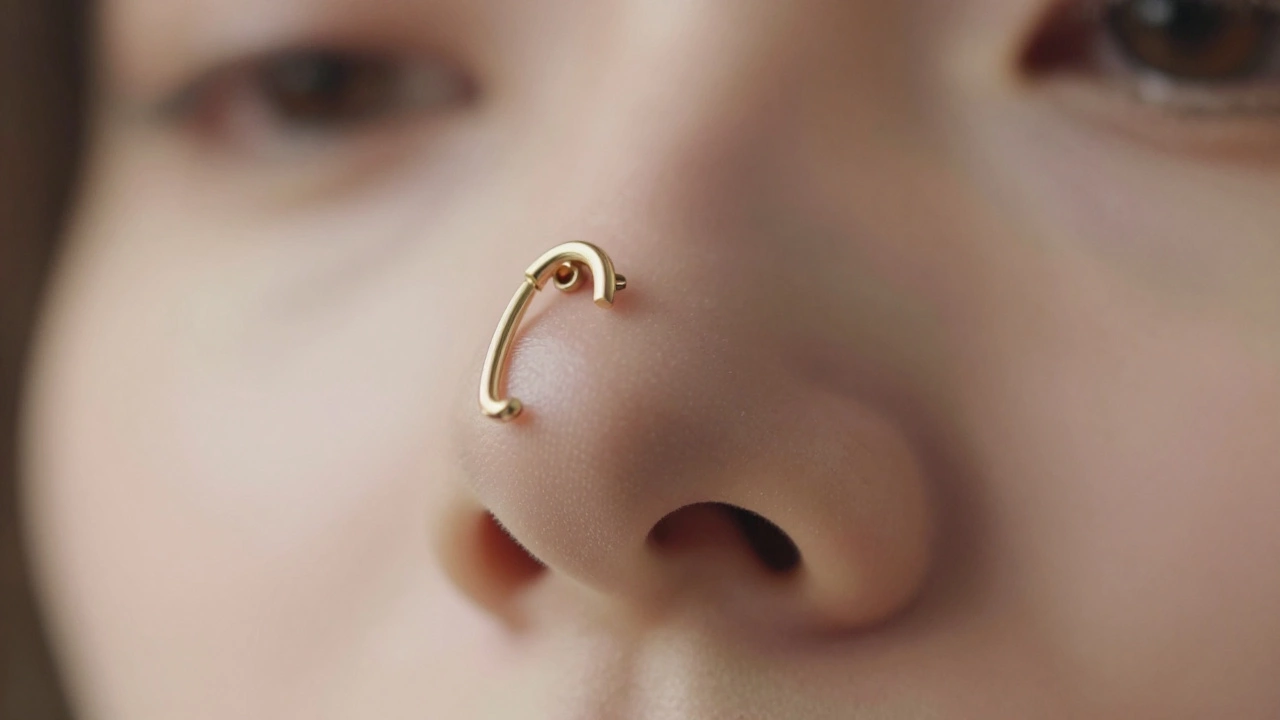
An Italian nose pin is a type of nostril stud or small hoop that curves along the outer edge of the nostril without passing completely through it. Unlike standard studs that go straight in and out, or large rings that pierce through the entire nostril, the Italian style sits on the surface. It typically features a C-shaped or U-shaped curve that rests against the cartilage, secured by a small screw-back, butterfly back, or a flexible wire mechanism.
The key characteristic is its non-piercing nature. You don’t need a fully healed hole for it to stay in place; it just needs a tiny puncture or even a fresh piercing (if designed for that purpose) to anchor itself. This makes it incredibly popular among people who want the look of a nose ring but dislike the weight, visibility, or commitment of larger jewelry.
Why Is It Called "Italian"? The Origin Story
This is the most common question I get. If it’s not from Italy, where did the name come from? The truth is, there’s no historical evidence linking this specific design to Italian culture. Instead, the term likely emerged in the Indian jewelry market during the late 20th century.
In India, jewelry designers often borrow names from Western countries to make certain styles sound exotic or modern. Just like "French hooks" for earrings or "American studs," the label "Italian" was probably used to distinguish these sleek, minimalist, curved designs from traditional Indian Nath is a traditional Indian nose ring worn by brides and women in South Asian cultures, often featuring intricate gold work, pearls, and stones or heavy temple jewelry. Over time, the name stuck. Today, when you ask for an Italian nose pin in any jewelry store across India, Pakistan, or Bangladesh, they know exactly what you mean: a lightweight, curved, semi-enclosed nostril stud.
Key Design Features and Variations
Not all Italian nose pins are created equal. While they share the same basic structure, the details can vary significantly. Here’s what to look for:
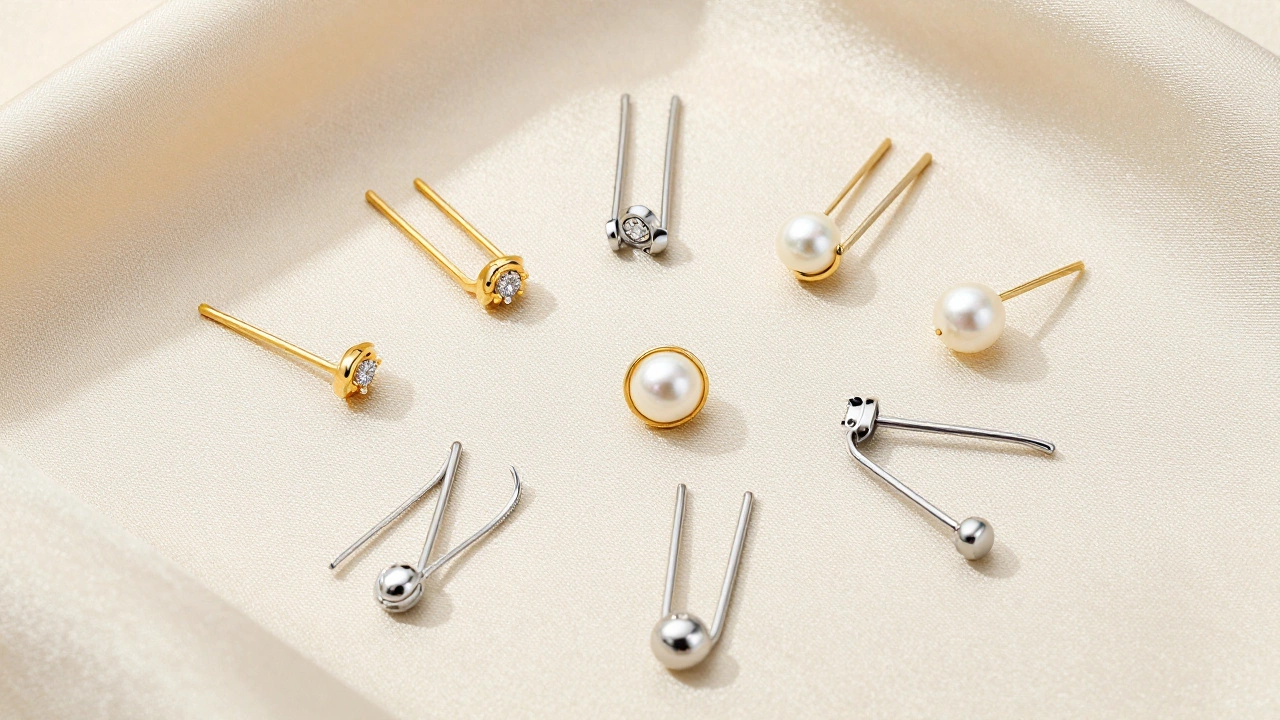
- The Curve: The defining feature is the arc. Some have a gentle, shallow curve for a barely-there look, while others have a deeper U-shape that wraps more around the nostril.
- The Closure: Most use a screw-back mechanism where a small post twists into a threaded base. Others use a friction-fit barbell or a flexible memory wire. Screw-backs are generally more secure for daily wear.
- The Centerpiece: The focal point can be a single diamond, a pearl, a colored stone, or simply polished metal. Minimalist designs often skip stones altogether for a clean, metallic finish.
- Size: They range from tiny micro-studs (2mm) to slightly larger hoops (4-5mm). Smaller sizes are better for professional settings, while larger ones make a bolder statement.
| Type | Best For | Security Level | Maintenance |
|---|---|---|---|
| Screw-Back | Daily wear, active lifestyles | High | Low (tighten occasionally) |
| Friction-Fit | Casual wear, temporary events | Medium | Medium (may loosen) |
| Memory Wire | Fresh piercings, sensitive skin | Low-Medium | High (clean regularly) |
| Stone-Studded | Weddings, parties, formal events | High (if screw-back) | Medium (polish stones) |
Materials Matter: Gold, Silver, and Surgical Steel
Since this jewelry sits close to your skin and mucous membranes, material choice is critical. Your nose is sensitive, and using the wrong metal can lead to irritation, green discoloration, or allergic reactions.
Gold: The gold standard (pun intended) for nose jewelry. Look for 18k or 22k gold if you have sensitive skin. Pure gold is soft, so it’s often alloyed with other metals. Ensure the alloy doesn’t contain nickel, which is a common allergen. Gold Italian nose pins hold their value and never tarnish, making them a great investment.
Silver: Sterling silver (925) is affordable and beautiful, but it oxidizes over time, turning black. You’ll need to polish it regularly. Also, some people react to the copper content in sterling silver. If you choose silver, opt for rhodium-plated versions for extra protection.
Surgical Steel: Ideal for budget-conscious buyers or those healing new piercings. It’s hypoallergenic and durable. However, it lacks the warmth and prestige of gold. Make sure it’s labeled "implant-grade" to avoid low-quality alloys.
Titanium: A rising star in body jewelry. It’s lighter than steel, completely hypoallergenic, and strong. If you’re allergic to everything else, titanium is your best friend.
How to Choose the Right Style for Your Face Shape
Jewelry should complement your features, not compete with them. Here’s a quick guide to picking the right Italian nose pin based on your face shape:
- Oval Faces: You’re lucky-you can pull off almost any size and shape. Try a medium-sized stud with a round stone for balance.
- Round Faces: Go for elongated designs. A slightly larger, vertical oval stone or a longer curve can help lengthen your face visually.
- Square Faces: Soften your angles with rounded shapes. Circular studs or curved hoops with smooth edges work best. Avoid sharp, geometric designs.
- Heart-Shaped Faces: Focus on the lower half of your face. A simple, understudied stud keeps attention balanced. Avoid overly large pieces that widen the cheek area.
- Long Faces: Add width with wider, horizontal designs. A broader curve or a stone set sideways can create the illusion of width.
Styling Tips: When and How to Wear It
The beauty of the Italian nose pin is its versatility. It’s subtle enough for the office but sparkly enough for a night out. Here’s how to style it:
For Work: Stick to plain metal or tiny diamonds. Avoid large stones or bright colors. A simple gold or silver screw-back looks professional and polished.
For Weddings: This is where you can shine. Pair a studded Italian nose pin with matching earrings and a maang tikka. Since it’s smaller than a traditional Nath, it won’t overwhelm your bridal makeup. It’s perfect for pre-wedding functions like Mehendi or Sangeet.
With Makeup: Let your nose jewelry pop by keeping your eye makeup neutral. If you’re wearing bold lips, go for a minimal stud. If your eyes are the focus, you can afford a slightly more decorative pin.
Pairing with Other Jewelry: Don’t overcrowd your face. If you’re wearing heavy jhumkas (bell-shaped earrings), keep the nose pin simple. If your earrings are small studs, you can experiment with a more elaborate Italian nose pin.

Care and Maintenance
To keep your Italian nose pin looking brand new, follow these simple steps:
- Clean Regularly: Use a mild soap and warm water solution. Gently rub the jewelry with a soft cloth. Avoid harsh chemicals like bleach or ammonia.
- Dry Thoroughly: Moisture is the enemy of silver and can cause corrosion in lower-quality metals. Always dry your nose pin before storing it.
- Store Properly: Keep it in a soft pouch or a jewelry box with separate compartments. Prevent scratches by storing it away from harder metals.
- Check the Back: If you have a screw-back, check it once a month to ensure it’s tight. Loose backs can fall off unexpectedly.
- Remove During Sleep: Sleeping with a nose pin can bend the curve or irritate your nostril. Take it out every night.
Common Mistakes to Avoid
I’ve seen many people struggle with their Italian nose pins because of a few common errors. Learn from them:
- Buying the Wrong Size: Too small, and it will pinch your skin. Too large, and it will slip out. Measure your nostril opening or consult a jeweler for sizing.
- Ignoring Allergies: Never assume a metal is safe. If you have sensitive skin, stick to gold or titanium. Cheap fashion jewelry often contains nickel.
- Over-Tightening: With screw-backs, a little pressure goes a long way. Over-tightening can strip the threads or damage your skin.
- Mixing Metals Poorly: While mixing metals is trendy, clashing tones can look messy. Stick to one metal family (gold/gold or silver/silver) for a cohesive look.
Is It Worth the Investment?
Compared to a full Nath, an Italian nose pin is significantly more affordable. You can find high-quality gold options starting at $50-$100, while designer pieces with diamonds can range from $200 to $500+. Given its durability and timeless appeal, it’s a smart addition to any jewelry collection. It’s especially worth it if you want a piece that transitions seamlessly from day to night without needing constant changes.
Can I wear an Italian nose pin if I don't have a piercing?
No, you still need a piercing. An Italian nose pin is not a clip-on. It requires a small hole in the nostril to anchor the post. However, because it doesn't pass all the way through, it can sometimes be easier to insert and remove than a full ring, especially for fresh piercings.
Will an Italian nose pin fall out easily?
If you choose a screw-back style, it is very secure and unlikely to fall out during normal activities. Friction-fit or wire styles may loosen over time, especially if you touch your nose frequently. For maximum security, always opt for a screw-back mechanism.
Is it painful to wear an Italian nose pin?
Generally, no. Because it is lightweight and doesn't pull on the piercing channel like a heavy ring might, it is comfortable for most people. However, if the curve is too tight or the material causes an allergic reaction, it can become uncomfortable. Choose the right size and hypoallergenic material to avoid pain.
Can I wear an Italian nose pin with a septum piercing?
Yes, absolutely. Many people with multiple facial piercings combine a septum ring with a nostril stud. The Italian nose pin’s subtle design complements a septum ring without creating visual clutter. Just ensure the styles and metals coordinate well.
How do I clean my Italian nose pin at home?
Mix a few drops of mild dish soap with warm water. Soak the nose pin for 5-10 minutes, then gently scrub it with a soft-bristled toothbrush. Rinse thoroughly with clean water and pat dry with a lint-free cloth. For gold, you can also use a specialized jewelry cleaning cloth.