Temple Jewelry Identifier & Styler
Select the characteristics of the necklace you are looking at or want to buy.
Please select options on the left to identify the necklace name and get styling tips.
You walk into a traditional wedding in South India, and the bride looks like she stepped out of an ancient temple mural. The gold glows against her skin, heavy with history and devotion. You look closer at her neck and realize it’s not just one piece-it’s a layered masterpiece. But what do you call that specific style? If you’ve ever wondered what is the Hindu necklace called, you are about to uncover a world where jewelry isn’t just fashion; it’s architecture worn on the body.
The short answer is that there isn’t just one name. It depends on the region, the deity depicted, and the layering technique. However, the umbrella term for this iconic style is Temple Jewelry, which is a category of traditional Indian jewelry inspired by the sculptures and carvings found on the walls of ancient temples in South India. Within this category, specific necklaces have distinct names like the Choker, Rani Haar, or Kasulam. Let’s break down exactly what these pieces are, why they matter, and how to identify them.
The Roots: Why It’s Called Temple Jewelry
To understand the name, you have to look at the source. This jewelry didn’t start in a designer’s studio. It started on stone walls. In the 7th century, during the reign of the Pallava and Chola dynasties, artisans began carving intricate details onto temple structures. They carved dancers, gods, and goddesses adorned with elaborate ornaments.
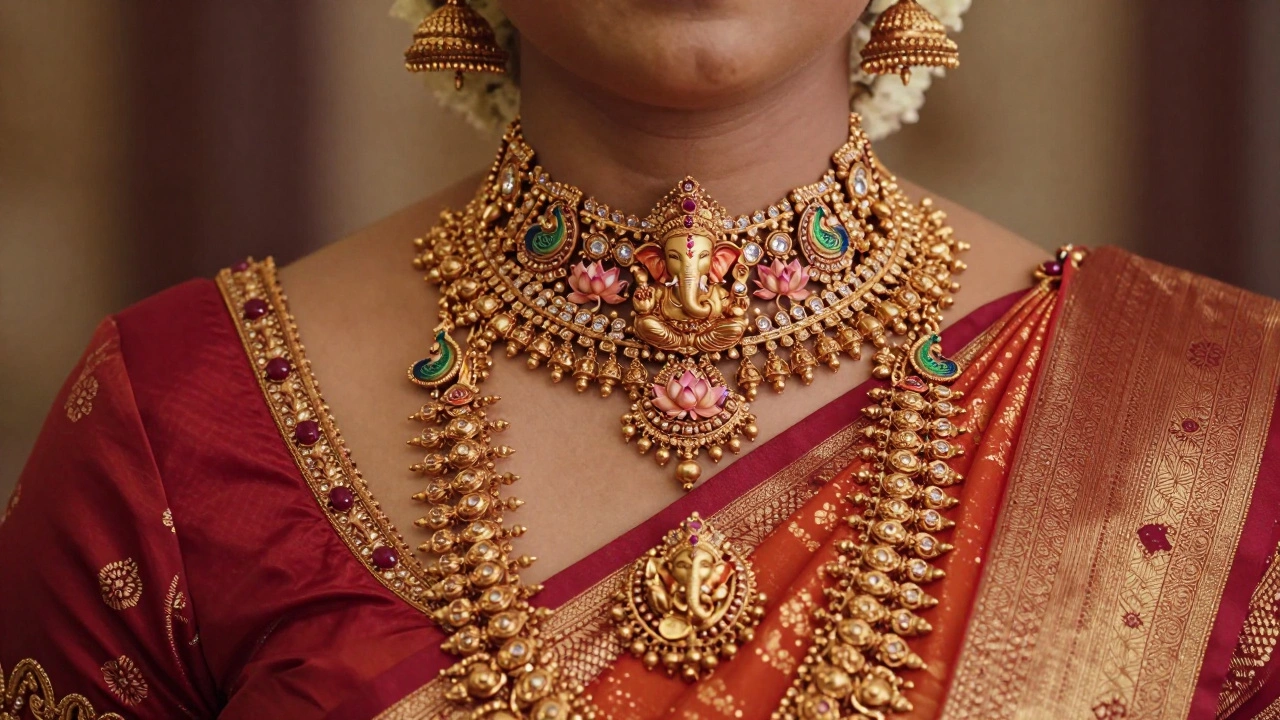
Craftsmen later took inspiration from these stone carvings and translated them into metal. That’s why the motifs look so familiar. You see lotus flowers, peacocks, elephants, and deities like Lord Ganesha or Goddess Lakshmi. These aren’t random patterns. They are direct replicas of religious iconography. When people ask what the Hindu necklace is called, they are often referring to this specific aesthetic that bridges the gap between worship and adornment.
This style is most prominent in states like Tamil Nadu, Karnataka, Kerala, and Andhra Pradesh. It’s less common in North India, where Kundan and Polki dominate. So, if you’re looking for this heavy, detailed look, you’re diving into the southern tradition.
Key Names for Traditional Necklaces
Not every gold chain is a temple necklace. Here are the specific names you need to know when shopping or attending a ceremony.
- Choker (Kasulam): This is the tight-fitting necklace that sits right at the base of the throat. In temple jewelry sets, it’s often the first layer. It features bold motifs like peacocks or geometric borders.
- Rani Haar: Translating to "Queen’s Necklace," this is a long, multi-layered piece that reaches down to the waist. It’s the centerpiece of bridal attire and often features large pendants.
- Vaddanam: A shorter necklace that hangs below the choker but above the Rani Haar. It acts as a bridge between the two layers.
- Kokku Vaddanam: A very short, stiff collar-like necklace that frames the face. It’s often paired with a matching headpiece.
- Mallipoo: Literally meaning "flower garland," this refers to necklaces made of large, individual flower motifs linked together. It’s lightweight compared to the solid gold versions.
If someone asks you specifically about the thick, statement piece a bride wears, they are usually talking about the Rani Haar or the Choker set. Using these terms shows you know your stuff.
Materials and Craftsmanship
Authentic temple jewelry is not cheap costume jewelry. It requires skill and precious materials. Traditionally, it was made using pure gold (24 karat). Today, due to cost and durability concerns, many pieces are crafted in 22-karat gold or even high-quality copper alloys with gold plating for everyday wear.
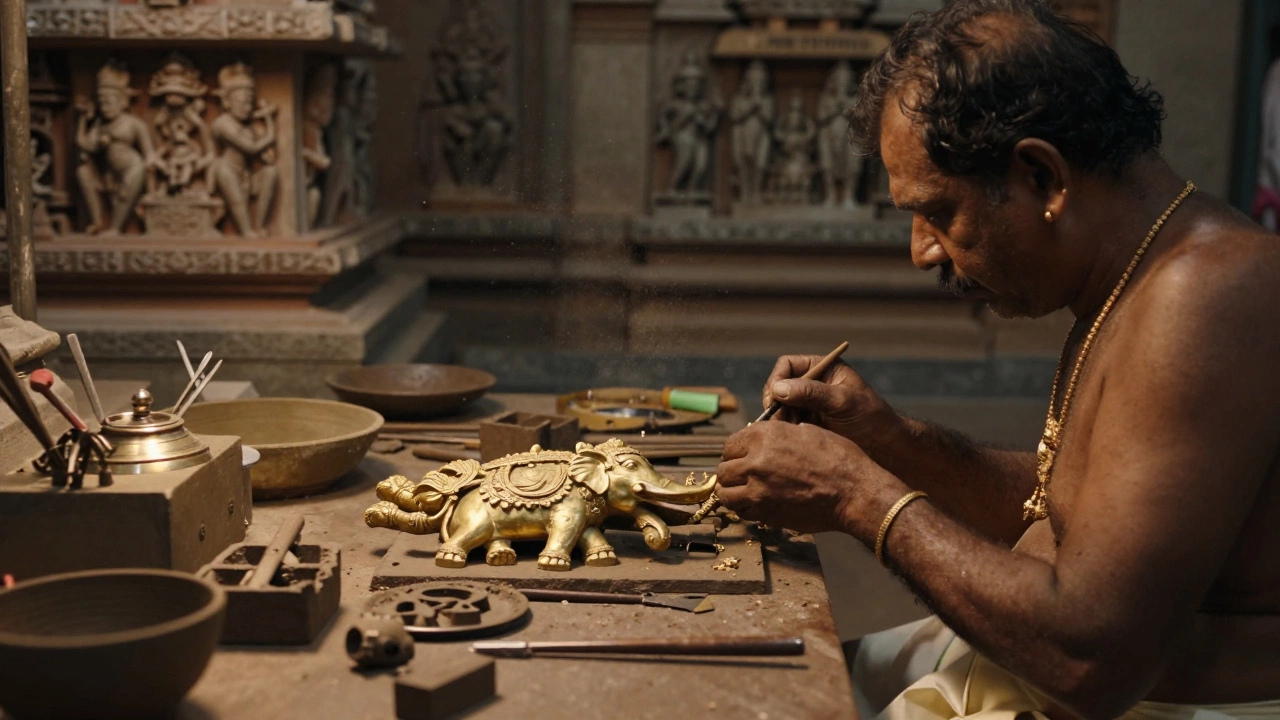
The craftsmanship involves a technique called lost-wax casting. Artisans sculpt the design in wax, encase it in clay, melt the wax out, and pour molten metal into the mold. This allows for the incredibly fine details you see in the facial expressions of the deities or the feathers of the peacocks.
Gemstones play a huge role too. While gold dominates, authentic pieces often feature uncut diamonds, rubies, emeralds, and pearls. The stones are usually bezel-set rather than prong-set, giving them a flush, antique look that protects the gems and enhances the vintage vibe.
| Necklace Type | Length | Key Feature | Best For |
|---|---|---|---|
| Choker (Kasulam) | Tight (13-15 inches) | Bold motifs, sits on collarbone | Bridal layering, formal events |
| Rani Haar | Long (30+ inches) | Multi-layered, heavy pendant | Weddings, major festivals |
| Mallipoo | Medium (18-20 inches) | Flower links, lighter weight | Daily wear, casual gatherings |
| Kokku Vaddanam | Very Short (12-14 inches) | Stiff collar structure | Paired with headpieces |
Symbolism Behind the Designs
Every element in a temple necklace has a purpose. It’s not just about looking good; it’s about invoking blessings. For example, the lotus motif symbolizes purity and spiritual awakening. Peacocks represent beauty and immortality. Elephants stand for strength and wisdom.
Deity pendants are common. A small Ganesha charm is believed to remove obstacles. A Lakshmi pendant invites wealth and prosperity. Wearing these pieces is considered auspicious. Many families pass these necklaces down through generations, believing they carry the energy of the ancestors who wore them before.
This spiritual connection is why you won’t see temple jewelry being sold as fast fashion. It’s treated with respect. Even when buying modern interpretations, buyers often look for pieces that retain these symbolic elements.
Modern Adaptations and Trends
In 2026, temple jewelry is having a massive resurgence, but with a twist. Younger generations want the look without the heaviness or the price tag of solid gold. Designers are now creating "lightweight" temple jewelry using silver, brass, or polymer-coated metals.
You’ll also see fusion styles. Imagine a temple choker paired with a western-style gown instead of a saree. Or a minimalist version of the Rani Haar that uses thin chains and smaller motifs. These adaptations make the traditional look accessible for office wear or casual outings.
Another trend is the use of oxidized silver. Blackened silver temple jewelry gives a rustic, antique feel that’s perfect for bohemian weddings or cultural festivals. It’s affordable and durable, making it a favorite among students and young professionals.

How to Style Your Temple Necklace
Wearing temple jewelry requires balance. Because the pieces are detailed and often heavy, they demand attention. Here’s how to pull it off without looking overwhelmed.
First, choose your outfit wisely. Silk sarees in deep reds, greens, or blues complement gold temple jewelry perfectly. Cotton sarees work well for daytime events. Avoid overly patterned fabrics that clash with the intricate designs of the necklace.
Second, consider layering. A single Rani Haar can be overpowering. Pairing a choker with a longer Vaddanam creates depth and dimension. Ensure the lengths don’t tangle. Measure yourself before buying to get the fit right.
Third, match your earrings. Temple jewelry sets often include matching jhumkas (bell-shaped earrings) or studs. Keeping the metal tone consistent-gold with gold, silver with silver-creates a cohesive look.
Finally, hair matters. An open hairstyle might compete with a long Rani Haar. A neat bun or braid allows the necklace to shine. If you’re wearing a choker, half-up styles work beautifully.
Caring for Your Investment
Temple jewelry is delicate despite its sturdy appearance. The intricate details can trap dirt and lose their luster over time. Clean your pieces regularly with a soft brush and mild soap solution. Avoid harsh chemicals that can damage gemstones or erode gold plating.
Store each piece separately in soft cloth pouches. Hanging them prevents tangling, especially for multi-layered necklaces. Keep them away from moisture and direct sunlight to prevent tarnishing, especially for silver or alloy pieces.
If you own heirloom pieces, have them inspected by a professional jeweler once a year. Check for loose stones or weak clasps. Proper maintenance ensures these beautiful artifacts last for generations.
Is temple jewelry only for brides?
No, while brides often wear elaborate sets like the Rani Haar, anyone can wear temple jewelry. Lighter pieces like Mallipoo or simple chokers are popular for daily wear, festivals, and cultural events. Modern trends also encourage mixing temple jewelry with contemporary outfits.
What is the difference between temple jewelry and regular gold jewelry?
Temple jewelry features specific motifs inspired by temple carvings, such as deities, animals, and flowers. Regular gold jewelry may have simpler designs or different styles like Kundan or Polki. Temple jewelry also often includes uncut gemstones and has a distinct antique finish.
Can I wear temple jewelry with a western outfit?
Absolutely. Many fashion enthusiasts pair temple chokers or short necklaces with blouses, dresses, or jeans. This fusion style adds a unique cultural touch to modern looks. Just ensure the rest of your accessories remain minimal to let the necklace stand out.
Where can I buy authentic temple jewelry?
You can find authentic pieces in specialized jewelry stores in South India, particularly in cities like Chennai, Bangalore, and Hyderabad. Online platforms also offer a wide range of options, but check reviews and material certifications carefully. Look for brands that emphasize traditional craftsmanship.
Are temple necklaces heavy?
Traditional gold temple necklaces can be quite heavy, especially multi-layered sets like the Rani Haar. However, modern alternatives made from silver, brass, or lightweight alloys offer the same look without the burden. Choose based on comfort and occasion.