Maang Tikka Price Calculator
Estimate the cost of a traditional maang tikka based on gold purity, stones, craftsmanship, and design complexity. Prices are based on current market rates for authentic temple jewelry.
Estimated price range:
₹0 - ₹0
Note: Prices are approximate and based on current market rates. Authentic temple jewelry crafted by master artisans using traditional techniques (kundan, meenakari, thewa) may cost significantly more.
Walk into any Indian wedding, and you’ll see it instantly-the shiny piece resting right between the eyebrows, often dangling slightly with every movement. It catches the light, glints as the bride turns her head, and feels as much a part of her as her red sindoor or the gold bangles on her wrists. But what’s it actually called? If you’ve ever wondered what the Indian forehead jewelry is named, the answer isn’t just one word-it’s a story woven into centuries of culture, craftsmanship, and ritual.
The Name You’re Looking For: Maang Tikka
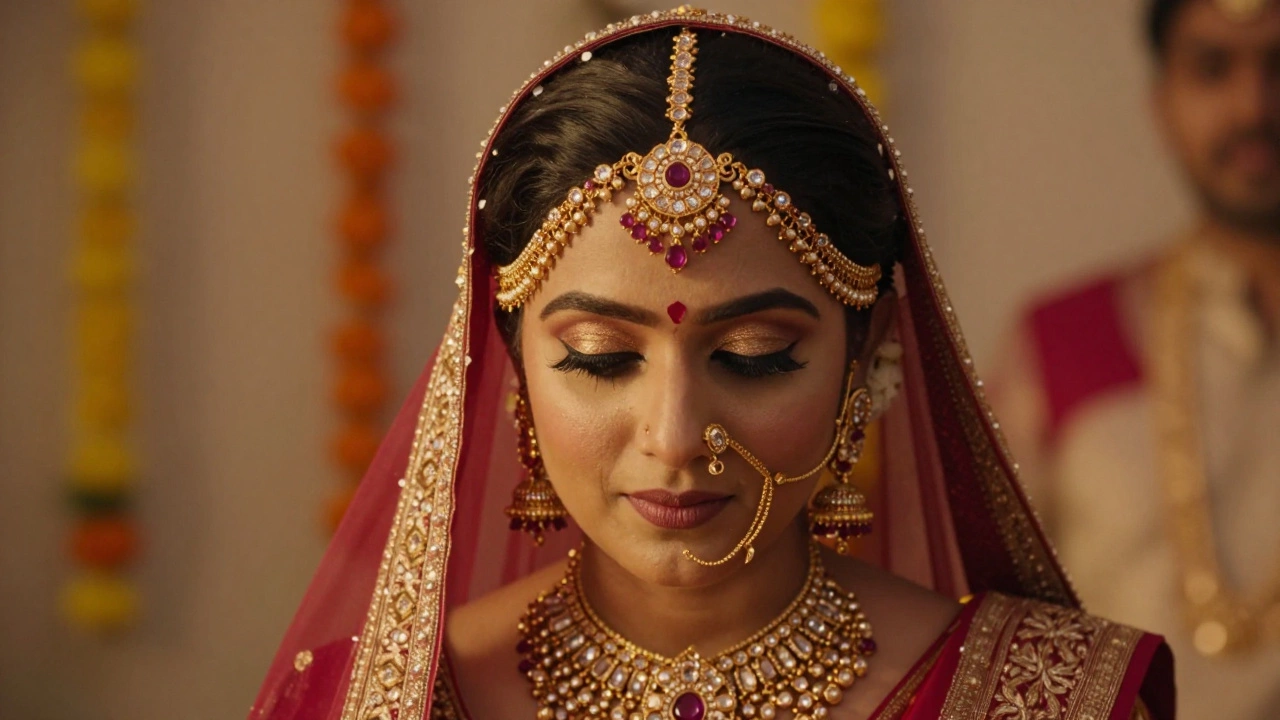
The Indian forehead jewelry is most commonly called a maang tikka. The word comes from two parts: maang, meaning the parting of the hair along the center of the forehead, and tikka, meaning a small ornament or mark. Together, they describe exactly what it is: a piece worn along the hairline, centered on the forehead, often with a pendant that hangs down over the brow.
It’s not just decoration. In many parts of India, especially in North and Central regions, the maang tikka is worn by married women as a symbol of status, tradition, and spiritual protection. The spot where it rests-the center of the forehead-is considered the ajna chakra in Hindu philosophy, the seat of intuition and inner wisdom. Wearing the maang tikka here is believed to help focus energy and ward off negative influences.
More Than Just a Pendant
Don’t picture a simple chain with a single bead. A traditional maang tikka can be elaborate. It often includes a central pendant, usually made of gold or silver, set with uncut diamonds, pearls, or colored stones like rubies and emeralds. The chain or string that holds it in place can be made of gold beads, tiny chains, or even threaded pearls. Some designs extend into two side pieces that drape over the temples, called phul or chandbalis in some regions.
In South India, especially Tamil Nadu and Kerala, you’ll see a similar piece called a thokkuthali. It’s heavier, often made of gold with intricate filigree work, and worn by brides during wedding ceremonies. While technically a different regional style, it serves the same purpose as the maang tikka and is part of the same broader tradition of temple jewelry.
Temple Jewellery: The Roots of the Design
Maang tikkas didn’t just appear out of thin air. Their design traces back to temple jewelry, a style that originated in Tamil Nadu over 1,000 years ago. Artisans in the region created ornate pieces to adorn deities in temples-gods and goddesses dressed in gold, precious stones, and detailed motifs of flowers, peacocks, and serpents.
Over time, these sacred designs were adapted for royal families and eventually for brides. The jewelry wasn’t just beautiful-it carried spiritual weight. The same motifs used to decorate Lord Shiva’s crown were now worn by brides to invoke blessings. Even today, temple jewelry pieces like maang tikkas often feature divine imagery: lotus flowers, conch shells, or the face of a deity.
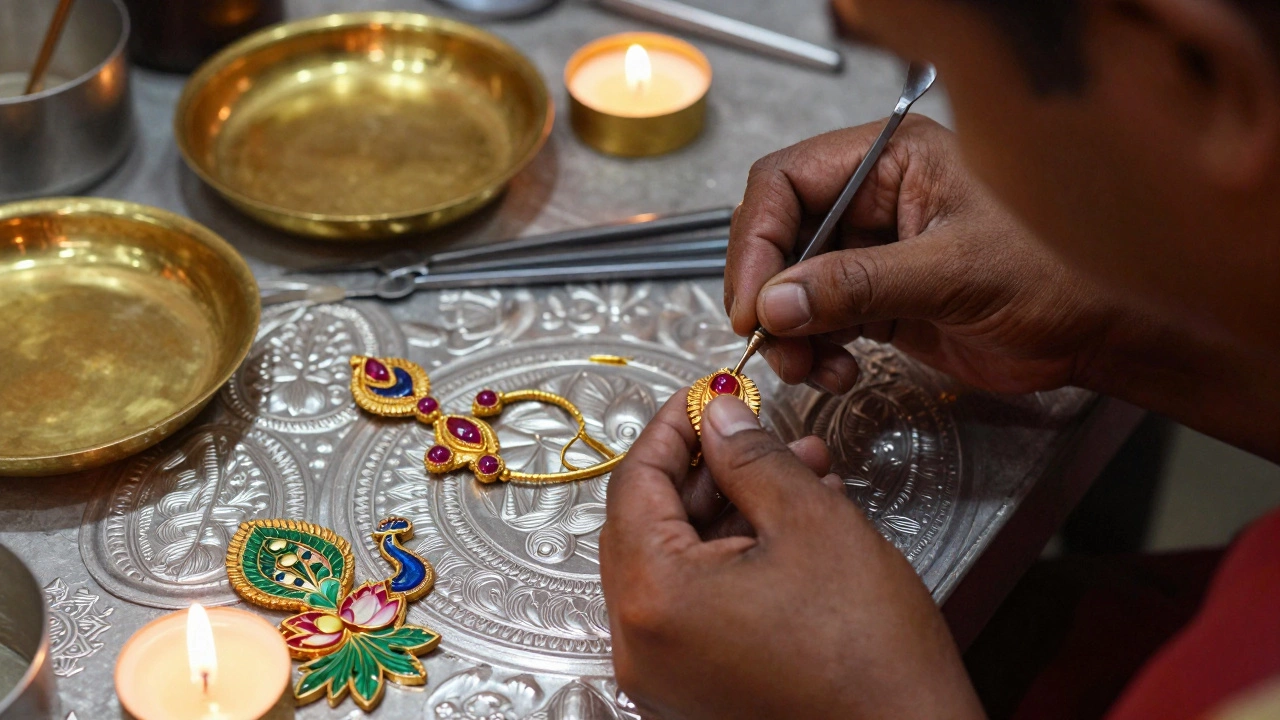
Unlike modern fashion jewelry, temple jewelry is handmade using traditional techniques like kundan, meenakari, and thewa. These methods involve setting stones in pure gold without adhesives, using molten gold to hold each piece in place. The result? Heavy, durable, and richly detailed ornaments meant to last generations.
How It’s Worn
Wearing a maang tikka isn’t as simple as clipping it on. The hair is usually parted cleanly down the center, and the piece is secured with pins or a chain that runs along the hairline and is fastened at the back. For brides, it’s often worn with matching earrings, nose rings, and bangles-creating a full set of temple jewelry.
Some women wear it daily as part of their traditional attire, especially in rural areas or during religious ceremonies. Others save it for weddings, festivals like Diwali or Karva Chauth, or family rituals. In urban settings, modern versions are lighter and more minimalist-small gold studs with a single pendant, or even clip-ons for those who don’t want to pierce their hairline.
Why It’s Still Popular Today
Even with globalization and changing fashion, the maang tikka hasn’t faded. Why? Because it’s not just jewelry-it’s identity. In a world where trends come and go, this piece connects women to their heritage. Bollywood films, fashion shows, and social media have helped keep it alive. Celebrities like Deepika Padukone and Priyanka Chopra have worn elaborate maang tikkas on red carpets, making it a global symbol of Indian elegance.
Brands like Tanishq, Kalyan Jewellers, and CaratLane now offer everything from ₹2,000 clip-on versions to ₹5 lakh heirloom pieces. But the real value isn’t in the price tag. It’s in the craftsmanship, the meaning, and the fact that when a woman wears it, she’s not just accessorizing-she’s continuing a legacy.
Common Misconceptions
Many people confuse the maang tikka with the bindi. The bindi is a dot, usually red or black, applied with paste or adhesive. It’s symbolic, often representing the third eye or marital status, but it’s not jewelry. A maang tikka is metal, stone, and chain-it’s worn on the head, not painted on the skin.
Another mix-up is with the jhoomar, a hair ornament worn on the side of the head, usually by brides in Punjab or Hyderabad. The jhoomar hangs from a comb or hairpin and swings as the wearer moves. It’s beautiful, but it’s not the same as the maang tikka, which is centered on the forehead.
Where to Find Authentic Pieces
If you’re looking for a real temple jewelry maang tikka, avoid mass-produced imports from China or Dubai. Instead, look for artisans in Channapatna, Kancheepuram, or Varanasi. These towns still have families who’ve been making temple jewelry for five or six generations. You’ll find them in local markets or through cooperatives that work directly with craft communities.
Online, stick to sellers who show photos of the making process, mention specific techniques like kundan or meenakari, and provide details about the gold purity and stone sources. A genuine piece will feel heavy, have tiny imperfections from handwork, and come with a certificate of authenticity.
Modern Twists
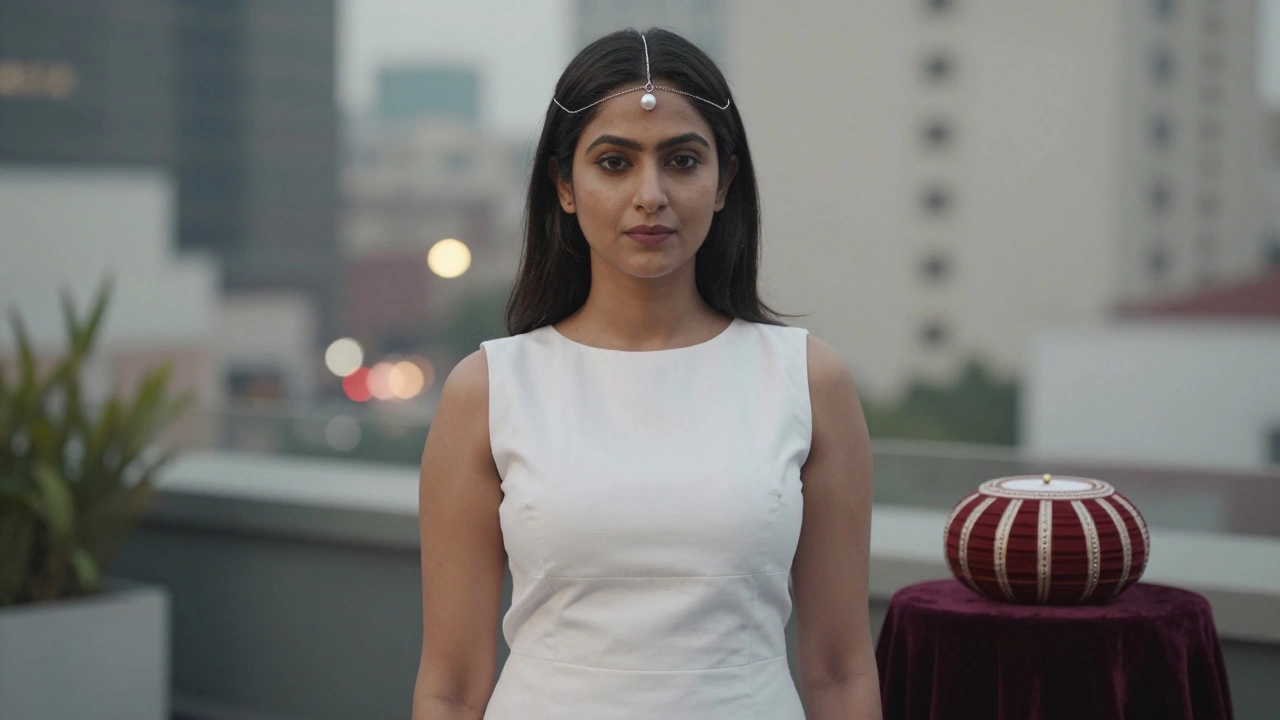
Today’s designers are blending tradition with contemporary style. You’ll find maang tikkas with minimalist gold chains, detachable pendants, or even ones made of oxidized silver for a vintage look. Some are designed to be worn with Western outfits-pairing a delicate maang tikka with a white dress or a blazer creates a striking fusion.
But even the most modern versions keep one thing unchanged: the placement. It still sits at the center of the forehead. Because no matter how it’s styled, that spot holds meaning.
What is the Indian forehead jewelry called?
The Indian forehead jewelry is called a maang tikka. It’s a traditional ornament worn along the hairline, centered on the forehead, and often features a pendant that hangs down over the brow. In South India, similar pieces are known as thokkuthali. Both are part of the broader tradition of temple jewelry.
Is maang tikka only for brides?
No. While it’s most commonly worn by brides during weddings, married women across India wear maang tikkas daily, especially during religious ceremonies, festivals, or family events. In rural areas, it’s part of everyday traditional attire. Modern versions are also worn by women who aren’t married, as a fashion statement.
What’s the difference between maang tikka and bindi?
The bindi is a dot, usually red or black, applied to the forehead with paste, sticker, or paint. It’s symbolic and often worn for spiritual or cultural reasons. The maang tikka is physical jewelry-made of gold, silver, or other metals, set with stones-and is worn on the hairline with a chain or pins. One is painted; the other is worn.
Can men wear maang tikka?
Traditionally, no. The maang tikka is a feminine ornament tied to marital and cultural customs for women. However, in some tribal communities and in modern fashion experiments, men have worn similar forehead ornaments during performances or cultural events. But in mainstream Indian culture, it remains a female accessory.
How much does a real maang tikka cost?
Prices vary widely. A simple clip-on version made with artificial stones can cost as little as ₹1,500. A handmade gold maang tikka with uncut diamonds or rubies, crafted using kundan or meenakari techniques, can range from ₹50,000 to over ₹5 lakh. The price depends on gold weight, stone quality, craftsmanship, and whether it’s antique or new.
Is temple jewelry only from South India?
Temple jewelry originated in Tamil Nadu, but similar styles developed across India. The maang tikka is worn nationwide, with regional variations: heavier gold pieces in the South, intricate kundan work in Rajasthan and Uttar Pradesh, and delicate pearl chains in Bengal. All fall under the umbrella of temple jewelry because they share the same sacred motifs and handcrafting traditions.