Gold Jewelry Damage Risk Checker
Assess how your daily habits might be damaging your gold jewelry. Answer the questions honestly to see your risk level and get personalized recommendations.
Your Jewelry Care Habits
Select the best answer for each question based on your daily routine.
Your Jewelry Care Risk Assessment
Gold jewelry is more than just an accessory-it’s an investment, a heirloom, and often a symbol of personal or cultural significance. But even the most beautifully crafted gold pieces can lose their shine, shape, or value if you’re not careful. Many people wear their gold jewelry daily without realizing how everyday actions slowly wear it down. Whether it’s your grandmother’s mangalsutra, a modern gold chain, or a heavy bangle you wear every day, there are specific things you should avoid to keep your gold looking new for decades.
Don’t Wear Gold Jewelry While Showering or Swimming
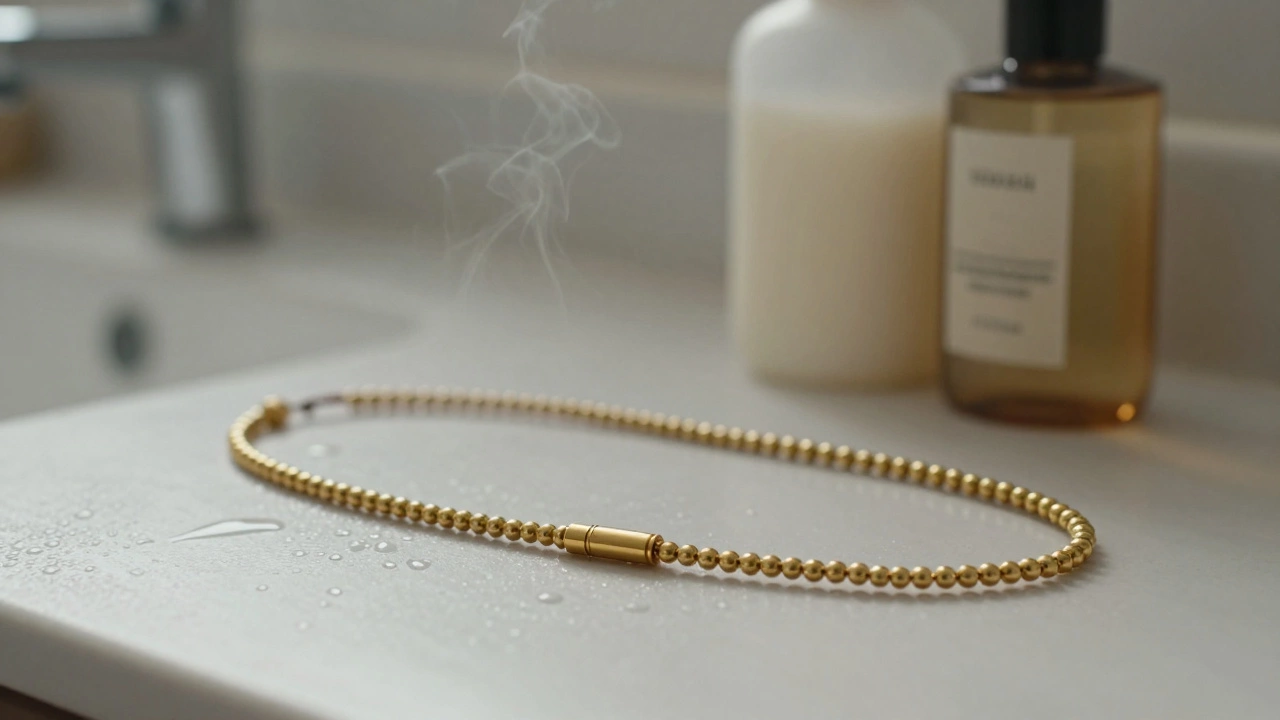
Water might seem harmless, but it’s not the water itself that’s the problem-it’s what’s in it. Chlorine in swimming pools and hot tubs eats away at the metal alloys mixed into gold, especially in 14K or 18K pieces. Over time, this weakens the structure, causing prongs to loosen or chains to snap. Even tap water can carry minerals and chemicals from pipes that leave a dull film on your jewelry. Soaps, shampoos, and body washes contain surfactants and fragrances that build up in crevices, dulling the surface and hiding the natural luster of gold.
One woman in Jaipur noticed her 22K mangalsutra turning matte after just six months of daily showers. She stopped wearing it in the bathroom, polished it gently with a soft cloth, and within weeks, the shine returned. Simple? Yes. But most people never make the connection.
Avoid Contact with Household Chemicals
Gold doesn’t rust, but the metals mixed into it-like copper, silver, or zinc-do. Common household cleaners like bleach, ammonia, and even some window sprays can cause irreversible damage. A single splash of bleach on a gold ring can turn it brittle. I’ve seen rings from customers in Mumbai that looked fine until they cleaned their kitchen with ammonia. The result? A ring that cracked under light pressure.
Even perfumes, hairsprays, and lotions contain alcohols and oils that coat gold and trap dirt. Always put on your jewelry after applying cosmetics. If you wear gold daily, wipe it down with a dry microfiber cloth after each use. It’s not cleaning-it’s protection.
Don’t Sleep or Exercise in Gold Jewelry
Gold is soft. Even 22K gold is more than 90% pure, which means it bends easily. When you sleep, you roll over, twist, and press your jewelry against hard surfaces. A gold bangle can dent. A delicate chain can kink. A pendant can get caught in your hair or pillow stitching.
Exercise is even worse. Sweat contains salt and acids that react with the alloys in gold. The constant movement and friction can scratch the surface or loosen stones. I’ve seen 18K gold earrings bent out of shape from yoga, and necklaces stretched thin from running. If you wear gold for daily comfort, save it for evenings. Use plated or stainless steel for workouts.

Avoid Storing Gold Jewelry Together
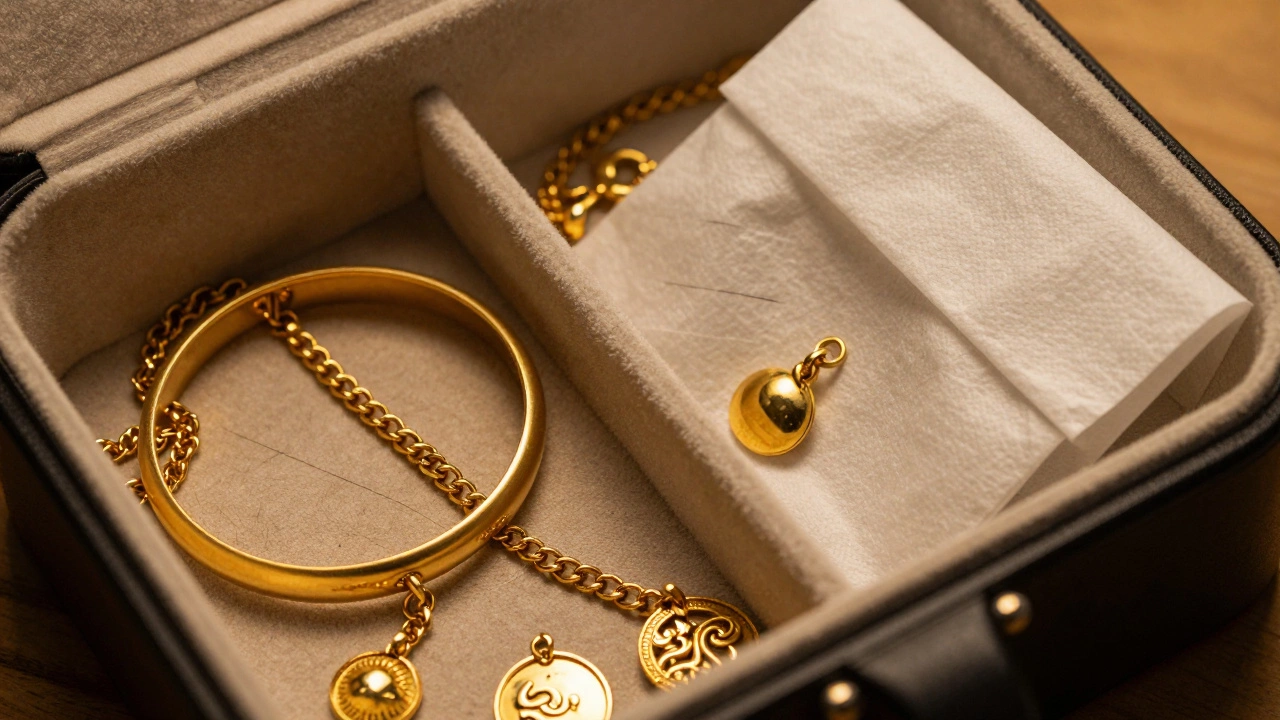
Storing multiple gold pieces in one box or pouch might seem convenient, but it’s a recipe for scratches. Gold is softer than many people think. A heavy gold bracelet rubbing against a thin chain all night will leave visible marks. Even two pieces of the same purity can scratch each other.
Instead, store each piece separately. Use soft-lined jewelry boxes, individual fabric pouches, or even small ziplock bags. If you must stack items, place a soft cloth between them. Some jewelers in Chennai use acid-free tissue paper to wrap gold pieces before storing-simple, cheap, and effective.
Never Use Toothpaste or Baking Soda to Clean Gold
You’ve probably heard online that toothpaste or baking soda is a great DIY cleaner. It’s not. Toothpaste is abrasive. It contains silica particles designed to scrub plaque off teeth-those same particles will scratch gold’s surface. Baking soda, while mild, can leave a gritty residue that gets trapped in engravings or gemstone settings.
One customer brought me a 22K gold pendant that looked like it had been sandblasted. She’d scrubbed it with toothpaste every week for two years. The fine details of the temple design were gone. The only fix? A full professional polish-which cost more than the original piece was worth.
For home cleaning, use warm water, a drop of mild dish soap, and a soft-bristled toothbrush. Gently brush the surface, rinse under lukewarm water, and pat dry with a lint-free cloth. That’s it. No scrubbing. No soaking. No magic solutions.
Don’t Ignore Loose Stones or Weak Prongs
If your gold jewelry has diamonds, emeralds, or rubies, the setting matters just as much as the metal. Gold prongs can wear thin over time, especially if the piece is worn daily. A loose stone might not fall out immediately, but the risk grows with every bump, knock, or tug.
Check your jewelry every three months. Hold it under a bright light and look closely at the settings. If you see a gap, a slight wobble, or a stone that doesn’t sit flush, take it to a jeweler. Most repairs cost under ₹500 in India. Waiting until the stone falls out? That’s a loss you can’t recover.
Avoid Extreme Temperatures
Gold expands and contracts with heat. Sudden temperature changes-like leaving your jewelry on a car dashboard in summer or near a heater in winter-can cause internal stress. Over time, this weakens the metal’s structure. In extreme cases, it can cause cracks that aren’t visible until the piece breaks.
Also, avoid leaving gold near open flames. A lighter or candle might not seem dangerous, but a few seconds of direct heat can alter the alloy composition, changing the color or making the metal brittle. This is especially true for yellow gold, which can turn slightly reddish after overheating.
Don’t Assume All Gold Is the Same
Not all gold jewelry is created equal. 24K is pure but too soft for daily wear. 22K is common in India and holds up better, but still dents easily. 18K and 14K are harder and more durable, but contain more alloys that react to chemicals. If you’re buying or wearing gold, know what you’re dealing with.
For daily wear, 18K is often the sweet spot. For heirloom pieces, 22K is traditional-but treat it like fine china. Store it carefully. Wear it sparingly. Clean it gently. That’s how you keep it alive for generations.
When in Doubt, See a Professional
Most gold jewelry damage is preventable. But if you’ve already noticed discoloration, scratches, or loose stones, don’t try to fix it yourself. A professional jeweler can assess the damage, clean it with ultrasonic tools, re-polish it, and reinforce settings without losing weight or detail.
Look for jewelers who use non-abrasive cleaning methods and have experience with traditional Indian gold designs. Many small-town jewelers in Kerala, Tamil Nadu, or West Bengal still use age-old techniques passed down for centuries. They know how to handle temple jewelry without damaging intricate filigree work.
Regular check-ups every 6-12 months can extend the life of your gold jewelry by decades. Think of it like servicing a car-you don’t wait until the engine fails.
Gold jewelry lasts longer than we do. But only if we treat it right.
Can I wear gold jewelry in the ocean?
No. Saltwater is highly corrosive to the alloys in gold jewelry, especially below 22K purity. It can cause pitting, discoloration, and weaken metal over time. Even if your jewelry looks fine after a swim, internal damage may already be happening. Always rinse and dry gold thoroughly after any saltwater exposure, but better yet-leave it behind.
Is it okay to clean gold with vinegar?
No. Vinegar is acidic and can damage the surface of gold, especially if it’s alloyed with copper or silver. It may remove tarnish temporarily, but it also eats away at fine details and can weaken settings. Stick to mild soap and water. Vinegar has no place in gold care.
How often should I get my gold jewelry professionally cleaned?
If you wear your gold daily, have it cleaned and inspected every 6 months. For occasional wear, once a year is enough. Professional cleaning uses ultrasonic machines and steam that safely remove buildup without scratching. It also lets the jeweler check for loose stones, worn prongs, or hidden damage you can’t see.
Does gold jewelry tarnish?
Pure gold (24K) doesn’t tarnish. But most jewelry is 22K, 18K, or lower, meaning it contains other metals like copper or silver. These can react with air, sweat, or chemicals and develop a dull film. It’s not rust-it’s oxidation. A gentle polish restores it. Don’t confuse tarnish with damage. It’s fixable.
Can I wear gold jewelry every day?
Yes-but not all pieces. Delicate chains, thin bangles, or jewelry with stones are better reserved for special occasions. For daily wear, choose thicker, simpler designs in 18K or 14K gold. Always remove jewelry before showering, exercising, or cleaning. Consistent care matters more than frequency of wear.