Nose Piercing Style Finder
Not sure which nose piercing is right for you? Answer these three questions to get a personalized recommendation based on anatomy, healing time, and versatility.
Recommended:
Why this fits you:
Ever stared in the mirror, holding a tiny diamond stud or a delicate gold ring, wondering exactly where it’s supposed to go? It sounds simple enough-poke it through your nose-but the reality is surprisingly nuanced. You might have heard conflicting advice from friends, family, or even online forums. Some say left is for marriage; others say right is for health. Then there are those who wear rings on one side and studs on the other, leaving you confused about what looks best.
The truth is, there isn’t just one "right" place. The perfect spot depends entirely on three things: your anatomy, your style goals, and the cultural meaning behind the choice. Whether you’re going for a subtle office-friendly look or a bold traditional statement, understanding these factors will help you make a decision you won’t regret when the swelling goes down.
Anatomy First: Finding Your Sweet Spot
Before we talk about superstitions or fashion trends, let’s talk biology. Your nose is not a symmetrical canvas. If you look closely in the mirror, you’ll likely notice that one nostril is slightly larger than the other, or that one side of your nasal cartilage curves differently. This asymmetry is normal, but it matters when you’re choosing a piercing location.
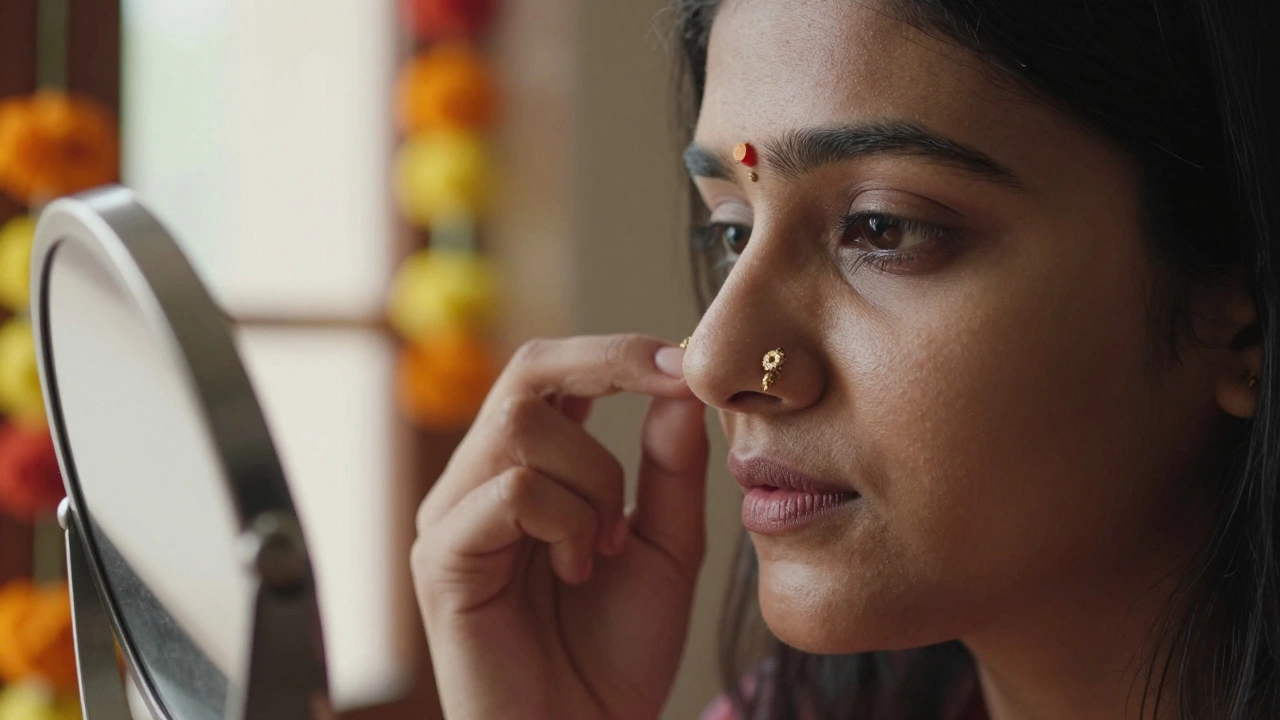
Nostril Piercing is the most common type of nose piercing, placed in the soft tissue of the nostril rim. To find the ideal spot, pinch the thickest part of your nostril. That fleshy area provides the best support for the jewelry. If you pierce too high, near the hard cartilage, you risk migration-the jewelry slowly moving out of position-or excessive pain during healing. If you go too low, close to the lip, the jewelry might get caught on facial hair or interfere with eating.
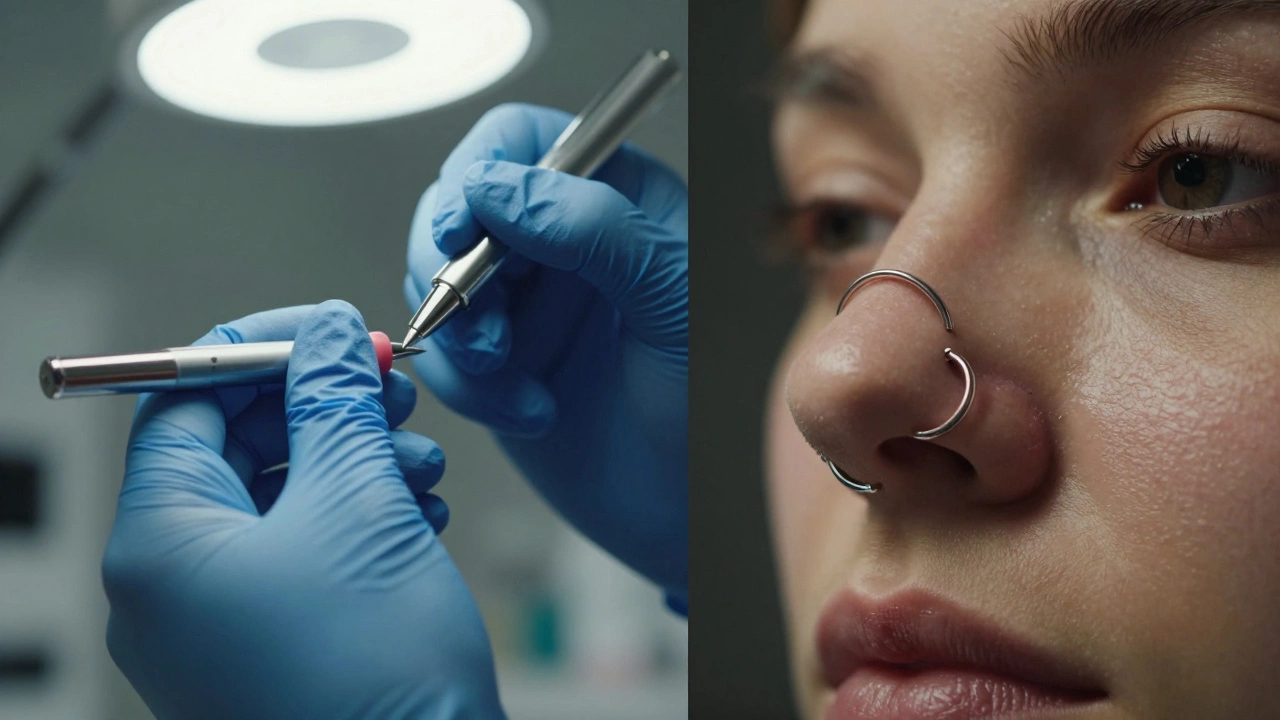
Here’s a quick trick: Smile widely. Notice which nostril flares more? Often, people choose the side that feels more balanced when they smile. For example, if your left nostril is naturally smaller, a larger hoop on the right might create visual symmetry. Conversely, a small stud on the left might accentuate its delicacy. Always consult with a professional piercer who can assess your unique nasal structure. They use sterile needles and mark the spot with a surgical pen before proceeding, ensuring the angle allows for comfortable jewelry insertion later.
The Left vs. Right Debate: Myth vs. Reality
You’ve probably heard the old wives’ tale: "Pierce the left side if you’re married, the right if you’re single." Or maybe you’ve heard the Ayurvedic claim that the left nostril connects to female reproductive organs, making it beneficial for childbirth pain relief. These beliefs run deep in many cultures, particularly in South Asia, but how much truth is there?
Let’s break it down scientifically first. There is no medical evidence that piercing either nostril affects fertility, menstruation, or childbirth. The nervous system does connect various parts of the body, but a needle in the nose doesn’t send therapeutic signals to the uterus. So, if you’re looking for health benefits, you might be disappointed. However, culture is powerful, and for many, the symbolic weight of the choice matters more than biology.
| Culture/Region | Left Side Meaning | Right Side Meaning |
|---|---|---|
| India (Hindu Tradition) | Marriage status, auspiciousness | Single status, sometimes aesthetic preference |
| Middle East | Often purely decorative | Often purely decorative |
| Western Fashion | No specific meaning | No specific meaning |
| Ayurveda | Linked to female reproductive health | Linked to male reproductive health |
In modern Western fashion, the side you choose is almost entirely personal. Many celebrities and influencers switch sides based on what complements their hairstyle or other facial features. If you have a cowlick that sweeps to the right, a piercing on the left might draw attention away from the hairline. It’s all about balance. Don’t feel pressured by tradition unless it holds personal significance for you. Your nose, your rules.
Septum vs. Nostril: Choosing the Style
Not all nose pins go in the nostril. In recent years, the Septum Piercing has seen a massive resurgence in popularity. Unlike the nostril piercing, which sits on the outside of the nose, the septum piercing goes through the thin piece of tissue between your nostrils, known as the "sweet spot."
Why do people choose the septum? One major advantage is versatility. You can flip the jewelry up inside your nose when you need to hide it for work or formal events, then flip it down for nights out. Nostril piercings don’t offer this flexibility. Additionally, septum piercings often heal faster-typically within 6 to 8 weeks compared to 4 to 6 months for nostrils.
However, the septum isn’t for everyone. If you have a deviated septum or very sensitive nasal passages, the procedure can be uncomfortable. Also, the initial swelling can be significant, requiring a larger initial ring that you’ll need to downgrade later. Nostril piercings, while slower to heal, tend to be less painful initially and allow for a wider variety of jewelry styles, including L-shaped studs, screws, and hoops.
Consider your lifestyle. Do you play contact sports? A septum ring might get knocked easily. Do you work in a conservative corporate environment? A hidden septum or a tiny diamond stud on the nostril might be safer bets. Think about how you want to interact with the jewelry daily. Some people love touching their nose rings; others prefer to forget they’re wearing them.
Jewelry Shapes and Their Impact on Placement
The type of jewelry you plan to wear should influence where you place the piercing. Not all holes fit all jewelry. Here’s how different shapes affect your choice:
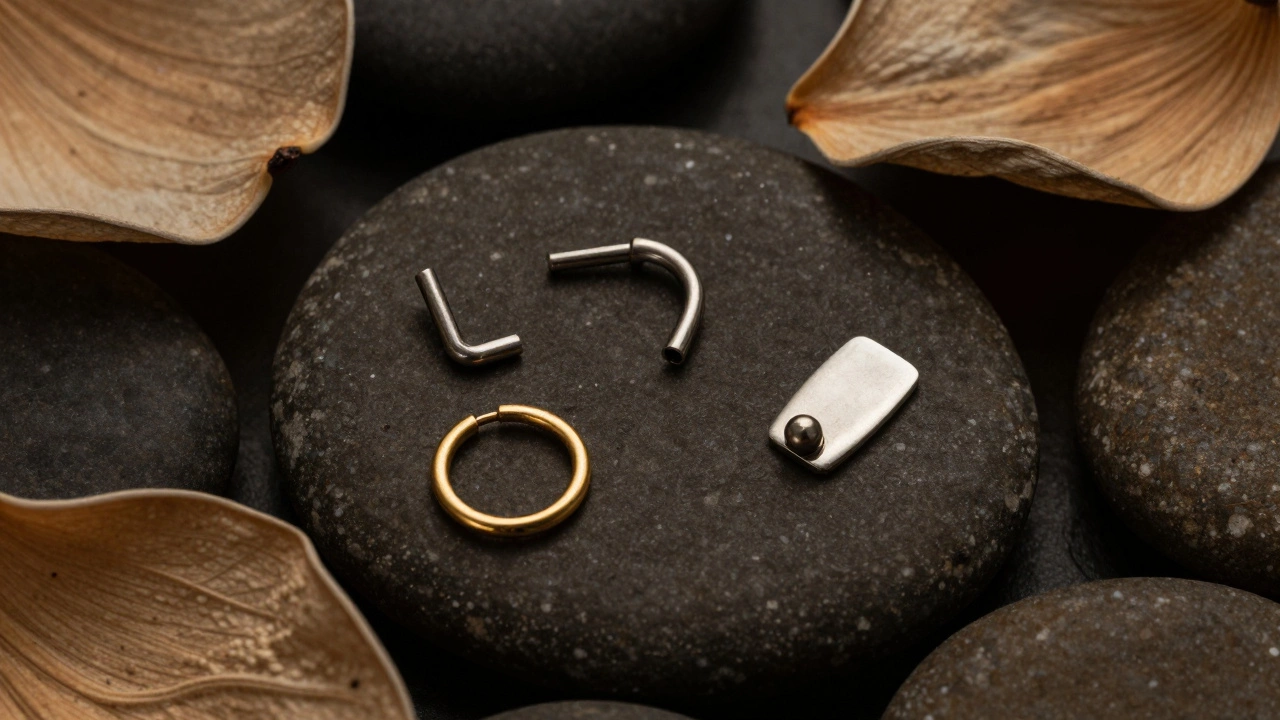
- L-Shaped Studs: These rely on gravity and friction to stay in place. They work best in nostril piercings that are fully healed and have a tight fistula (the hole). If your piercing is new or loose, an L-shape might fall out frequently.
- Nail Screws: These have a curved end that twists into the piercing channel. They are secure and comfortable, making them ideal for long-term wear in nostril piercings. They require a precise angle during piercing to ensure the screw engages properly.
- Hoops/Rings: Hoops need space to rotate. If you have a small nostril, a large hoop might look disproportionate or irritate the surrounding skin. Ensure your piercer marks a spot that allows the ring to sit comfortably without digging into the upper cartilage.
- Labrets: Flat-back labret studs are the gold standard for healing. They minimize movement and reduce irritation bumps. If you’re prone to keloids or irritation, start with a labret and switch to decorative pieces only after full healing.
If you’re torn between a stud and a hoop, remember that you can usually switch later. Most piercers recommend starting with a straight barbell or labret for healing, then transitioning to your desired style once the tissue is stable. Trying to insert a hoop into a fresh nostril piercing can cause trauma and delay healing significantly.
Healing Considerations and Aftercare
Where you place the piercing also impacts how easy it is to clean. Nostril piercings are exposed to dust, makeup, and accidental touches throughout the day. Septum piercings are somewhat protected by the shape of the nose but can collect mucus. Both require diligent aftercare.
Use a saline solution twice daily for the first few months. Avoid alcohol or hydrogen peroxide, which can dry out the tissue and slow healing. Rotate the jewelry only if instructed by your piercer-modern consensus suggests leaving it alone to prevent micro-tears. Watch for signs of infection: excessive redness, hot to the touch, yellow/green discharge, or persistent pain. Mild swelling and clear fluid are normal.
If you choose the nostril, be mindful of sleeping positions. Sleeping on the pierced side can cause pressure sores. Consider using a travel pillow with a hole in the center to keep pressure off the area. For septum piercings, avoid blowing your nose forcefully for the first week, as this can displace the jewelry or reopen the wound.
Final Thoughts: Trust Your Instincts
There is no universal "right" place to wear a nose pin. The best placement is the one that makes you feel confident, comfortable, and aligned with your personal style. Whether you follow tradition, prioritize aesthetics, or focus on practicality, the key is to research, consult a professional, and listen to your body. Your nose is a central feature of your face, and enhancing it with jewelry should be a joyful experience, not a source of stress.
Does it matter which side I get my nose pierced?
Medically, no. Culturally, yes, depending on your background. In India, the left side is traditionally associated with marriage. In Western fashion, it’s purely a personal aesthetic choice. Choose the side that balances your facial features or aligns with your cultural values.
Is a septum piercing easier to hide than a nostril piercing?
Yes. A septum ring can be flipped up inside the nostrils, making it completely invisible. Nostril piercings cannot be hidden without removing the jewelry, which risks closing the hole if it’s not fully healed.
How long does it take for a nose piercing to heal?
Nostril piercings typically take 4 to 6 months to heal fully. Septum piercings heal faster, usually within 6 to 8 weeks. Healing times vary based on individual biology and aftercare diligence.
Can I change my jewelry immediately after getting pierced?
No. It’s best to wait until the piercing is fully healed. Changing jewelry too early can introduce bacteria, cause trauma, and lead to irritation bumps or infection. Stick with the initial implant-grade titanium or steel jewelry recommended by your piercer.
What is the least painful nose piercing?
Most people report that nostril piercings are less painful than septum piercings because the septum involves piercing through thicker tissue and closer to nerve endings. However, pain tolerance varies greatly from person to person.