Indian Customs Jewelry Duty Calculator
Estimate your liability before you land. This tool helps you determine if you need the Red Channel and estimates potential duties.
Customs Assessment
Action Plan
You just bought a stunning set of temple jewellery in Chennai. The craftsmanship is intricate, the gold shines under the airport lights, and you're eager to wear it home. But as you approach the customs counter, a knot forms in your stomach. Do you have to declare this bling? Will they tax you? Or worse, will they confiscate it?
Here’s the blunt truth: yes, you generally have to declare high-value items, but no, you won’t necessarily pay a fortune if you know the rules. Indian customs regulations are strict about precious metals, especially for residents returning from abroad or non-residents bringing goods into the country. This guide breaks down exactly what you need to do so you can breeze through that green channel-or the red one-with confidence.
The Golden Rule: What Counts as "Jewelry"?
Before we talk about taxes, let’s clarify what customs officers are looking at. They don't care about costume jewelry made of plastic or brass unless it looks suspiciously like gold. They care about precious metals and stones. If your piece contains gold, silver, platinum, diamonds, emeralds, or rubies, it falls under their radar.
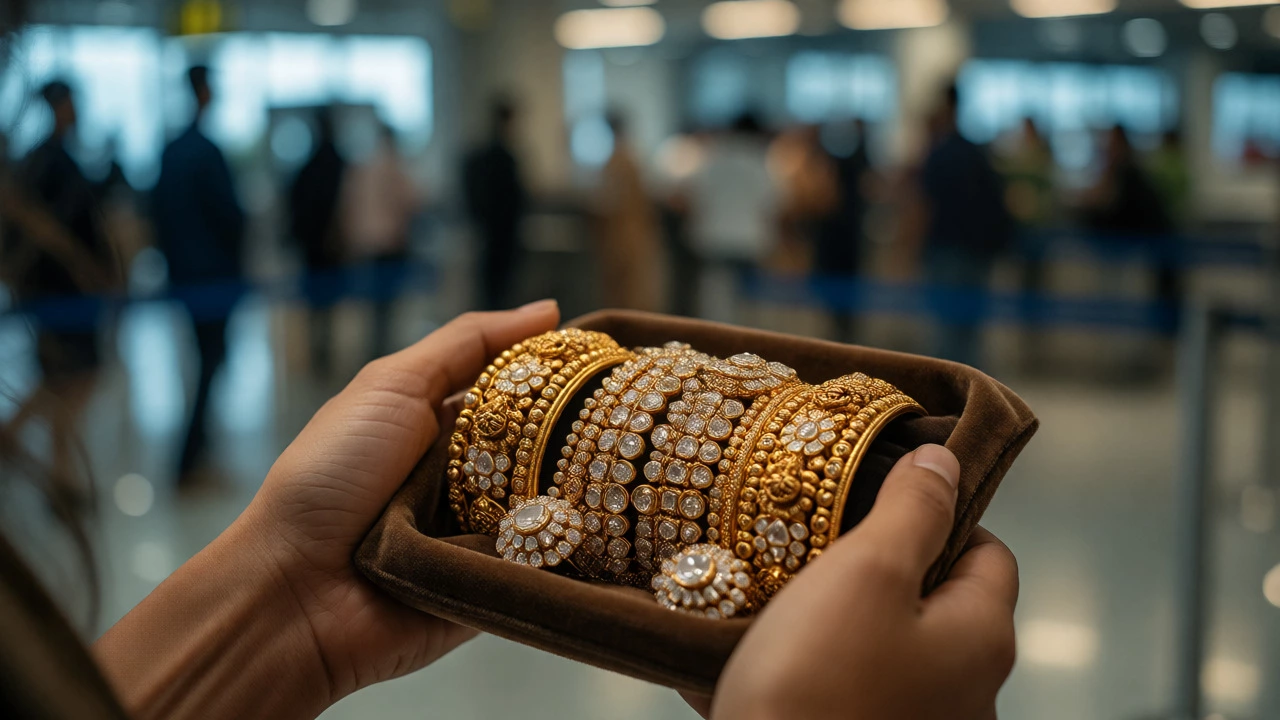
Most travelers confuse personal use with commercial intent. If you’re wearing a single pair of earrings and a necklace, you’re usually fine. But if you have a velvet pouch containing five heavy gold bangles and two diamond rings, that raises eyebrows. Why? Because it looks like stock for a shop back home, not just your daily wear.
| Item Type | Typical Value Range (INR) | Declaration Required? | Risk Level |
|---|---|---|---|
| Worn Personal Use (1-2 pieces) | < ₹50,000 | No (Green Channel) | Low |
| Carried Loose (Multiple pieces) | ₹50,000 - ₹1 Lakh | Yes (Red Channel) | Medium |
| High-Value Sets/Sets for Family | > ₹1 Lakh | Yes (Mandatory) | High |
| Antique/Temple Jewellery | Varies (Appraisal needed) | Yes | High |
Know Your Status: Resident vs. Non-Resident
Your passport status changes everything. Indian Customs treats people differently based on where they live.
For Residents of India: If you live in India and are returning from a trip abroad, you get a specific duty-free allowance. As of current regulations, you can bring in used personal effects without paying duty. However, new jewelry purchased abroad counts toward your total value limit. For air passengers, this limit is typically ₹50,000 for men and ₹1 lakh for women (plus any duty-free alcohol/tobacco). If your new gold jewelry pushes you over this limit, you’ll pay duty on the excess amount.
For Non-Resident Indians (NRIs) and Foreigners: This is trickier. NRIs often carry significant wealth in the form of gold. You are allowed to bring in personal effects, but if the value exceeds reasonable limits for personal use, you must declare them. Foreign tourists face stricter scrutiny. If you buy a ₹2 lakh necklace in Dubai and fly to Delhi, you cannot simply walk through the green channel. You must declare it.
The Temple Jewellery Exception: Antique vs. New
This is where things get interesting for our readers interested in traditional South Indian aesthetics. Temple jewellery is distinct because it is often handcrafted using traditional methods like lost-wax casting. It isn't always mass-produced factory gold.
If you are buying antique temple jewellery (older than 100 years), different laws apply. The Antiquities and Art Treasures Act might require an export certificate from the seller. Without this, Indian customs could seize it upon exit. Conversely, when entering India, if you claim an item is antique, be prepared to prove it. Customs officers aren't gemologists; they look for receipts. If you say it's a family heirloom brought back from a trip, they might ask for photos of you wearing it previously.
For modern reproductions of temple styles-like those popular in Chennai bridal markets-they are treated as standard new gold purchases. No special antique exemption applies unless it has documented provenance.

How to Calculate Duty: The Math Behind the Bling
Let’s say you spent ₹1.5 lakhs on a new gold chain and pendant while visiting London. You’re an Indian resident returning home. Your duty-free allowance for women is ₹1 lakh. That means ₹50,000 is taxable.
But wait, it’s not just income tax you’re paying. Import duty on gold jewelry in India is substantial. Historically, basic customs duty plus social welfare surcharge and education cess adds up. In recent years, rates have fluctuated, but expect to pay roughly 15% to 20% effective rate on the assessed value. So, on ₹50,000, you might owe around ₹7,500 to ₹10,000 in duties. Is it worth hiding? Probably not. Penalties for non-declaration can include fines up to three times the duty amount or even seizure of the goods.
Pro Tip: Keep the Receipts
Never travel with expensive jewelry without proof of purchase. A crumpled receipt from a reputable jeweler establishes the value. If you don’t have a receipt, customs will assess the value themselves, often using international gold rates plus making charges. Their estimate might be higher than what you actually paid.
Step-by-Step: Clearing Customs Smoothly
Don’t panic at the counter. Follow these steps to ensure a hassle-free experience.
- Prepare Before Landing: Gather all receipts for jewelry purchased abroad. If you’re carrying multiple pieces, take photos of yourself wearing them before leaving the country (for residents returning) or keep them in separate, clear bags.
- Choose the Right Channel: If your total new purchases (jewelry + electronics + gifts) exceed your duty-free limit, go to the Red Channel. Do not gamble on the Green Channel if you have heavy gold. Officers can spot weight discrepancies in luggage X-rays.
- Declare Honestly: Hand over your receipts. Say clearly, "I am declaring this gold jewelry purchased abroad." Transparency builds trust.
- Assessment: The officer will check the purity (often via hallmarks) and calculate duty. Pay the fee via card or cash. Get a stamped declaration slip.
- Exit: Keep the stamped slip safe. You may need it if stopped again or for future reference.

Pitfalls to Avoid
- Wearing Too Much: Wearing ten gold bangles and three necklaces might trigger suspicion that you’re smuggling rather than traveling. Distribute heavy items across family members if possible, but keep receipts for each person.
- Ignoring Hallmarks: Ensure your jewelry has BIS hallmarking if you plan to resell it in India later. Imported jewelry without hallmarks might face extra checks or require re-assay, which costs time and money.
- Understating Value: Don’t try to sneak a ₹5 lakh diamond ring as a "gift." Customs knows market prices. Under-declaration leads to penalties.
Frequently Asked Questions
Can I bring unlimited gold to India?
No, there is no absolute unlimited quota for general travelers. While there is no hard cap on the number of pieces, the total value must align with "reasonable personal use." If you carry 5kg of gold coins, it will be treated as commercial import regardless of how many pieces you wear. For most tourists and NRIs, sticking to personal-use quantities (under ₹1-2 lakhs in value) avoids complex commercial import procedures.
Do I have to pay tax on old jewelry I wore before my trip?
Generally, no. Used personal effects brought back by Indian residents are exempt from duty. However, you must prove they were yours before departure. Photos of you wearing the jewelry before the trip, or old purchase bills, serve as excellent evidence. If you can't prove prior ownership, customs may treat it as a new purchase.
What happens if I don't declare my jewelry?
If caught, you face severe consequences. Customs can confiscate the undeclared goods. Additionally, you may be fined up to three times the duty payable. In cases of deliberate evasion involving high values, legal action under the Customs Act, 1962, is possible. It’s never worth the risk for a few thousand rupees in saved duty.
Are temple jewellery designs taxed differently?
Not inherently. Taxation depends on the material (gold/silver/diamonds) and whether it is new or used. However, authentic antique temple jewellery might fall under antiquity laws, requiring export/import certificates. Modern replicas are taxed as standard new gold imports based on weight and purity.
Can I send jewelry by post instead of carrying it?
Yes, but postal imports often incur higher handling fees and stricter valuation checks. Courier services also charge service fees. Carrying it personally allows you to utilize your baggage allowance and duty-free limits more efficiently. Plus, you avoid the risk of loss or theft during transit.
Final Thoughts: When in Doubt, Declare
Traveling with jewelry should feel exciting, not stressful. The key is preparation. Know your duty-free limit, keep your receipts organized, and be honest with customs officers. Whether you’re bringing home a delicate mangalsutra or a heavy bridal set, following these rules ensures your beautiful acquisitions stay in your hands, not in a customs locker.