
Nose Pin Style Matcher
Fill out the form to receive your personalized nose pin recommendations.
You’ve seen that perfect nose pin on Instagram or in a boutique window. It sparkled under the lights, and you thought, "That’s me." But when you get home and hold it up to your mirror, something feels off. Maybe it looks too heavy, maybe it disappears entirely, or maybe it just doesn't match the vibe of your outfit. This isn't about the jewelry being bad; it's about compatibility. Choosing the right nose pin is less about following trends and more about understanding how metal interacts with your specific bone structure, skin tone, and daily life.
Figuring out if a piece suits you involves looking at three main things: your face shape, your nostril anatomy, and your lifestyle. A tiny stud might look elegant on a petite frame but get lost on someone with stronger features. Conversely, a large hoop can overwhelm a delicate face. Let’s break down exactly how to test this before you spend money, so you don’t end up with another piece of jewelry sitting in a drawer collecting dust.
The Mirror Test: Assessing Your Face Shape
Your face shape acts as the canvas for any facial jewelry. The goal is usually balance. If you have angular features, you might want softer curves to offset them. If you have round features, you might want lines that add definition. Here is how different shapes generally react to nose pins:
- Oval Faces: Lucky you. Most styles work here. You can experiment with hoops, studs, and chains without worrying too much about proportion.
- Round Faces: Avoid small, circular studs that mimic the width of your face. Instead, opt for longer designs, such as teardrop-shaped drops or larger hoops that create vertical lines. These draw the eye up and down, elongating the face.
- Square Faces: Strong jawlines benefit from curved elements. Hoops or rounded studs soften the angles. Avoid sharp, geometric diamonds that might emphasize the boxiness unless you are going for a bold, edgy look.
- Heart-Shaped Faces: Wider foreheads and narrower chins mean you need weight lower down. A nose pin with a dangling element or a slightly larger bottom can help balance the top-heavy appearance.
- Long/Oblong Faces: Wide hoops or horizontal designs can shorten the appearance of a long face. Tiny studs might make the face look even longer by drawing attention only to the center point.
To check this quickly, tie your hair back and look straight into the mirror. Trace your face shape with a lipstick or dry-erase marker on the glass. Does the nose pin you are considering complement those lines or fight against them?
Nostril Anatomy: Size and Thickness Matter
Face shape is half the battle. The other half is physical fit. Not all noses are created equal, and a design that fits one person might pinch, slide, or fall off another. You need to assess your nostril thickness and hole placement.
If you have thin nostrils, heavy gold bands or thick hoops will drag the piercing down, causing irritation over time. Lightweight materials like titanium or thin gold wire are better choices. For thicker nostrils, dainty filigree work might feel invisible or get caught in fabric. You need structural integrity-solid bands or secure screw-backs.
Placement also dictates what works. A standard nostril piercing (side of the nose) handles most traditional pins. However, if you have a high nostril piercing, long dangling chains might hit your cheekbone when you smile. Always do a "smile test." Smile widely while holding the proposed design near your nose. If it hits your cheek or pulls uncomfortably, it won’t suit your dynamic expressions, no matter how pretty it looks static.
| Nostril Type | Recommended Styles | Avoid |
|---|---|---|
| Thin/Delicate | Fine hoops, micro-studs, lightweight screws | Heavy solid gold bands, large gemstones |
| Thick/Firm | Sturdy hoops, substantial studs, septum rings | Ultra-thin wires that bend easily |
| High Placement | Short drops, studs, short chains | Long danglers that touch cheeks |
| Low Placement | Standard hoops, medium-length drops | Very short studs that sit too low |
Skin Tone and Metal Choice
A nose pin can clash with your complexion just as badly as it clashes with your face shape. This is where color theory comes in handy. Generally, cool undertones (pink, red, or blue hints) look best with silver, white gold, platinum, or rose gold. Warm undertones (yellow, peachy, or golden hints) shine with yellow gold, brass, copper, or bronze.
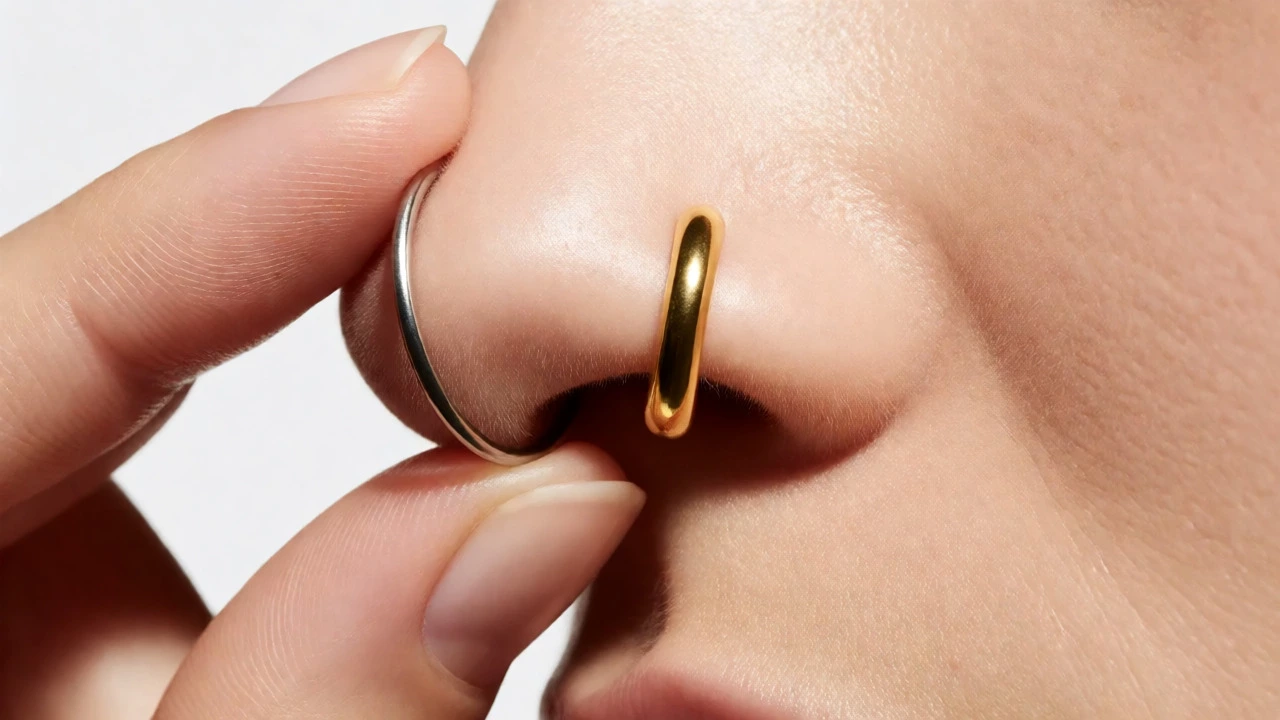
But don’t let rules dictate everything. Many people mix metals successfully. The key is contrast. If you have very pale skin, a dark oxidized silver might provide striking contrast. If you have deep brown skin, bright yellow gold creates a radiant glow. Try holding two different metal pieces against your cheek, not just your nose. Sometimes the reflection on your cheek tells you more than the direct view of the nose itself.
Consider your natural coloring beyond skin tone. Do you wear mostly black and white clothes? Silver might blend seamlessly. Do you wear earth tones? Gold complements browns and greens. Your wardrobe should inform your jewelry choice because you’ll be wearing this every day, not just for special occasions.
Lifestyle Compatibility: Practicality Over Aesthetics
You might love the look of a massive floral nose ring, but do you wear glasses? Do you sleep on your side? Do you work in an environment where snagging jewelry is a hazard? A nose pin "suits" you only if you can actually wear it comfortably in your daily routine.
Glasses wearers often struggle with large hoops that hit the temple arms of their frames. In this case, a smaller hoop or a stud with a subtle curve is far more practical. If you have sensitive skin, nickel-containing alloys might cause reactions regardless of how good they look. Opt for hypoallergenic materials like surgical steel, titanium, or 14k+ gold.
Think about maintenance too. Intricate filigree designs trap makeup and sweat, requiring frequent cleaning. Simple polished surfaces wipe clean in seconds. If you hate cleaning jewelry, choose simple. If you enjoy the ritual, go complex. Honesty about your habits saves you frustration later.
The Digital and Physical Try-On Hack
Before buying, use technology. Many apps now offer AR try-ons for facial jewelry. While not perfect for scale, they give a rough idea of placement and size. For a more accurate method, take a photo of yourself facing forward with neutral lighting. Open a photo editor on your phone. Cut out an image of the nose pin you want to buy (or draw a circle/shape representing it). Paste it onto your nose in the photo. Zoom out. Does it look proportional? Zoom in. Does the detail distract from your eyes?
If shopping online, check return policies rigorously. What looks good on a model with a narrow nose might look bulky on yours. Order two sizes if possible-one smaller, one larger-and keep the one that feels invisible once it’s on. The best jewelry is the kind you forget you’re wearing because it feels like part of you.

Common Mistakes to Avoid
One major mistake is ignoring the "movement" factor. Jewelry moves when you move. A rigid, heavy piece might swing painfully when you run or turn your head quickly. Another error is matching everything perfectly. Trying to match your nose pin exactly to your earrings or necklace can look dated. Modern styling favors intentional mismatching or varying textures. For example, pair a textured gold nose pin with smooth silver earrings.
Also, beware of trend-chasing. Micro-nose studs were huge a few years ago, but they can be difficult to see and maintain. Large statement hoops are trending again, but they require confidence and care. Choose based on your personality, not just the current Instagram feed. If you’re shy, a loud hoop might make you self-conscious. If you’re expressive, a subtle stud might feel boring.
Final Checklist Before Buying
Run through this quick list before clicking "purchase" or handing over cash:
- Face Balance: Does the shape counterbalance my dominant facial features?
- Physical Fit: Will it stay secure without pinching or sliding?
- Metal Harmony: Does the color enhance my skin tone?
- Lifestyle Check: Can I wear this while working, sleeping, and exercising?
- Comfort Test: Did I simulate movement (smiling, turning head) to ensure no collisions?
Remember, "suiting" someone is subjective. Confidence plays a huge role. If you feel awkward wearing it, it probably doesn’t suit you yet, regardless of technical rules. Start with versatile pieces-a medium-sized hoop or a classic diamond stud-and branch out once you understand what feels natural. Your nose pin should highlight your face, not hide behind it or compete with it.
Does face shape really determine if a nose pin suits me?
Yes, significantly. Face shape influences visual balance. Angular faces often benefit from curved jewelry to soften features, while round faces may look elongated with vertical or dangling designs. However, personal preference and confidence can override these general guidelines.
What metal is best for sensitive skin?
Titanium, niobium, and implant-grade stainless steel are the safest options for sensitive skin as they are hypoallergenic. High-karat gold (14k or higher) and platinum are also generally safe. Avoid cheap alloys containing nickel, which is a common allergen.
Can I wear a nose pin if I wear glasses?
Absolutely, but choose carefully. Large hoops or long dangling chains may interfere with the temples of your glasses. Opt for smaller hoops, studs, or designs that sit close to the nostril to avoid collision and discomfort.
How do I know if the size is right?
The size should be proportional to your nostril thickness and overall face size. Thin nostrils suit delicate, thin-gauge jewelry, while thicker nostrils can support heavier, wider bands. Use digital try-on tools or compare against existing jewelry you own to gauge scale.
Is it okay to mix metals in nose jewelry?
Yes, mixing metals is a popular contemporary style. Pairing gold and silver adds depth and modernity. Just ensure the textures or colors complement each other rather than clashing. For instance, matte gold with shiny silver can create an interesting contrast.