Bangle Size Calculator
Step 1: Measure Your Hand
Wrap a string around the widest part of your closed fist (across the knuckles). Measure that string length in inches.
Step 2: Material Choice
Different materials require different fit tolerances.
Enter your measurements to see your recommended size
Quick Guide to Common Bangle Sizes
If you're in a rush and just want to know what most women wear, here is the breakdown. Most adult women in India fall into the 2.4 to 2.8 range. If you have very slender wrists, you might be a 2.2. If you have broader hands, you'll likely look toward 2.10 or 3.0.| Bangle Size | Inner Diameter (Inches) | Hand Category |
|---|---|---|
| 2.2 | 2.125" | Extra Small / Very Slender |
| 2.4 | 2.25" | Small / Average |
| 2.6 | 2.375" | Medium / Standard |
| 2.8 | 2.5" | Large / Broad |
| 2.10 | 2.625" | Extra Large |
The Secret to Measuring Your Hand at Home
Since bangles don't have a clasp, the size is determined by the largest part of your hand-your knuckles. If you measure just your wrist, the bangle will never get on. Here is the most reliable way to do it without professional tools.- Tuck your thumb inside your palm, making a fist as if you are about to put on a bangle.
- Take a piece of sturdy string or a flexible measuring tape.
- Wrap the string around the widest part of your closed fist (across the knuckles).
- Mark the point where the string meets or overlaps.
- Lay the string flat against a ruler to find the total circumference in inches.
Understanding Material Differences
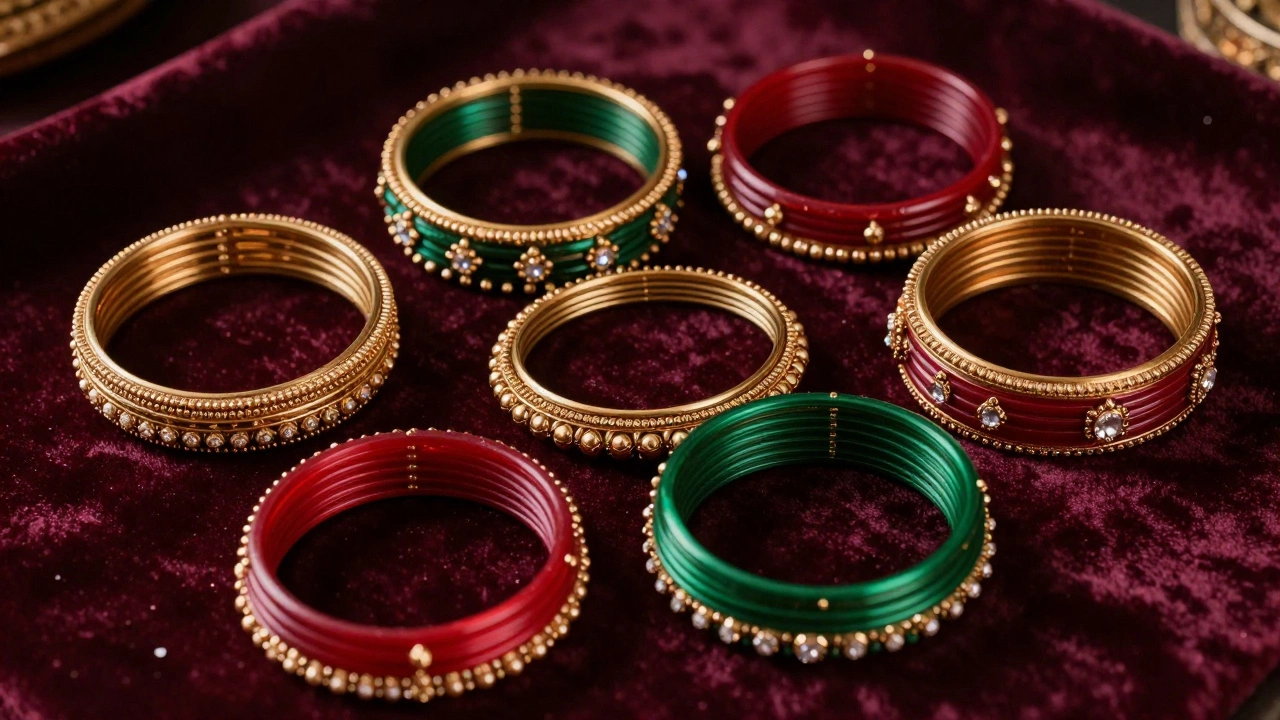
Not all bangles are created equal. The material you choose changes how the size feels on your wrist. Glass Bangles are the staple of traditional Indian wear. Because they are rigid and break easily, you need a precision fit. If a glass bangle is too tight, it will shatter upon impact with your wrist. Most women prefer a slightly looser fit for glass to avoid accidents. Gold Bangles, especially those with a hinge or a screw (known as 'Kada'), are more forgiving. Since they open up, you only need to worry about the wrist circumference rather than the knuckle width. If you are buying a solid gold circle, however, the knuckle rule still applies. Silk Thread Bangles are softer and often have a slightly more flexible inner lining. These are great for those who fluctuate in size due to weather or health reasons, as they don't pinch as harshly as metal.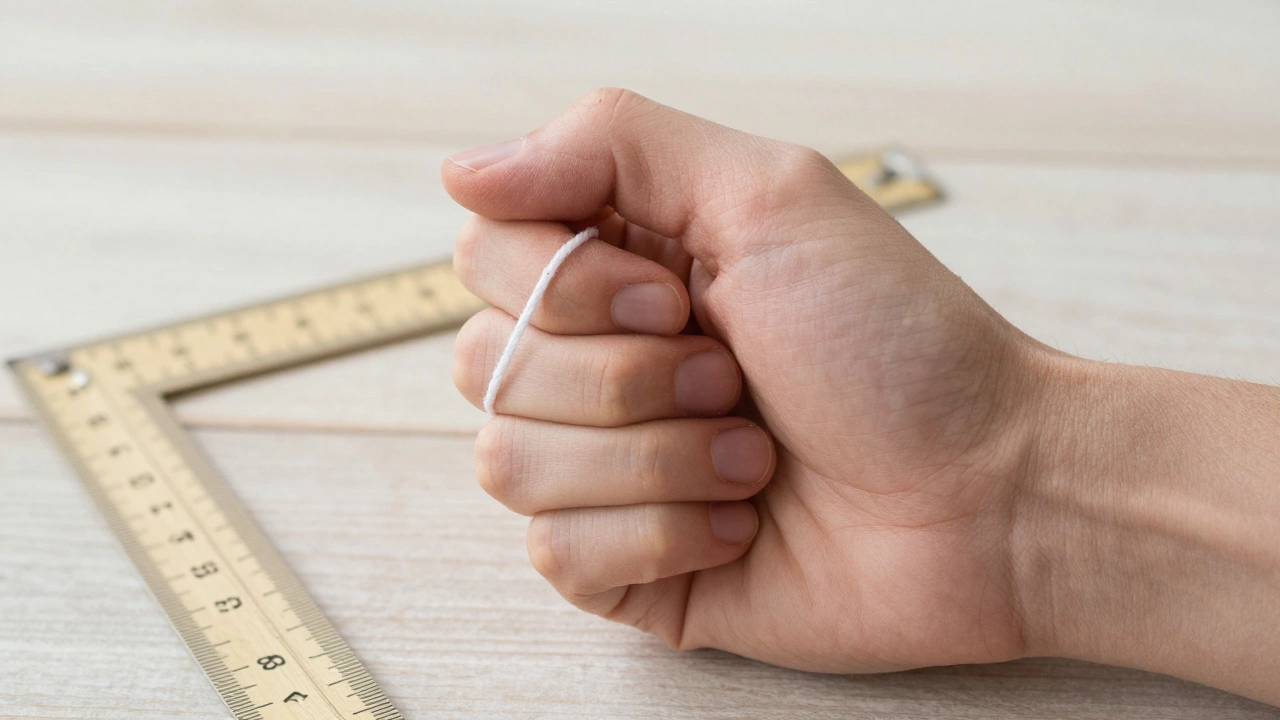
Common Sizing Mistakes to Avoid
One of the biggest errors people make is measuring their wrist while it's relaxed. Your wrist is the narrowest part of your arm, but your knuckles are the widest. If you buy a 2.2 because your wrist is tiny, you'll find that the bangle stops dead at your knuckles and refuses to slide in. Always measure the "entry point." Another mistake is ignoring the thickness of the bangle. A very thick, chunky Kada takes up more internal space than a thin Churi. If you are buying a heavy-set bangle, you might want to go up half a size (e.g., from 2.4 to 2.6) to ensure it doesn't feel suffocating.Tips for Different Age Groups
Sizing varies wildly depending on the stage of life. For young girls (kids), the sizes usually start much lower, often ranging from 1.2 to 2.0. These are smaller, lighter, and designed for narrower frames. As a girl enters her teens, her bone structure changes, and she usually transitions into the 2.2 or 2.4 range. For adult women, factors like pregnancy or certain medical conditions can cause temporary swelling in the hands (edema). If you're shopping for a bride-to-be, keep in mind that the stress and dietary changes of a wedding can sometimes lead to slight swelling. Recommending a slightly larger size for heavy bridal sets is often a safer bet to ensure comfort during the long ceremonies.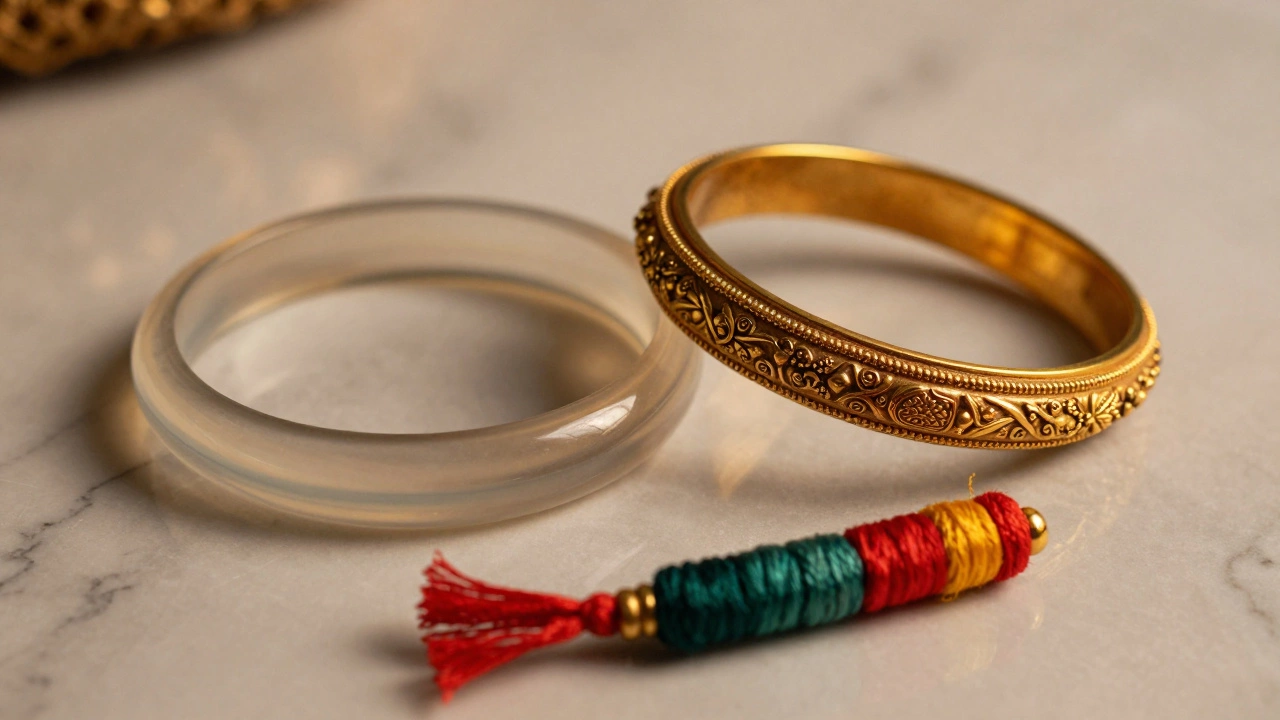
How to Test the Fit
If you've already bought a bangle and want to know if it's the right size, use the "two-finger rule." Once the bangle is on your wrist, you should be able to fit your index finger between the bangle and your skin. If there is no gap, it's too tight and will restrict blood flow or irritate the skin. If you can fit three or four fingers, it's too loose and will likely fall off when you move your arm quickly.Comparing Bangle Types and Their Sizing Needs
| Bangle Type | Sizing Criticality | Fit Recommendation | Flexibility |
|---|---|---|---|
| Glass (Churi) | High | Slightly Loose | None |
| Solid Gold/Silver | High | Exact Fit | None |
| Hinged Kada | Low | Wrist-based | High (Opens) |
| Silk Thread | Medium | Comfort Fit | Low |
What is the most common bangle size for Indian women?
The most common sizes are 2.4 and 2.6. Size 2.4 is typically for those with smaller or average hands, while 2.6 is the standard medium size for a large portion of the adult female population in India.
Can I wear a bangle that is slightly too big?
Yes, you can. A slightly loose bangle is generally better than one that is too tight. You can prevent it from sliding off by wearing it alongside tighter-fitting bangles or using a small piece of adhesive foam/cloth on the inside of the bangle to snug it up.
How do I convert circumference to bangle size?
Measure the circumference of your hand (knuckles) in inches. Divide that number by 3.14. For example, 7.06 inches divided by 3.14 equals 2.25, which corresponds to a size 2.4 bangle.
Do gold bangles need a different size than glass ones?
The numerical size (e.g., 2.6) remains the same across materials. However, because gold is a precious metal and often heavier, a very tight gold bangle can be more uncomfortable than a tight glass one. Always prioritize a comfortable glide over the wrist.
What if my left and right hands are different sizes?
It is actually quite common for your dominant hand to be slightly larger. If you are buying a pair of bangles, measure both hands. If they differ, it's best to buy the size that fits the larger hand to ensure both can be worn, or buy two different sizes if the seller allows it.