Diamond Cut Price Estimator
Find estimated diamond prices based on India's jewelry market data. The calculator uses:
- Round brilliant (100% base price - highest waste)
- Princess cut (78% of round price)
- Cushion cut (88% of round price)
- Emerald cut (68% of round price)
- Asscher/Oval (83% of round price)
Price Comparison
| Cut Type | Relative Cost | Waste Rate |
|---|---|---|
| Round Brilliant | 100% | 50-60% |
| Princess Cut | 78% | 30-40% |
| Cushion Cut | 88% | 40-50% |
| Emerald Cut | 68% | 35-45% |
| Asscher/Oval | 83% | 45-55% |
Tip: In India, round brilliant cuts cost 20-30% more than other shapes. Save up to ₹80,000 on a 1-carat stone by choosing princess or cushion cuts.
When you walk into a jewelry store in Mumbai or Jaipur and ask about diamond rings, the first thing you’ll hear is about carat weight, clarity, and color. But there’s one factor that often gets overlooked - the cut. And it might be the biggest driver of price you didn’t know about.
Not all diamond shapes cost the same. Two diamonds with identical carat weight, color, and clarity can have wildly different prices - just because one is round and the other is emerald. Why? It all comes down to how much of the rough diamond is lost during cutting, how complex the process is, and how much demand there is for that shape.
Why Cut Matters More Than You Think
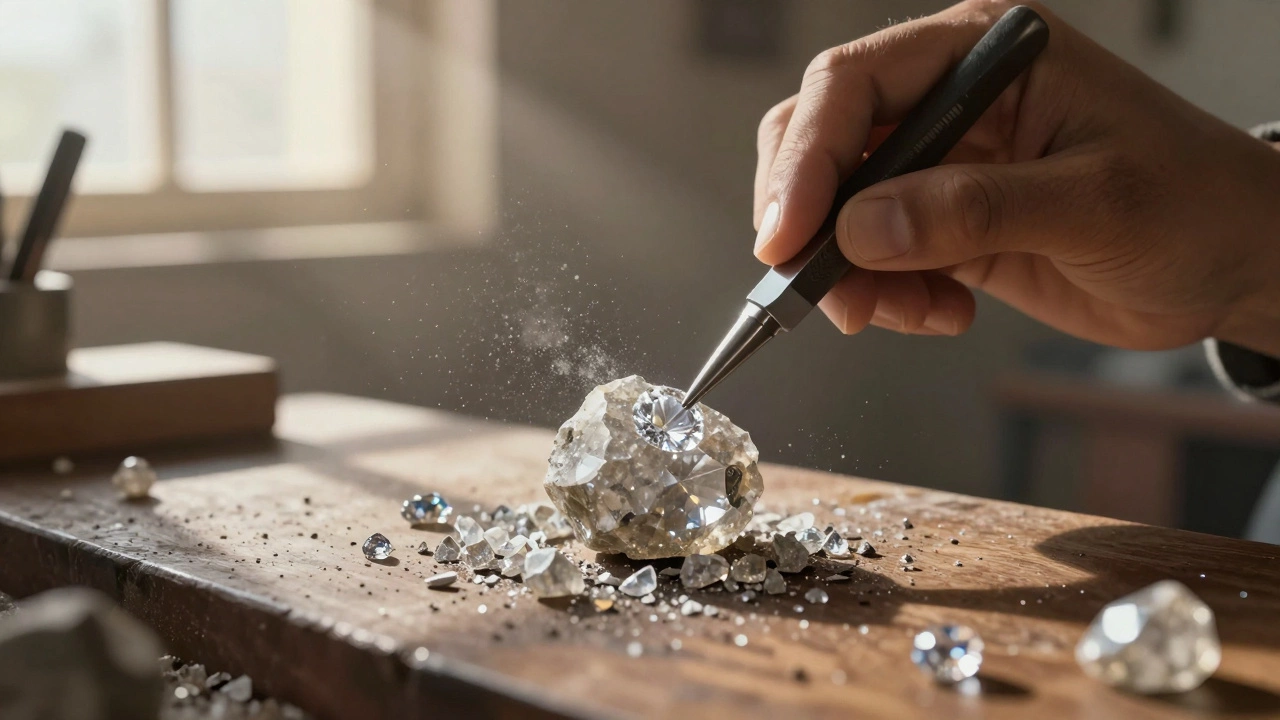
The cut of a diamond isn’t just about how sparkly it looks. It’s about waste. Diamond miners pull rough stones from the earth, and those stones are irregular. A skilled cutter has to decide how to shape them to get the most value out of every gram. Some shapes require throwing away more than half the original stone. That’s not just a loss - it’s money gone.
Take a round brilliant cut. It’s the most popular shape for engagement rings in India, and for good reason. But to make one, a cutter typically loses 50-60% of the rough diamond. That’s more waste than any other common shape. And because of that, even a 1-carat round brilliant can cost 20-30% more than a 1-carat princess cut with the same clarity and color.
The Most Expensive Cut: Round Brilliant
If you’re asking which diamond cut is most expensive, the answer is simple: round brilliant. It’s not just popular - it’s the most costly per carat among standard shapes.
Here’s why:
- Maximum waste: Up to 60% of the rough diamond is discarded to achieve the perfect 58-facet symmetry.
- High demand: Over 75% of engagement rings sold in India feature a round diamond. That demand pushes prices up.
- Strict grading: GIA and other labs grade round brilliants more strictly. A slight imbalance in symmetry or polish drops its grade - and its value.
- Optical performance: No other cut reflects light the same way. That brilliance is hard to replicate, making it the gold standard.
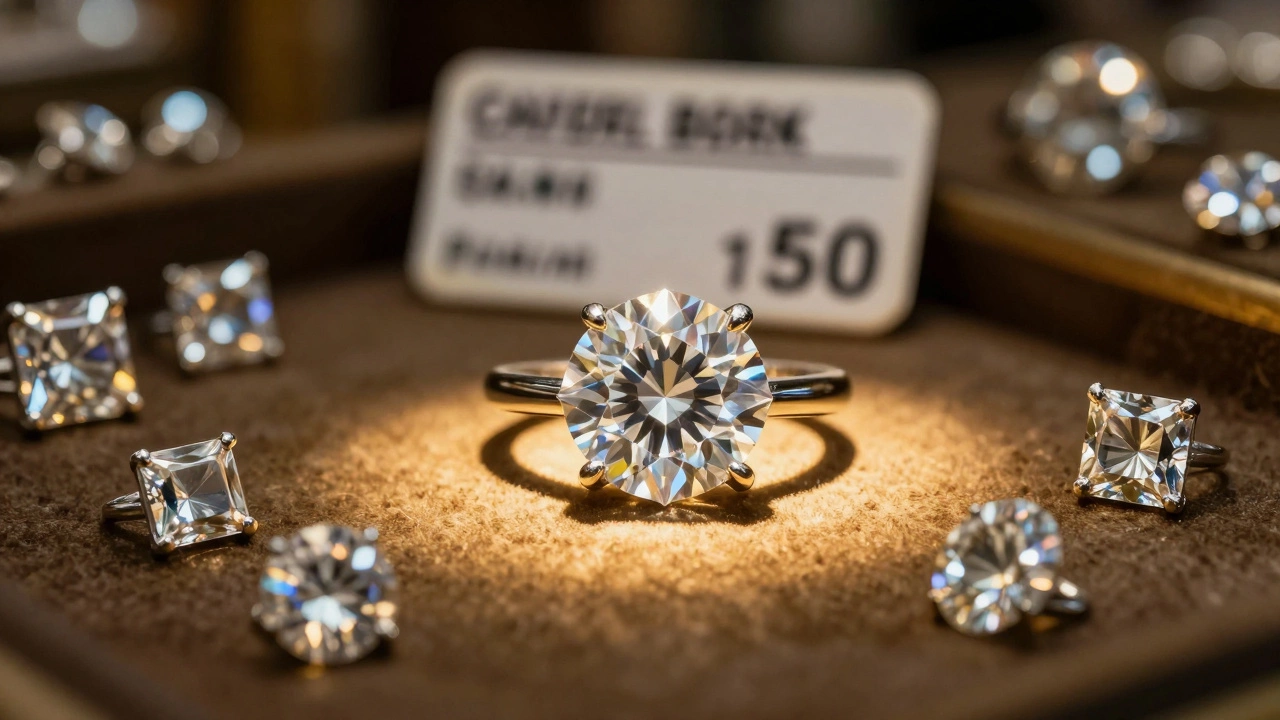
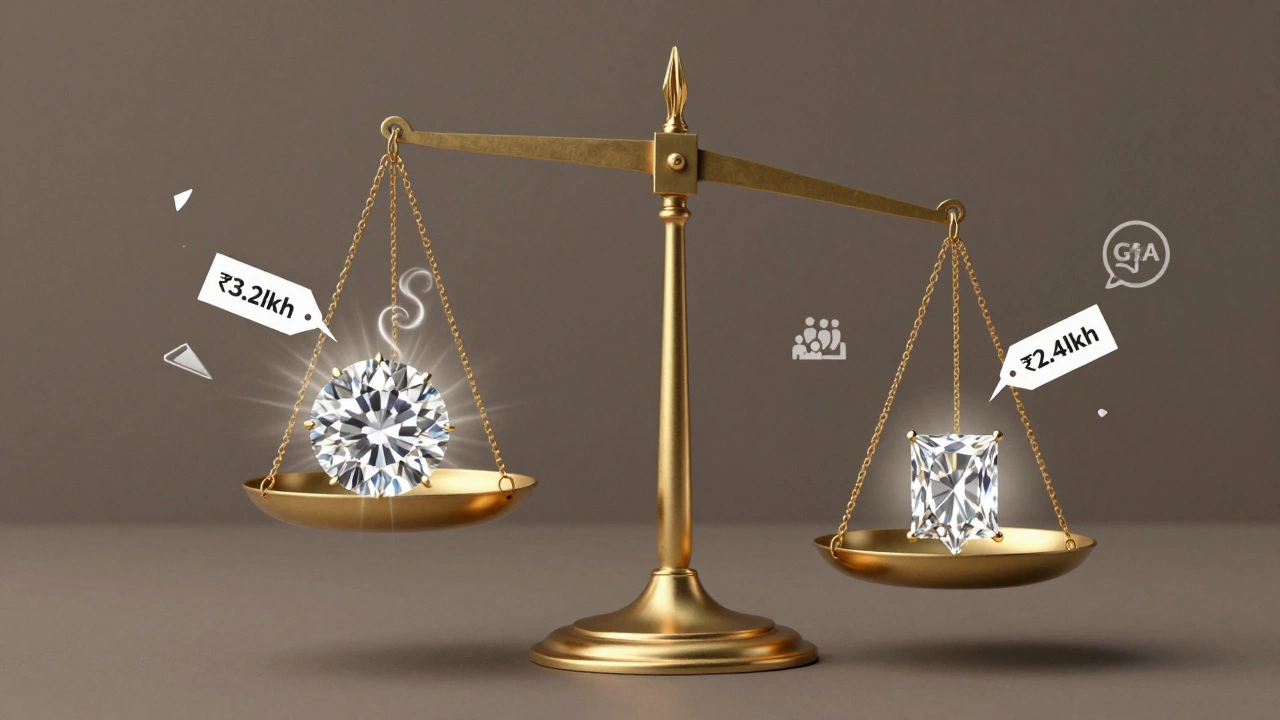
In Mumbai’s jewelry markets like Zaveri Bazaar, a 1-carat round brilliant with G color and VS1 clarity might cost ₹3.2 lakh. The same stone in a princess cut? Around ₹2.4 lakh. That’s a ₹80,000 difference - just because of the shape.
Other Expensive Cuts - And Why They’re Cheaper
Round isn’t the only costly shape, but it’s the most expensive. Here’s how other popular cuts stack up:
| Shape | Waste Rate | Relative Cost (vs. Round) | Why It’s Cheaper |
|---|---|---|---|
| Round Brilliant | 50-60% | 100% | High demand, maximum waste, strict grading |
| Princess Cut | 30-40% | 75-80% | Less waste, square shape uses rough more efficiently |
| Cushion Cut | 40-50% | 85-90% | Older style, less demand than round, softer light return |
| Emerald Cut | 35-45% | 65-70% | Step-cut, shows flaws easily - lower clarity stones sell cheaper |
| Asscher Cut | 45-55% | 80-85% | Rare, complex cutting, low supply |
| Oval Cut | 40-50% | 80-85% | Looks larger than round, but less demand in India |
Notice something? The emerald cut is one of the cheapest - not because it’s less beautiful, but because it shows inclusions more easily. Buyers often choose lower clarity grades to save money, which brings the price down. The princess cut is a smart middle ground: modern, sparkly, and efficient.
What About Fancy Cuts? Are They More Expensive?
Fancy shapes like pear, marquise, or heart can cost more than round - but only if they’re rare or hard to cut. A perfectly symmetrical heart-shaped diamond with no bowtie effect? That’s a rarity. Cutters spend hours shaping it, and fewer than 5% of rough stones can be turned into a flawless heart. In those cases, yes - it can cost more than a round.
But here’s the catch: most fancy cuts don’t have consistent demand in India. Unless you’re buying for a custom design or heirloom piece, you’re not paying a premium. In fact, many jewelers in Surat and Jaipur offer discounts on fancy shapes because they’re harder to sell.
What Should You Buy?
If you’re shopping for a diamond ring in India, here’s what actually matters:
- Want maximum sparkle? Go round brilliant. It’s worth the extra cost if you care about brilliance and resale value.
- Want to save money without losing beauty? Try princess or cushion. They look almost as bright and use more of the rough stone.
- Prefer elegance over sparkle? Emerald or Asscher. These are classy, timeless, and cost 25-35% less than round.
- Don’t be fooled by marketing. A “luxury” oval or radiant cut doesn’t mean higher quality - just different style.
Many people in India think bigger carat = better. But if you’re paying ₹4 lakh for a 1.2-carat round, you could get a 1.5-carat princess with the same clarity and color for ₹3 lakh. That’s 25% more diamond for the same price.
Final Tip: Always Ask for the RAPAPORT Report
Reputable jewelers in India use the Rapaport Diamond Price List - a global standard that lists prices by cut, carat, color, and clarity. If a jeweler won’t show you the Rapaport sheet for your diamond, walk away.
Here’s what to look for: compare the price per carat of your diamond to the Rapaport rate for its cut. If the round is priced more than 15% above the list, you’re paying a premium for branding - not quality.
And remember: in cities like Mumbai, Surat, and Jaipur, you’ll find jewelers who cut their own diamonds. They have direct access to rough stones. That means lower margins. Ask if they’re a cutter-wholesaler. You could save up to 20%.
Is the round brilliant cut always the most expensive?
Yes, among the most common diamond cuts used in engagement rings, the round brilliant is consistently the most expensive per carat. This is due to high waste during cutting, strong demand, and strict grading standards. However, rare fancy cuts like a perfect heart or pear can sometimes cost more - but they’re uncommon and not widely available in India.
Why are princess cuts cheaper than round brilliants?
Princess cuts lose less of the original rough diamond - only 30-40% compared to 50-60% for round brilliants. That means jewelers can get more finished diamonds from the same piece of rough. Plus, they’re less in demand than round cuts in India, so prices stay lower.
Does the diamond cut affect its resale value?
Absolutely. Round brilliants have the highest resale value because they’re the most liquid - meaning buyers everywhere recognize their value. Princess and cushion cuts hold decent value. But fancy shapes like emerald or marquise often sell for 30-50% less on the secondary market because fewer people want them.
Can I save money by choosing a lower clarity diamond with a better cut?
Yes, but only if the cut is excellent. A well-cut VS2 diamond can look more brilliant than a poorly cut VVS1. Focus on cut grade first - especially for round brilliants. A good cut hides flaws better. In India, many jewelers offer cut grades from GIA or IGI. Always ask for it.
Are lab-grown diamonds cheaper because of the cut?
No - lab-grown diamonds are cheaper because they’re made in labs, not mined. The cut still affects the price. A lab-grown round brilliant will still cost more than a lab-grown emerald cut, for the same reasons: waste, demand, and grading. The price gap between cuts stays the same.
Final Thought
The most expensive diamond cut isn’t about beauty - it’s about economics. Round brilliants cost more because they waste more, demand more, and are graded harder. If you’re buying for investment or tradition, go round. If you’re buying for style and value, look beyond the round. In India’s jewelry markets, you have the power to choose wisely - and save thousands without sacrificing sparkle.