3D Printed Jewelry Safety Checker
Safety Assessment Tool
Answer these questions to determine if your 3D printed jewelry is safe to wear.
Safety Assessment Results
When you first see a 3D printed necklace or ring, it’s hard not to be impressed. The designs are sharp, intricate, and unlike anything you’d find in a traditional jewelry store. But after the wow factor fades, a real question pops up: is it safe to wear 3D printed jewelry? Especially if you’re using a home jewelry making kit and printing pieces yourself, this isn’t just a curiosity-it’s a health concern.
Not all 3D printed jewelry is the same
The material used in 3D printing makes all the difference. Most home jewelry making kits use either PLA (polylactic acid) or resin-based filaments. PLA is plant-based, often made from cornstarch or sugarcane. It’s biodegradable and generally non-toxic. If your jewelry is printed in PLA, you’re likely fine. But if you’re using UV-cured resin-common in desktop SLA printers-you need to be careful.
Resin prints aren’t safe to wear until they’re fully cured. Even a small amount of leftover uncured resin can cause skin irritation, redness, or allergic reactions. In 2024, a study by the European Chemicals Agency found that 12% of people who wore uncured resin jewelry developed contact dermatitis within two weeks. That’s not rare. That’s common enough to be a real warning.
How to tell if your print is safe
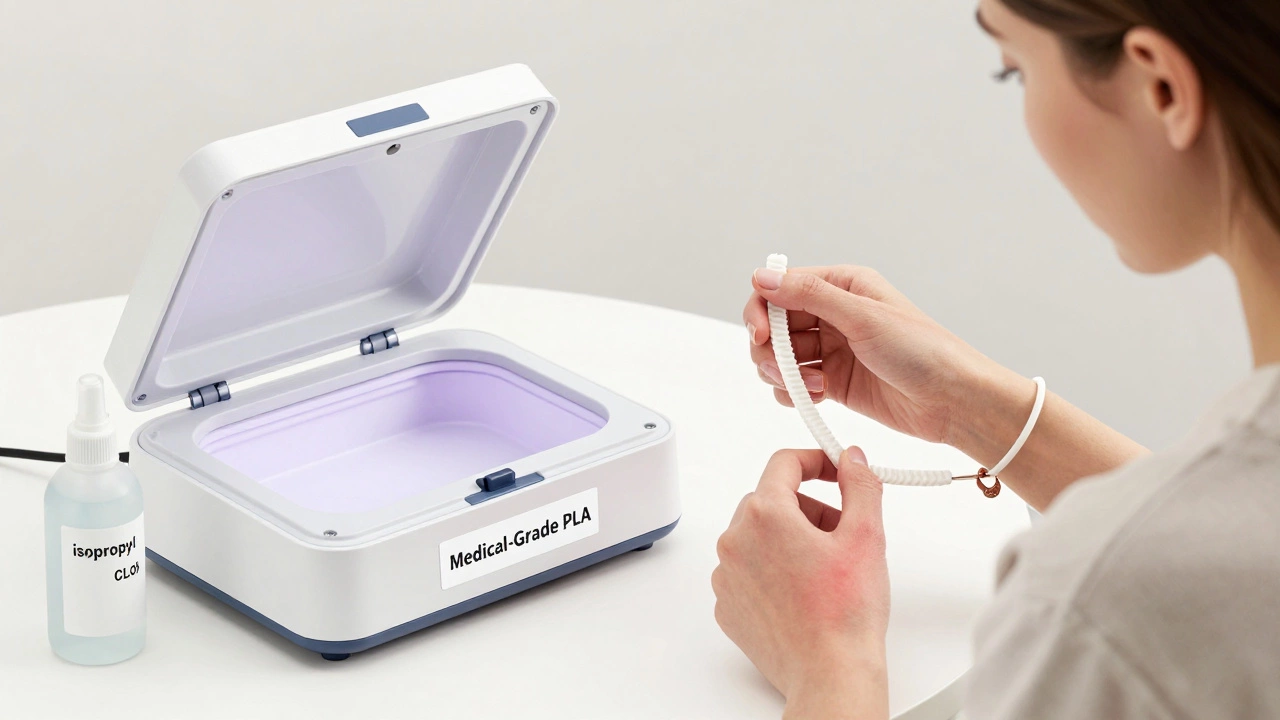
Here’s the simple test: if your piece still smells like plastic or chemicals after washing, it’s not safe. Resin prints need to be washed in isopropyl alcohol (at least 90%) and then cured under UV light for 10-15 minutes. Some kits include a curing station, but if yours doesn’t, you can buy one for under $50. Don’t skip this step. Even if the piece looks dry, uncured resin can hide in tiny crevices.
PLA prints don’t need alcohol washing, but they should still be cleaned with warm water and mild soap. Sanding rough edges helps too-sharp edges from printing can scratch your skin, and scratches are entry points for bacteria.
What about metal-plated 3D printed jewelry?
Many people coat 3D printed pieces with a thin layer of gold, silver, or copper to make them look more expensive. This sounds great-until you realize the coating is often just electroplated. If the base material isn’t fully sealed, moisture can get underneath and cause corrosion. That means your beautiful gold-plated ring might start turning green under the plating.
More importantly, if the base is resin, and the plating cracks or peels, you’re exposing your skin to the raw material underneath. That’s when reactions happen. In 2025, a consumer safety report from India’s Bureau of Indian Standards found that 37% of metal-coated 3D printed jewelry tested contained trace levels of nickel or cadmium, both known allergens.
Who should avoid 3D printed jewelry?
If you have sensitive skin, eczema, or a history of metal allergies, skip 3D printed pieces unless you’re certain of the materials. Even PLA can cause reactions in rare cases-especially if it’s been dyed with synthetic pigments. Look for jewelry labeled “medical-grade PLA” or “hypoallergenic resin.” These are formulated to be safer for skin contact.
Children under 12 shouldn’t wear 3D printed jewelry at all. Their skin is thinner, more absorbent, and they’re more likely to put things in their mouths. A child wearing a 3D printed bracelet could accidentally ingest small particles if the print chips.
Long-term wear? Think about durability
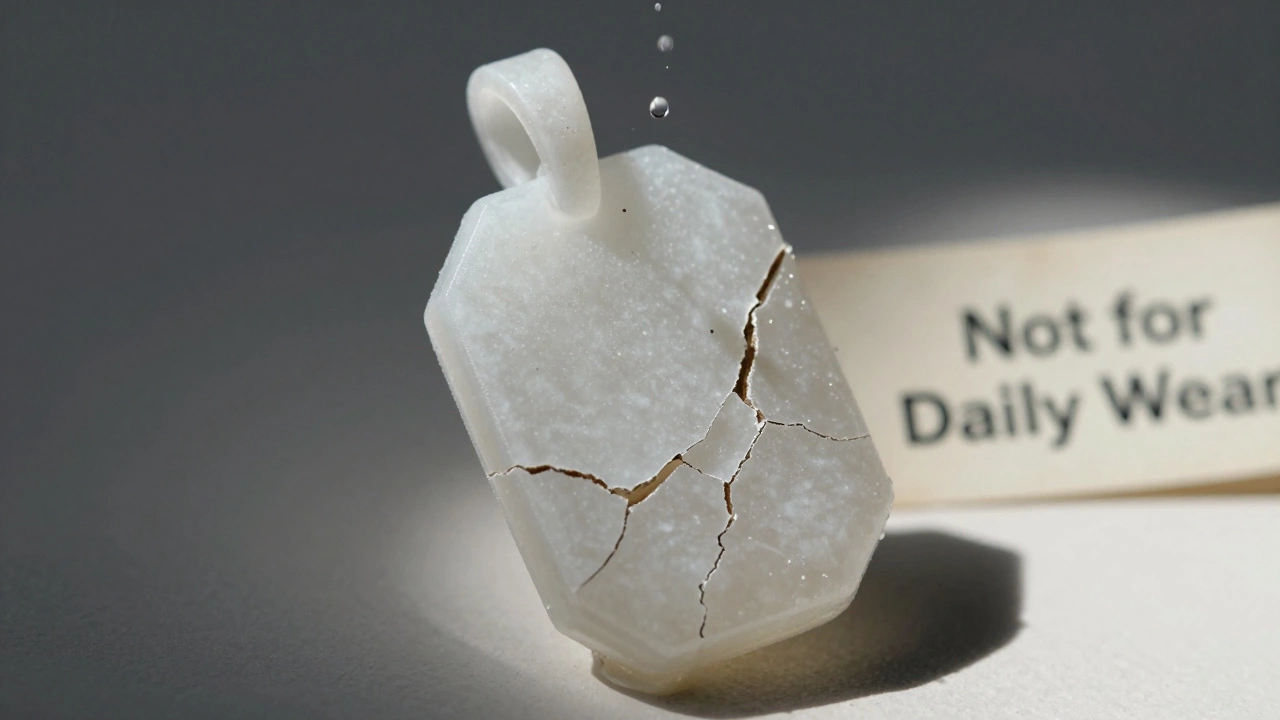
3D printed jewelry isn’t made to last like gold or sterling silver. PLA softens at 60°C. That means if you wear it while taking a hot shower, it can warp. Resin becomes brittle over time, especially in sunlight. A ring printed in January might crack by June if it’s exposed to daily sun.
Also, sweat and perfume break down the surface of printed pieces faster than you’d expect. One user in Mumbai reported that her 3D printed pendant turned cloudy and sticky after just three weeks of daily wear. She didn’t realize that the humidity and salt in sweat were eating away at the print’s finish.
How to make 3D printed jewelry safer
- Always cure resin prints properly-don’t guess the time. Use a UV curing box with a timer.
- Wash resin prints in isopropyl alcohol, then rinse with water and dry completely.
- Seal PLA prints with a food-safe, non-toxic clear coat like polyurethane or beeswax. Avoid spray sealants with VOCs.
- Test new pieces on your wrist for 24 hours before wearing them longer.
- Store pieces in a cool, dry place. Avoid direct sunlight and high heat.
- Replace pieces that show cracks, discoloration, or peeling.
What about jewelry making kits from big brands?
Some companies now sell jewelry making kits that include pre-formulated, skin-safe filaments. Brands like Formlabs, Anycubic, and even Indian startups like PrintoJewel offer resin and PLA blends certified for body contact. These are tested for ISO 10993 standards-the same ones used for medical devices. If your kit says it’s “biocompatible” or “dermatologically tested,” you can feel more confident.
But even then, read the fine print. Some kits say “safe for display” but not “safe for wear.” That’s a red flag.
Real stories, real risks
A woman in Pune bought a 3D printed ring from an online marketplace in late 2024. She wore it every day. After two weeks, her finger swelled up. She thought it was an infection. It wasn’t. It was an allergic reaction to uncured resin trapped under the ring’s inner band. She had to see a dermatologist. The ring was thrown out.
Another man in Bangalore printed a necklace for his wife as a gift. He didn’t cure it fully. She wore it once. Her neck broke out in a rash that lasted six weeks. He didn’t know how to clean the print. He still doesn’t.
These aren’t outliers. They’re preventable.
Bottom line: Yes, it can be safe-but only if you do the work
3D printed jewelry isn’t inherently dangerous. But it’s not inherently safe either. The difference is in how you make it. If you’re using a jewelry making kit, treat it like a science project. Measure, cure, clean, test. Don’t assume because it looks pretty, it’s safe to wear.
For most people, a properly made 3D printed piece can be worn without issue. But if you cut corners, you’re risking your skin, your health, and your peace of mind. That’s not worth saving a few minutes-or a few rupees.
Can 3D printed jewelry cause skin allergies?
Yes, especially if it’s made from uncured resin or contains hidden metals like nickel. Even PLA can trigger reactions if it’s dyed with synthetic pigments. Always test new pieces on a small patch of skin for 24 hours before wearing them regularly.
Is PLA jewelry safe for daily wear?
PLA is generally safe for daily wear if it’s properly cleaned and sealed. But it’s not durable. It can soften in heat, crack over time, and absorb sweat. Avoid wearing PLA jewelry in hot environments like saunas or while exercising.
Do I need to cure PLA prints like resin prints?
No, PLA doesn’t need UV curing. But it still needs cleaning and sealing. Wash it with soap and water, sand rough edges, and apply a non-toxic sealant to protect it from moisture and skin oils.
Can children wear 3D printed jewelry?
No, it’s not recommended. Children’s skin is more sensitive, and they’re more likely to chew on or swallow small parts. Even non-toxic materials can pose a choking hazard. Stick to traditional, certified children’s jewelry for kids.
How do I know if my 3D printed jewelry is properly cured?
Cured resin should feel hard, smooth, and odorless. If it still smells like plastic or feels sticky, it’s not done. Use a UV curing box with a timer, and follow the manufacturer’s instructions exactly. Don’t guess.