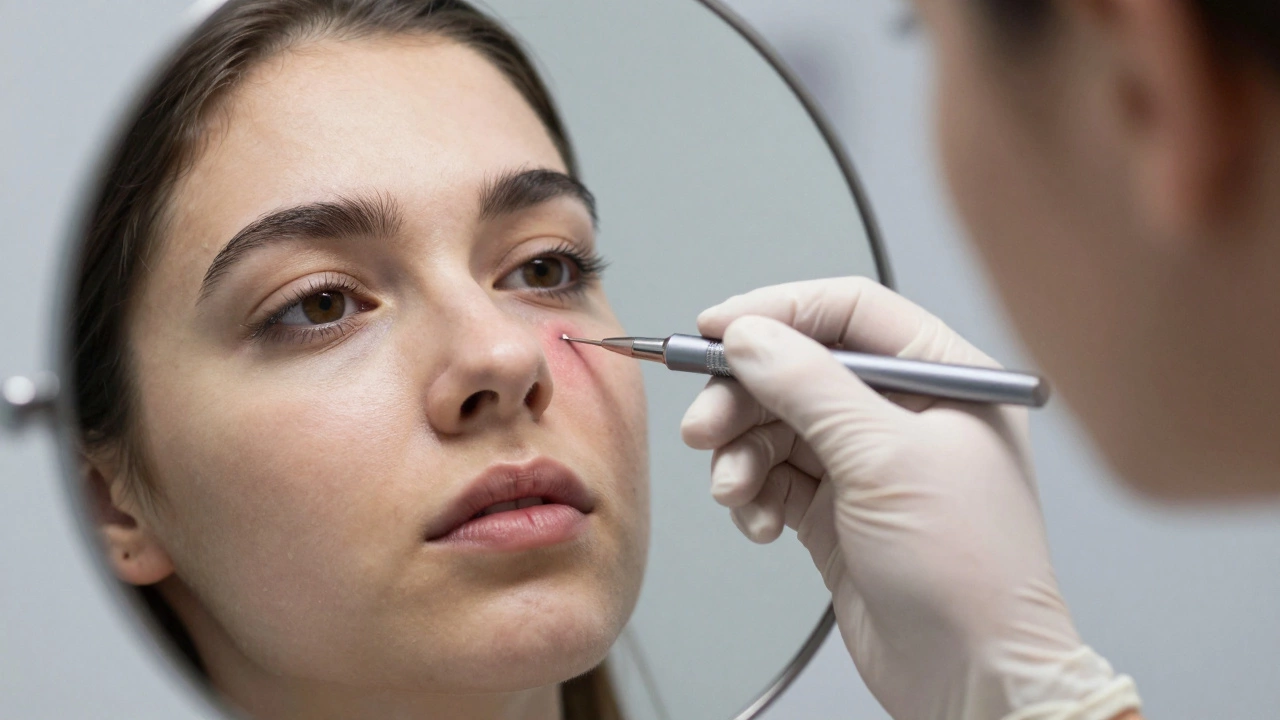
Nose Piercing Pain Predictor
Estimated Pain Score
Note: Healing times vary based on anatomy and aftercare.
Quick Summary of the Pain Experience
- Nostril Piercing: Usually a 3 to 5. A sharp pinch and a few tears.
- Septum Piercing: Usually a 4 to 6. More pressure, but often faster healing.
- The "Sweet Spot": Finding the thin skin area in a septum piercing can lower the pain significantly.
- Aftermath: Throbbing and sensitivity for 24-48 hours are standard.
Breaking Down the Pain Scale by Placement
Not all nose piercings are created equal. If you are choosing between a classic side stud and a hidden septum ring, you are dealing with two completely different types of tissue.The nostril piercing involves punching through the wing of the nose. Because this area is mostly cartilage, it doesn't have as many nerve endings as your lips, but it is denser than an earlobe. Most people describe this as a "sharp zap." On a scale of 1 to 10, it typically sits around a 4. The pain is intense for about three seconds, and then it settles into a dull throb that lasts for an hour or two. If you've had your ears pierced, it feels slightly more intense, but it is over much faster.
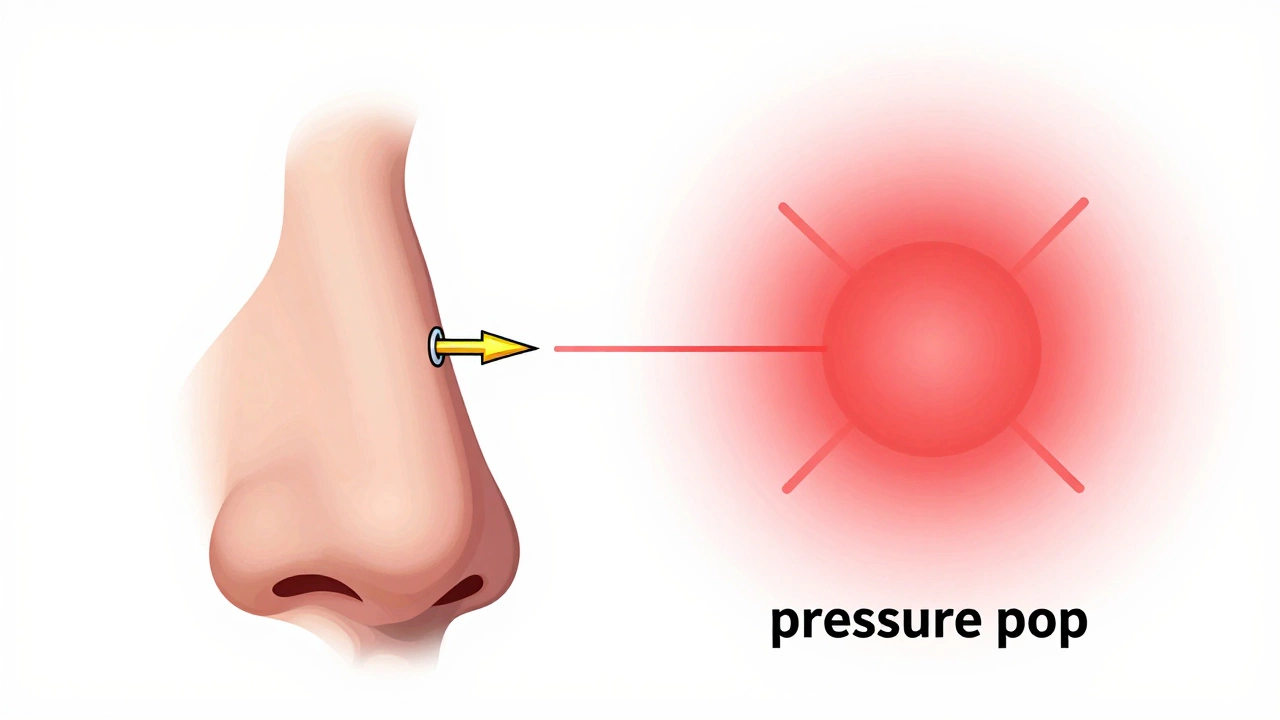
Then there is the Septum Piercing, which is a piercing that goes through the thin membrane of cartilage separating the nostrils. This one is a bit of a wildcard. If the piercer hits the "sweet spot"-the thin area of skin just below the cartilage-the pain is a mild 3. However, if the needle goes through a thicker part of the cartilage, it can jump to a 6. The sensation is less of a "pinch" and more of a "pressure pop." You might feel a sudden rush of heat in your nose, which is a normal inflammatory response.
| Attribute | Nostril Piercing | Septum Piercing |
|---|---|---|
| Average Pain Score | 3-5 / 10 | 4-6 / 10 |
| Sensation Type | Sharp pinch / Sting | Pressure / Pop |
| Healing Time | 2-6 Months | 2-3 Months |
| Primary Tissue | Cartilage / Skin | Mucosal Membrane |
Why Some People Feel More Pain Than Others
Why does your best friend say it felt like nothing while you're terrified? Pain is subjective, but there are concrete biological factors at play. The thickness of your nasal cartilage is a primary driver. Some people have naturally thicker walls in their nostrils, which requires more force from the needle, leading to a higher pain spike.Your state of mind also matters. Anxiety triggers the release of cortisol, which can actually make you more sensitive to pain. If you are gripping the chair and holding your breath, your muscles tense up, making the needle's passage feel more abrupt. Deep breathing helps oxygenate the blood and relax the facial muscles, often dropping the perceived pain score by a full point.
The tool used also makes a difference. A Piercing Needle is a surgical-grade, hollow needle designed to remove a tiny core of tissue to make room for jewelry. This is far superior to a piercing gun. Guns crush the tissue rather than slicing it, which increases trauma and pain. Anyone using a gun for a nose piercing is essentially increasing the pain scale from a 4 to a 7.
Managing the "After-Pain" and Sensitivity
The actual piercing takes seconds, but the following few days are where the real work happens. You'll likely experience a sensation called "the throb." This is your body sending blood and white blood cells to the area to start the healing process. For the first 48 hours, your nose might feel like it's pulsing. This isn't "pain" in the needle sense, but more of an annoyance, sitting around a 2 on the scale.You will also deal with the "bump"-technically known as a hypertrophic scar or irritation bump. This happens when the jewelry is moved too much or if you use the wrong cleaning agent. While not excruciating, a bump makes the area hypersensitive. Touching it can feel like a sharp 3, which is why "hands off" is the golden rule of aftercare.
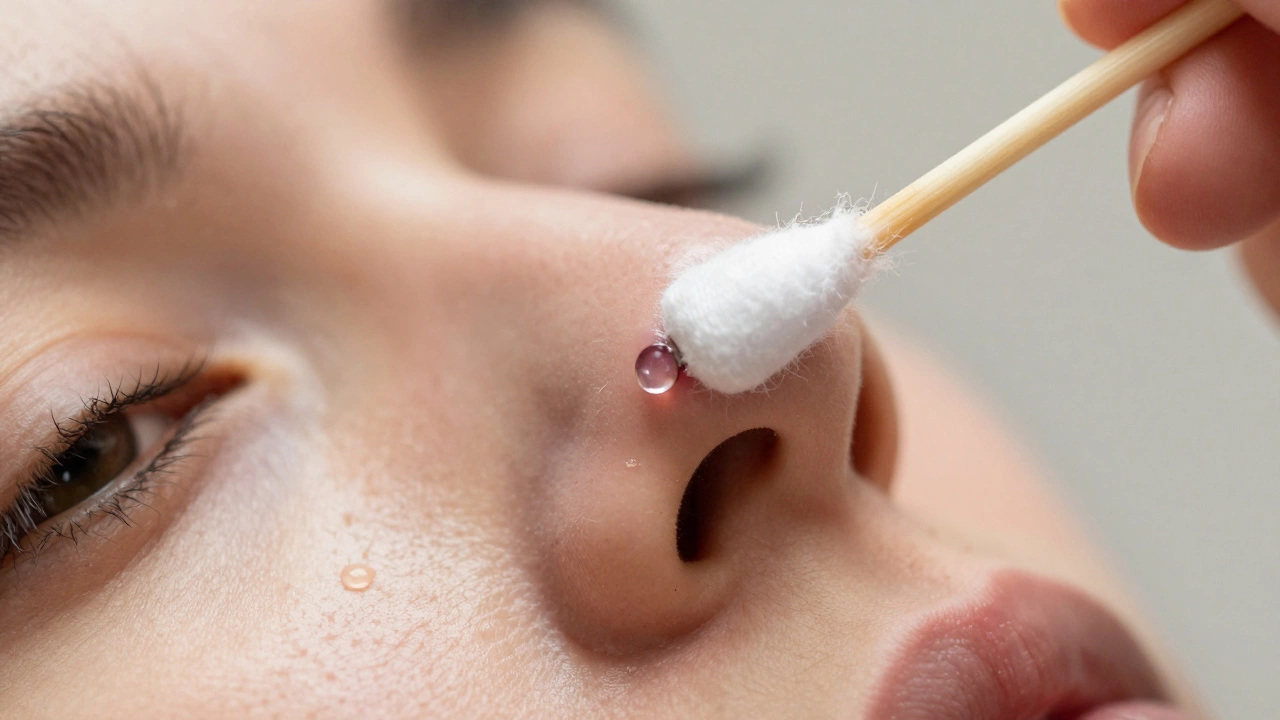
To keep the pain low during recovery, stick to a Saline Solution, which is a sterile mixture of salt and water used to clean piercings without irritating the tissue. Avoid rubbing alcohol or hydrogen peroxide; these are too harsh and will dry out the skin, causing it to crack and sting, effectively raising your daily pain level.
Choosing Jewelry to Minimize Irritation
Once the initial pain subsides, the jewelry you choose determines if you'll have long-term comfort or constant irritation. This is where Nose Pin Designs come into play. If you go for a heavy, dangling piece of jewelry too early, the weight will pull on the fresh wound, causing a persistent ache.Start with a flat-back labret or a small stud made of Implant Grade Titanium, which is a biocompatible metal that is highly resistant to corrosion and unlikely to cause allergic reactions. Nickel is a common allergen found in cheaper jewelry; if your body reacts to nickel, the area will itch, swell, and burn, making the experience feel like a constant 4/10 irritation long after the needle is gone.
When you're ready to switch to more elaborate designs, wait until the piercing is fully epithelialized (the skin has grown all the way through the hole). Switching to a hoop too early can cause the jewelry to rotate, which irritates the canal and brings back that sharp, stinging pain you thought you left behind in the studio.
Common Pitfalls That Increase Pain
Many people accidentally turn a simple 4/10 experience into a nightmare by making a few common mistakes. The biggest one is "the twist." Old-school advice suggested twisting the jewelry daily to prevent it from growing into the skin. This is outdated and harmful. Twisting the stud tears the fragile new skin cells forming inside the hole, effectively re-piercing yourself every day and keeping the pain levels elevated.Another mistake is snagging the jewelry. A nose stud is a prime target for towels, sweaters, and pillowcases. A sharp tug on a fresh piercing can cause a sudden, searing pain (an 8 or 9 for a split second) and may even rip the piercing partially out. To avoid this, keep your jewelry short and snug during the first few months.
Finally, avoid using "home remedies" like toothpaste or lemon juice on the site. These substances are irritants that can cause chemical burns on the sensitive internal nasal lining. Stick to the professional advice: sterile saline and patience.
Does a septum piercing hurt more than a nostril piercing?
Generally, no. While the sensation is different-pressure versus a pinch-septum piercings often heal faster because the tissue is a mucous membrane rather than dense cartilage. However, if the piercer misses the "sweet spot" and goes through thick cartilage, it can feel more intense than a nostril piercing.
How long does the actual pain of the needle last?
The sharp pain lasts only for the few seconds it takes for the needle to pass through. Once the jewelry is inserted, the sharp pain vanishes and is replaced by a warm, throbbing sensation that usually fades within a few hours.
Why is my nose piercing still hurting after a month?
If you are still experiencing significant pain after a month, it could be a sign of infection or an allergic reaction to the metal in your jewelry. Common culprits include nickel-plated steel. You should check for excessive swelling, yellow discharge, or extreme redness and visit a professional piercer or doctor.
Can I use numbing cream before getting my nose pierced?
Some people do, but many professional piercers discourage it. Numbing creams can change the texture of the skin or cause the tissue to swell, which might make it harder for the piercer to get a precise angle. Since the pain is very brief, most find it unnecessary.
Does the pain change if I get both nostrils pierced?
The pain for each individual side remains the same (around a 3-5). However, getting both done at once can be an adrenaline rush. Some people find the second one easier because they know exactly what to expect, while others find it harder because their body is already reacting to the first puncture.
Next Steps for Your Piercing Journey
If you've decided to go through with it, your next move should be finding a certified professional. Don't go to a mall kiosk that uses a gun. Look for someone who uses a single-use catheter or needle and understands nasal anatomy.Once you're pierced, set a calendar reminder for your jewelry change. Most nostril piercings need a few months before you can safely switch to a hoop. If you're tempted by elaborate nose pin designs, keep a mood board of what you want so you can show your piercer and ensure you're using the right gauge of jewelry for your specific hole size.
If you experience a fever or the redness starts spreading toward your cheeks, stop the saline rinses and head to a clinic. While rare, infections can happen, and catching them early prevents permanent scarring or the loss of the piercing.