Toe Ring Symbolism & Style Guide
Discover what your toe ring might signify or choose the perfect one for your needs.
Step 1: Define Your Intent
Select options and click "Analyze" to see insights.
Insight Report
Recommendations
Quick Myth Buster Quiz
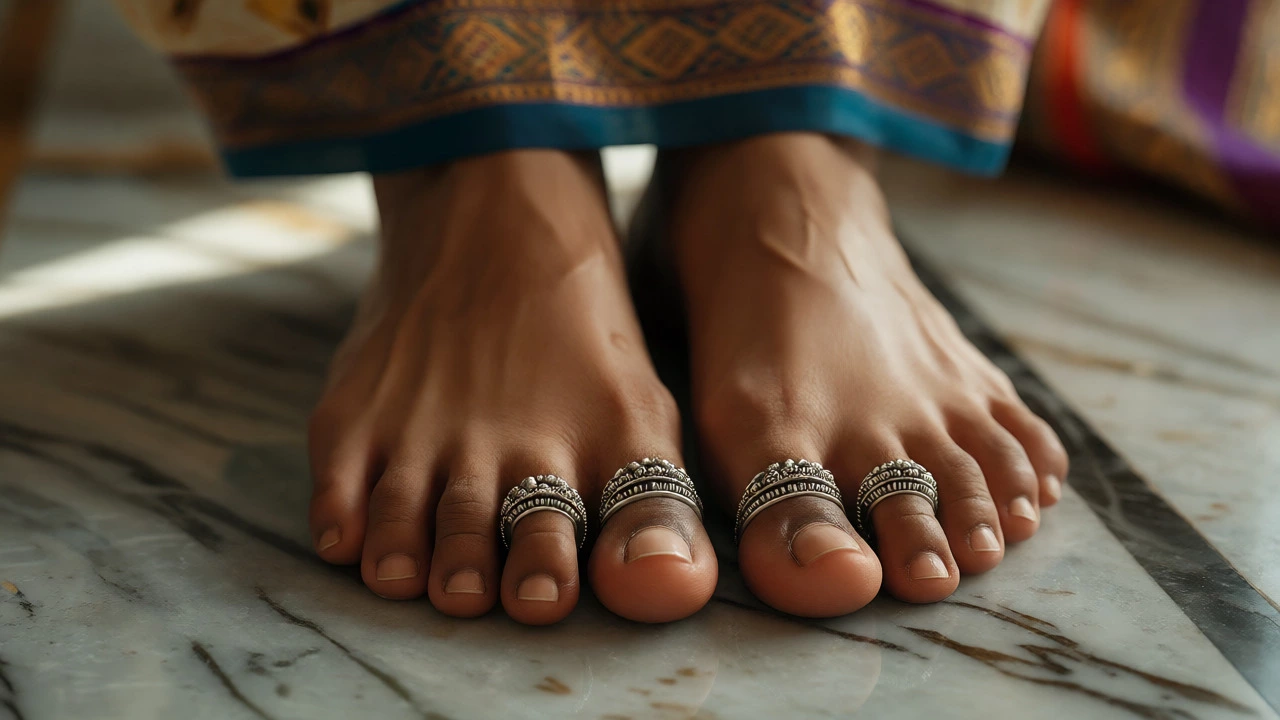
You’ve seen them on countless feet in India, often gleaming silver or gold against the skin. But have you ever stopped to wonder what a simple toe ring, also known as a bichiya, actually signifies? It’s not just an accessory. For centuries, this small piece of metal has carried weight-literally and metaphorically-in social status, marital status, health beliefs, and fashion.
If you’re wearing one, thinking of buying one, or just curious about why your aunt insists on wearing hers every day, you’re in the right place. Let’s break down the layers of meaning behind this traditional adornment without getting lost in vague generalizations.
The Core Symbolism: Marital Status and Social Identity
In many parts of South Asia, particularly India, the most immediate association with a toe ring is marriage. Historically, wearing toe rings was a clear public signal that a woman was married. This wasn’t just about vanity; it was a social marker. In rural communities especially, seeing a woman wear silver toe rings meant she was taken, respected, and part of the family structure.
But here’s where it gets nuanced. The symbolism varies by region. In some states, only the second toe is worn. In others, both toes are adorned. And while the tradition started with married women, modern usage has shifted dramatically. Today, unmarried women wear them purely for style, blurring the lines between cultural duty and personal expression.
Why does this matter? Because understanding the context helps you respect the tradition if you’re visiting these cultures, or make informed choices if you’re adopting the trend yourself. It’s not just "jewelry"; it’s a language spoken through metal.
Ayurveda and Health: The Pressure Point Theory
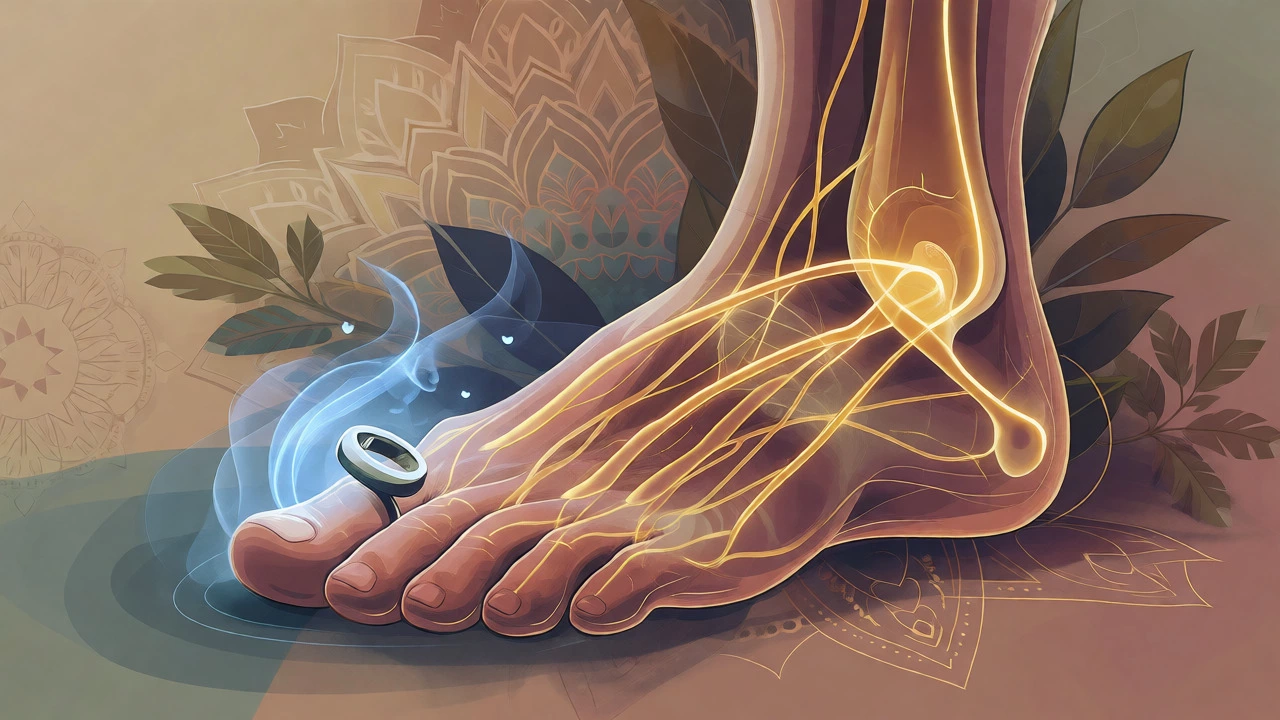
Move beyond the social aspect, and you hit the physiological side. Many proponents of traditional medicine argue that toe rings aren’t just decorative-they’re therapeutic. The theory rests on Ayurveda, an ancient Indian system of medicine. According to this belief, the nerves from the second toe connect directly to the uterus and heart via pressure points.
The idea is simple: wearing a ring on the second toe applies constant, gentle pressure to these nerve endings. This stimulation is believed to regulate menstrual cycles, reduce cramps, and improve reproductive health. While modern Western medicine doesn’t fully validate the direct link between toe pressure and uterine health, the placebo effect and the comfort of ritual play significant roles. Many women report feeling more balanced or grounded when they wear their rings daily.
It’s worth noting that the material matters here too. Traditionalists insist on silver over gold for health benefits. Why? Silver is considered a cooling metal in Ayurveda, which balances body heat. Gold, being conductive and heating, is sometimes avoided for daily wear on feet, though this rule is loosely followed in urban fashion circles today.
Fashion Evolution: From Ritual to Runway
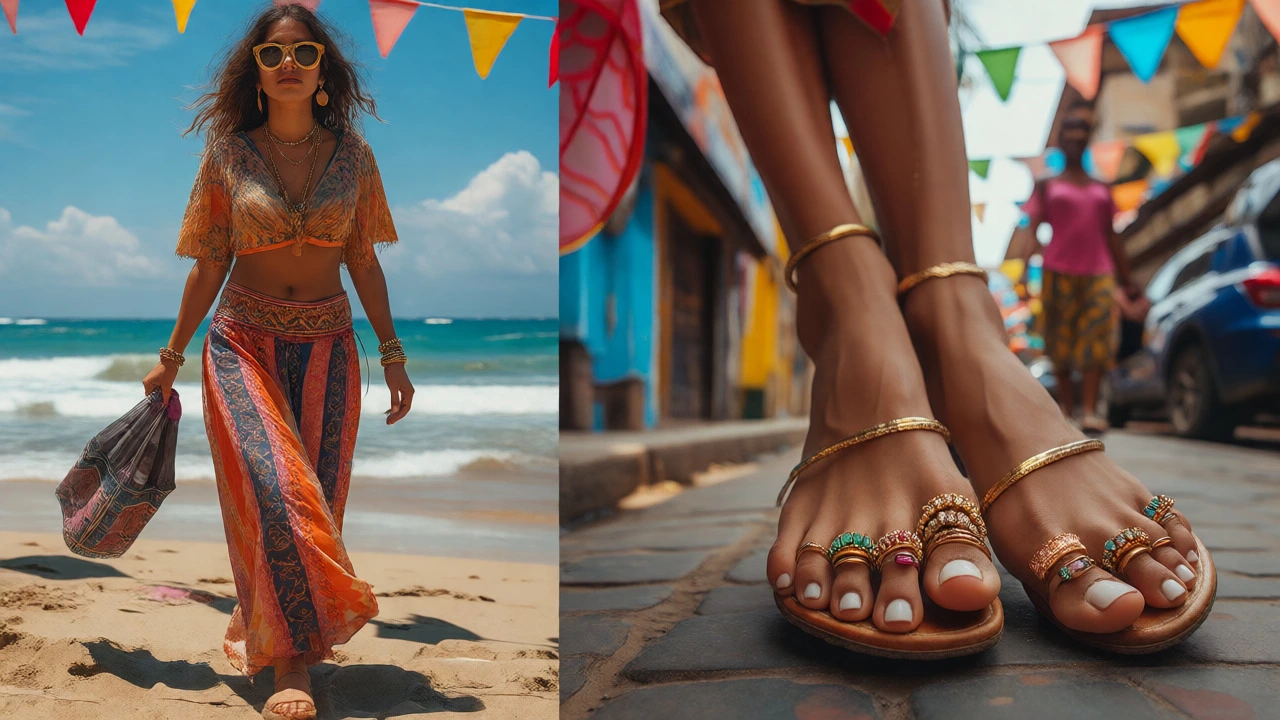
Let’s talk about the shift we’re seeing now. Toe rings have escaped the confines of tradition. They’ve become global fashion staples. You’ll see them paired with beachwear in Bali, bohemian outfits in London, and streetwear in Mumbai. The rigid rules about "married women only" are fading fast.
Designs have exploded in variety. We’re no longer limited to simple silver bands. Contemporary designers offer intricate patterns, gemstone-studded options, and minimalist geometric shapes. The focus has shifted from symbolic weight to aesthetic appeal. People mix metals, stack multiple rings, and choose designs that reflect personal style rather than community expectation.
This evolution raises an interesting question: Does removing the traditional context dilute the meaning? Some purists say yes. They argue that wearing a toe ring without understanding its roots turns a sacred symbol into mere ornamentation. Others argue that culture evolves, and fashion is a valid new layer of meaning. Both perspectives hold water. The key is awareness. If you wear one for fashion, own that choice. If you wear it for tradition, respect the history.
Regional Variations Across India
India is vast, and so are its interpretations of the toe ring. What holds true in Rajasthan might differ in Tamil Nadu. Understanding these nuances prevents cultural missteps and adds depth to your appreciation of the jewelry.
| Region | Common Practice | Material Preference | Cultural Note |
|---|---|---|---|
| North India (Punjab, Haryana) | Worn on both feet, often heavy designs | Silver, sometimes gold-plated | Strong indicator of marital status; part of bridal trousseau. |
| South India (Tamil Nadu, Kerala) | Often single toe, simpler designs | Gold, silver | Less strictly tied to marriage; popular among all ages for aesthetics. |
| West India (Gujarat, Maharashtra) | Paired with anklets, elaborate patterns | Silver predominantly | Considered auspicious during festivals and weddings. |
| East India (Bengal, Odisha) | Varied; less uniform practice | Mix of gold and silver | Increasingly adopted as fashion accessory by younger generations. |
Notice how the material preference shifts? In the North, silver dominates due to Ayurvedic beliefs. In the South, gold is more accepted for daily wear, reflecting different economic and cultural attitudes toward precious metals. These details matter if you’re shopping for authentic pieces or trying to understand local customs.
Choosing the Right Toe Ring: A Practical Guide
So, you want to buy one. Where do you start? Size, material, and design are your main decision points. Getting these wrong leads to discomfort or dissatisfaction.
- Size Matters: Feet swell throughout the day. Measure your toe in the evening, not the morning. A ring that fits at 9 AM might cut off circulation by 6 PM. Adjustable rings are a safe bet if you’re unsure.
- Material Choice: If you have sensitive skin, avoid nickel alloys. Opt for sterling silver, pure gold, or stainless steel. Silver tarnishes but is easy to clean. Gold stays shiny but costs more. Stainless steel is durable and hypoallergenic, great for active lifestyles.
- Design Comfort: Avoid sharp edges. Since toes rub against shoes, a smooth inner band is crucial. Intricate outer designs are fine, but ensure they don’t snag on socks or fabric.
Pro tip: Start with a simple band before investing in ornate designs. Wear it for a week to test comfort. If it causes pain or leaves deep marks, the fit or shape isn’t right for your foot structure.
Modern Misconceptions and Myths
Several myths persist around toe rings. Let’s debunk the big ones.
Myth 1: Only married women can wear them. False. Unmarried women, men, and non-binary individuals wear them globally. The restriction is largely historical and regional, not universal law.
Myth 2: Wearing a toe ring brings bad luck if unmarried. In some conservative households, yes. But in urban centers, it’s seen as quirky or stylish. Context is everything.
Myth 3: Gold toe rings are always better than silver. Depends on your goal. For Ayurvedic health claims, silver wins. For wealth display, gold wins. For durability and low maintenance, platinum or steel might win.
Understanding these myths helps you navigate social expectations without feeling pressured. You decide what the symbol means for you.
Care and Maintenance Tips
To keep your toe ring looking good, follow these simple steps. Silver tarnishes quickly due to sweat and dirt. Clean it weekly with a mild soap solution and a soft cloth. Avoid harsh chemicals like bleach, which can damage the finish.
Store them separately. Toe rings can scratch other jewelry if thrown together in a box. Use a small pouch or a dedicated compartment in your jewelry organizer. If you swim frequently, remove them. Chlorine and saltwater accelerate corrosion, especially for lower-karat gold or plated items.
Regular checks for loose stones or bent bands prevent loss. Since toes move constantly, prongs can loosen over time. A quick check once a month saves you from losing a gemstone in the carpet.
Frequently Asked Questions
Is it necessary to wear a toe ring on the second toe?
Traditionally, yes, especially in Ayurvedic practices, because the second toe is linked to specific nerve pathways connected to the reproductive system. However, in modern fashion, people wear rings on any toe based on comfort and style preferences. There is no strict rule outside of specific cultural or religious contexts.
Can men wear toe rings?
Absolutely. While historically associated with women in South Asian cultures, men wear toe rings globally for fashion, spiritual reasons, or as symbols of commitment in certain subcultures. In the West, it’s a common unisex accessory.
Does wearing a toe ring really help with periods?
Scientific evidence supporting a direct physiological link is limited. However, many users report subjective relief from menstrual discomfort, possibly due to acupressure principles or the psychological comfort of adhering to a traditional wellness ritual. It’s best viewed as a complementary practice rather than a medical cure.
What is the difference between a toe ring and a toe separator?
A toe ring is a circular band worn around a single toe for decoration or symbolism. A toe separator is usually made of foam or silicone and sits between two toes to relieve friction, correct alignment, or aid in pedicures. They serve completely different purposes.
Are there any superstitions about removing a toe ring?
In some traditional families, removing a wedding toe ring prematurely is considered unlucky or a sign of disrespect to the spouse. However, practical reasons like swelling, injury, or changing outfits often necessitate removal, and most modern couples view this pragmatically.