When you think of gold jewelry, you don’t just see metal. You see history, emotion, and culture woven into every curve and gemstone. In South Indian traditions - especially in places like Chennai - gold isn’t just worn. It’s celebrated. And the most powerful way to elevate its beauty? Pairing it with the right color. Not just any color. The two that have stood the test of time, the ones that make hearts pause and eyes widen. Gold and ruby. And gold and emerald.
Gold and Ruby: The Fire That Matches the Sun
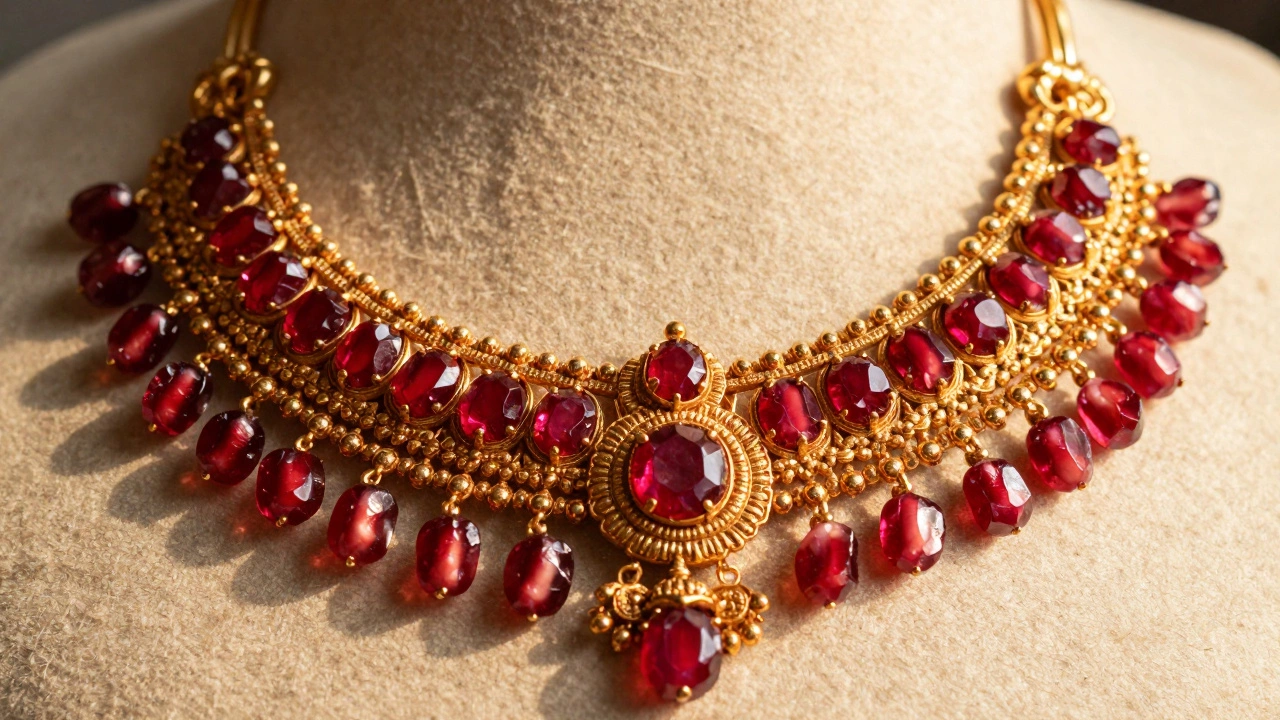
Picture a temple necklace, heavy with intricate filigree, each link holding a deep red ruby. The gold catches the morning light. The ruby glows like a drop of crushed pomegranate. Together, they don’t just look good - they feel alive. This pairing isn’t new. It’s been worn by queens in Thanjavur, brides in Madurai, and grandmothers in Kanchipuram for over 500 years.
Ruby, known as manikam in Sanskrit, is more than a gem. It’s a symbol of power, protection, and passion. In traditional Vedic astrology, it’s linked to the Sun - the source of all life. Gold, of course, is the metal of the Sun itself. So when you wear gold with ruby, you’re not following a trend. You’re aligning with ancient cosmic logic.
Real gold, 22K or higher, has a warm, honey-toned glow. Ruby, when cut well and set properly, reflects that warmth back - deeper, richer, fiercer. You’ll see this in classic temple jewelry: a pair of jhumkas with ruby drops, a maang tikka with a central ruby flanked by gold filigree, or a choker with alternating ruby beads and gold beads. The contrast isn’t sharp. It’s harmonious. Like fire and sunlight.
Gold and Emerald: The Green That Breathes
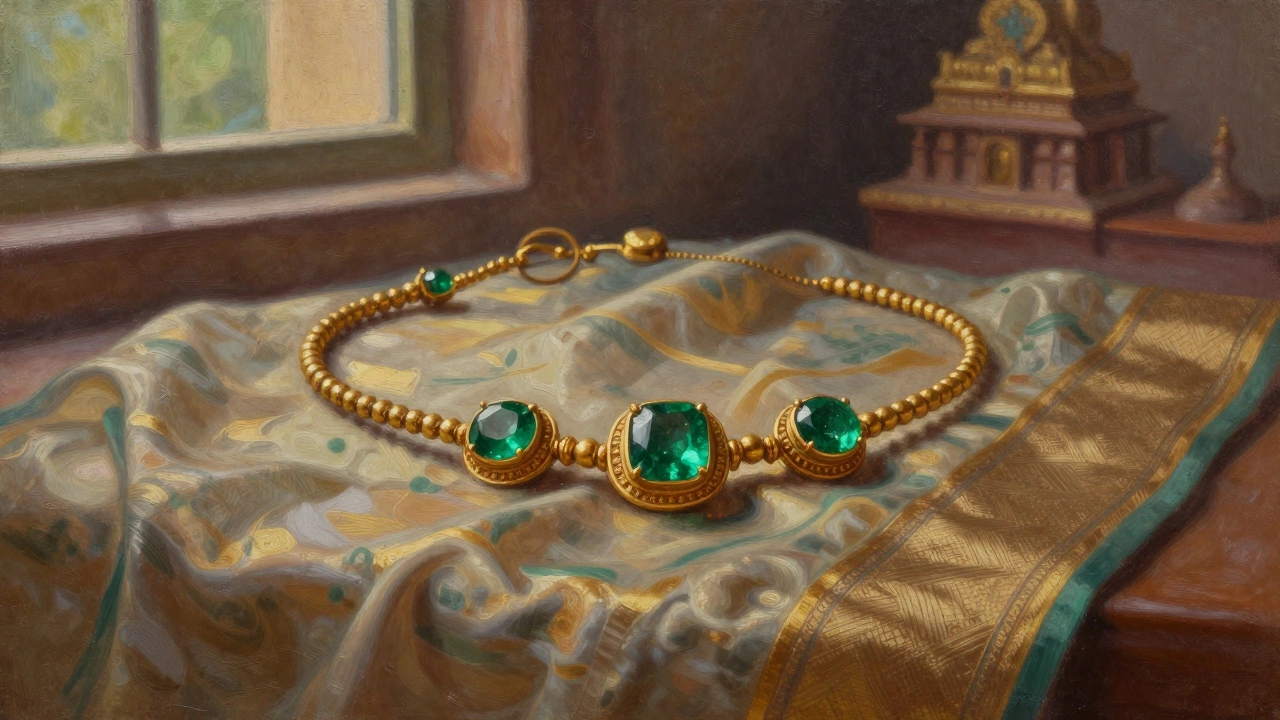
If gold and ruby are the heartbeat of tradition, then gold and emerald are its breath. Emerald, or panna, brings calm. It’s the color of monsoon rains on temple courtyards, of new rice shoots in Tamil Nadu’s fields, of the deep green silk of a Kanchipuram sari.
In South Indian households, emerald is often worn by women after marriage - not as a fashion statement, but as a blessing. It’s believed to bring balance, clarity, and prosperity. When set in gold, the effect is quiet but unforgettable. A pair of gold bangles with emerald inlays, a pendant with a single emerald nestled in a gold lotus - these pieces don’t shout. They whisper elegance.
Unlike ruby, emerald doesn’t compete with gold. It complements it. The cool green of a fine emerald makes the warmth of gold glow even brighter. It’s why you’ll find this combination in bridal sets from the 1940s still being passed down today. A woman in her 70s in Trichy might wear a gold mangalsutra with three emeralds - each one chosen because it caught the light just right when she was married.
Why These Two? The Science Behind the Beauty
It’s not just tradition. There’s real color theory behind why these pairings work.
Gold has a warm undertone - yellow, sometimes slightly orange. Ruby, with its deep red hue, sits directly opposite green on the color wheel. That means it’s a complementary color to emerald. But here’s the twist: when you place ruby next to gold, they’re not opposites. They’re cousins. Both are warm. Both carry energy. Both reflect light in similar ways.
Emerald, on the other hand, is cool. It’s the perfect counterbalance. Gold + emerald = warmth meeting cool. Fire meeting water. Sun meeting rain. That’s why these two combinations feel so complete. They don’t just look beautiful. They feel balanced.
Modern jewelers in Chennai still test this. They’ll lay out gold pieces with different stones under natural light. The ruby and emerald always stand out. Not because they’re the most expensive. But because they’re the most alive.
What About Other Colors? Why Not Sapphire or Amethyst?
You might ask: What about blue sapphire? Or purple amethyst? Aren’t they beautiful with gold?
They are. But they don’t carry the same cultural weight. Sapphire, or neelam, is powerful - but it’s linked to Saturn, a planet associated with hardship in Vedic astrology. Many families avoid wearing it with gold unless there’s a specific astrological reason.
Amethyst? It’s modern. It’s trendy. But it doesn’t have the centuries of ritual behind it. In Tamil Nadu, a woman might wear a gold ring with a diamond for a wedding. But she’ll wear a gold bangle with a ruby or emerald for daily worship. One is for celebration. The others are for connection.
Even in today’s global market, when designers from Paris or Milan try to mix gold with turquoise or coral, it rarely resonates with South Indian buyers. The heart still knows what the eyes haven’t forgotten.

How to Spot Real Pairings in Real Jewelry
If you’re looking to buy or identify authentic gold jewelry with these color pairings, here’s what to look for:
- Gold purity: Real traditional pieces use 22K or 24K gold. Lower karats look dull next to rubies and emeralds.
- Stone quality: A good ruby is deep red with no brown or orange tinge. A good emerald has a rich green, not too light, not too dark. Surface cracks are normal - they’re signs of authenticity.
- Setting style: Traditional settings use kundan or polki techniques - where the stone is pressed into gold with no prongs. This holds the color closer to the metal, enhancing the glow.
- Weight and texture: These pieces are heavy. They’re meant to be felt, not just seen. If it feels too light, it’s likely a modern imitation.
Visit a trusted jeweler in Kumbakonam or Madurai. Ask to see pieces from the 1980s or earlier. You’ll notice the same patterns: ruby in the center, emerald on the sides, gold holding it all together. These aren’t random choices. They’re inherited wisdom.
Modern Takes, Same Soul
Today, younger designers are blending these classics into minimalist styles. A thin gold chain with a single ruby pendant. A pair of stud earrings with tiny emeralds. These aren’t dilutions - they’re translations.
A bride in Bangalore might wear a gold nose ring with a ruby, paired with a simple emerald drop in her ear. She’s not rejecting tradition. She’s carrying it forward.
The truth is simple: no other two colors work with gold the way ruby and emerald do. Not because they’re the most expensive. But because they’re the most meaningful. They carry stories. They carry prayers. They carry the weight of generations.
When you wear gold with ruby, you wear the sun. When you wear gold with emerald, you wear the earth. Together, they make something timeless.
Why are ruby and emerald considered the best colors to pair with gold in traditional jewelry?
Ruby and emerald have been paired with gold for centuries in South Indian culture because they align with ancient astrological and aesthetic principles. Ruby, linked to the Sun, enhances gold’s natural warmth, symbolizing power and protection. Emerald, linked to balance and prosperity, contrasts beautifully with gold’s warmth, creating harmony. These pairings aren’t just visually striking - they’re deeply rooted in ritual, making them more meaningful than modern alternatives.
Can other gemstones like sapphire or diamond work as well with gold?
Sapphire and diamond can look elegant with gold, but they lack the cultural resonance of ruby and emerald in traditional South Indian jewelry. Sapphire is associated with Saturn, often avoided in daily wear due to astrological beliefs. Diamond, while popular in modern bridal sets, doesn’t carry the same symbolic weight in rituals or ancestral designs. Ruby and emerald are preferred because they’re tied to daily worship, family heritage, and seasonal traditions.
How can I tell if a ruby or emerald in gold jewelry is real?
Real rubies have a deep, saturated red without orange or brown tones. Real emeralds show a rich green with natural inclusions - not perfect clarity. Look for traditional kundan or polki settings where the stone is pressed into gold without prongs. Authentic pieces are heavy, with intricate handcrafted goldwork. If the piece feels too light or has a uniform, machine-made look, it’s likely synthetic or plated.
Are these color combinations only for women?
Traditionally, yes - these pieces were worn by women during rituals, weddings, and daily worship. But modern designs now include unisex pieces like gold rings with ruby or emerald accents for men. In some communities, men wear gold bangles with a single emerald during temple visits. The symbolism is still the same, even if the form has evolved.
Where can I find authentic gold jewelry with ruby and emerald in India?
The best places are traditional jewelry hubs like Kumbakonam, Madurai, and Kanchipuram in Tamil Nadu, or Mysore in Karnataka. Look for family-run workshops that have been making temple jewelry for generations. Avoid large retail chains - they often sell mass-produced pieces. Ask to see older stock or heirloom designs - those will show the true craftsmanship and color pairing.