Bangle Color Meaning Calculator
Select options to see cultural significance
Choose your marital status, occasion, and color preference to see what it means in Indian tradition.
When you see a woman in India wearing a stack of colorful bangles, it’s not just jewelry-it’s a language. Each color tells a story, carries a wish, or marks a moment in her life. The red, green, gold, and white bands on her wrists aren’t chosen randomly. They’re tied to centuries of belief, regional customs, and deep cultural codes that still shape how women wear them today.
Red: The Symbol of Marriage and Vitality
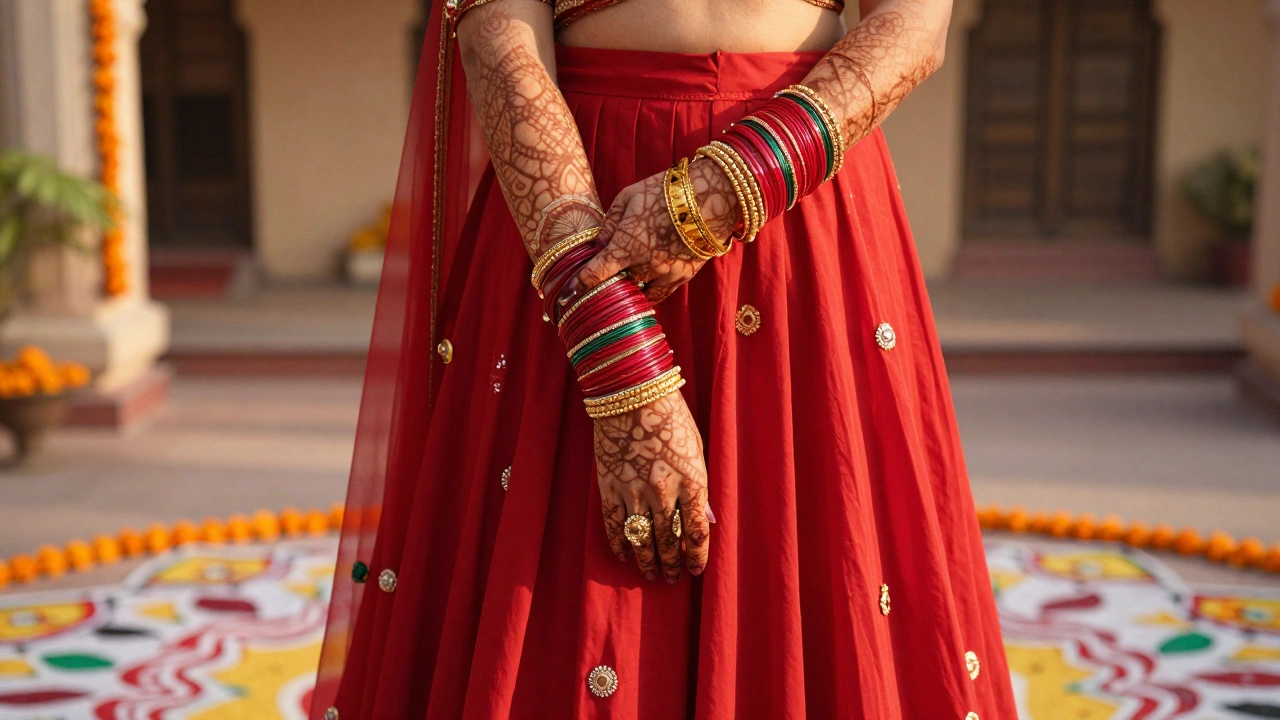
Red is the most powerful color in Indian bangle traditions. It’s not just popular-it’s expected. In North India, especially in states like Punjab, Haryana, and Uttar Pradesh, brides wear red glass bangles from the moment they say "I do." The shade isn’t just any red-it’s often a bright, almost fiery vermilion, called gulabi or laal. This color stands for energy, passion, and the life force of a married woman. In many families, if a bride’s red bangles break, it’s seen as a sign of bad luck, and they’re replaced immediately.
But red isn’t just for weddings. Married women across India wear red bangles daily as a visible sign of their marital status. It’s why widows in some communities stop wearing them-removing the red is a quiet, deeply felt ritual of transition. Even today, in rural households, mothers will say, "Put on your red bangles," as a way of reminding their daughters of their role and responsibility in the family.
Green: Prosperity, Fertility, and Protection
Green bangles are often worn alongside red, especially in South India and parts of West Bengal. In Tamil Nadu and Kerala, brides wear emerald-green glass or lac bangles as part of their wedding set. Green stands for growth, fertility, and good fortune. It’s believed to protect the woman from the "evil eye"-a harmful glance thought to bring misfortune.
Many women in Andhra Pradesh and Telangana wear green bangles during pregnancy, believing they help ensure a healthy birth. In some households, green bangles are the only ones worn after childbirth, replacing the red ones as a symbol of new life. The color is also linked to nature and the earth, making it a grounding presence in rituals tied to motherhood.
Gold: Wealth, Status, and Sacredness
Gold bangles aren’t just decorative-they’re heirlooms. In many families, gold is passed down from mother to daughter, often with each generation adding a new pair. A bride might wear a single thick gold bangle on one wrist, while the other holds glass or lac bangles. This balance of gold and color is intentional.
Gold represents not just wealth, but spiritual purity. In Hindu rituals, gold is associated with the sun and the goddess Lakshmi, the deity of prosperity. Women who wear gold bangles daily, especially in South India, often do so as a form of security-gold holds value even in hard times. In some communities, gold bangles are the only jewelry a woman wears after her husband’s death, symbolizing enduring connection and dignity.
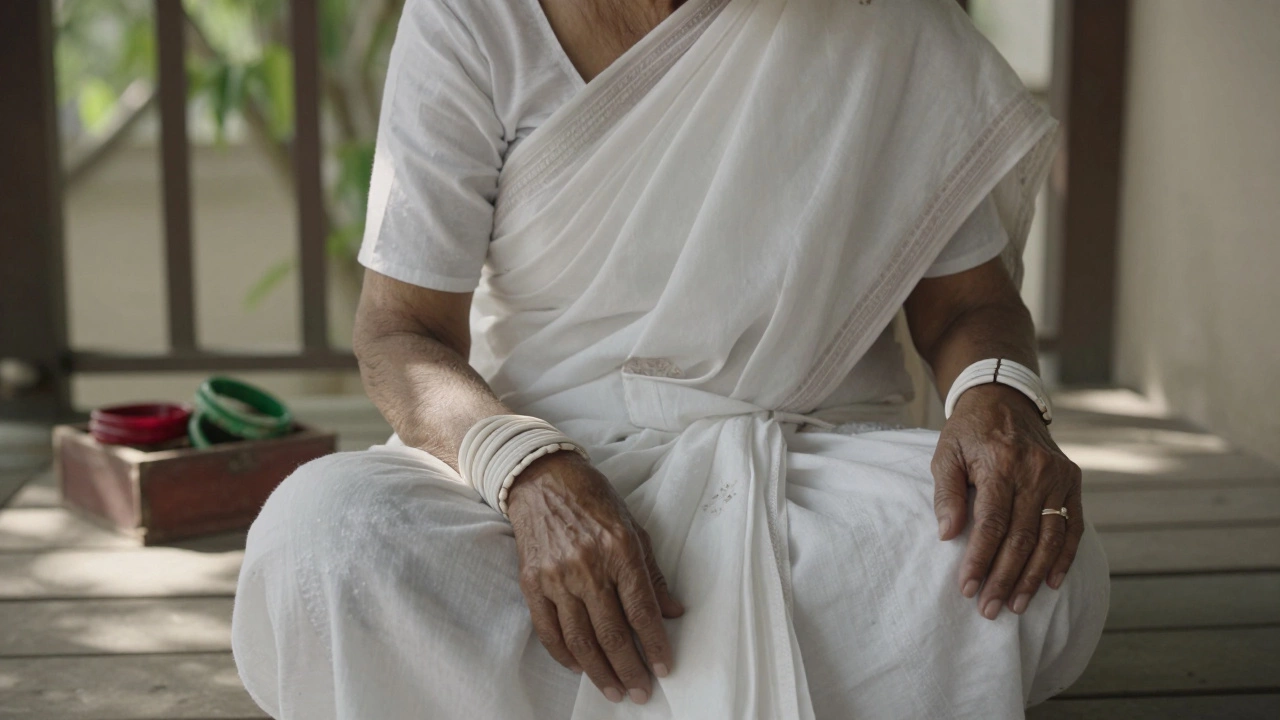
White and Cream: Purity, Widowhood, and Simplicity
White and cream bangles are worn by widows in many parts of India, especially in conservative communities in Bihar, Rajasthan, and parts of Maharashtra. After the death of her husband, a woman may be expected to remove all colored bangles and wear only plain white ones made of shell or plastic. This practice, though fading in cities, still exists in rural areas and is tied to ideas of austerity and mourning.
But white isn’t always about loss. In some regions, like Gujarat, newly married women wear white bangles for the first few days after the wedding, symbolizing purity before transitioning to red. In parts of Bengal, white bangles are worn during fasting rituals or religious ceremonies to signify detachment and spiritual focus.
Yellow and Orange: Auspicious Beginnings
Yellow and orange bangles are most common during festivals like Karva Chauth, Teej, and Navratri. These colors are tied to the sun, energy, and the goddess Durga. In Rajasthan and Madhya Pradesh, women wear bright yellow bangles during Teej, dancing and singing in celebration of monsoon and marital joy.
Orange is also worn by women during religious fasts, especially in North India. It’s the color of saffron, sacred in Hinduism, and believed to bring divine protection. Young girls often wear orange bangles before marriage as a sign of readiness for future life changes.
Blue and Purple: Modern Shifts and Regional Nuances
Traditionally, blue and purple weren’t common in bangle sets. But today, especially in urban centers like Delhi, Mumbai, and Bangalore, younger women wear them for fashion. Blue is sometimes chosen for its calming effect, while purple is linked to royalty and individuality.
In some parts of Odisha and Assam, blue bangles are worn during specific temple rituals. Purple, though rare in traditional sets, is now used by designers blending heritage with modern style. These colors don’t carry ancient meanings-but they’re becoming new symbols of personal expression.
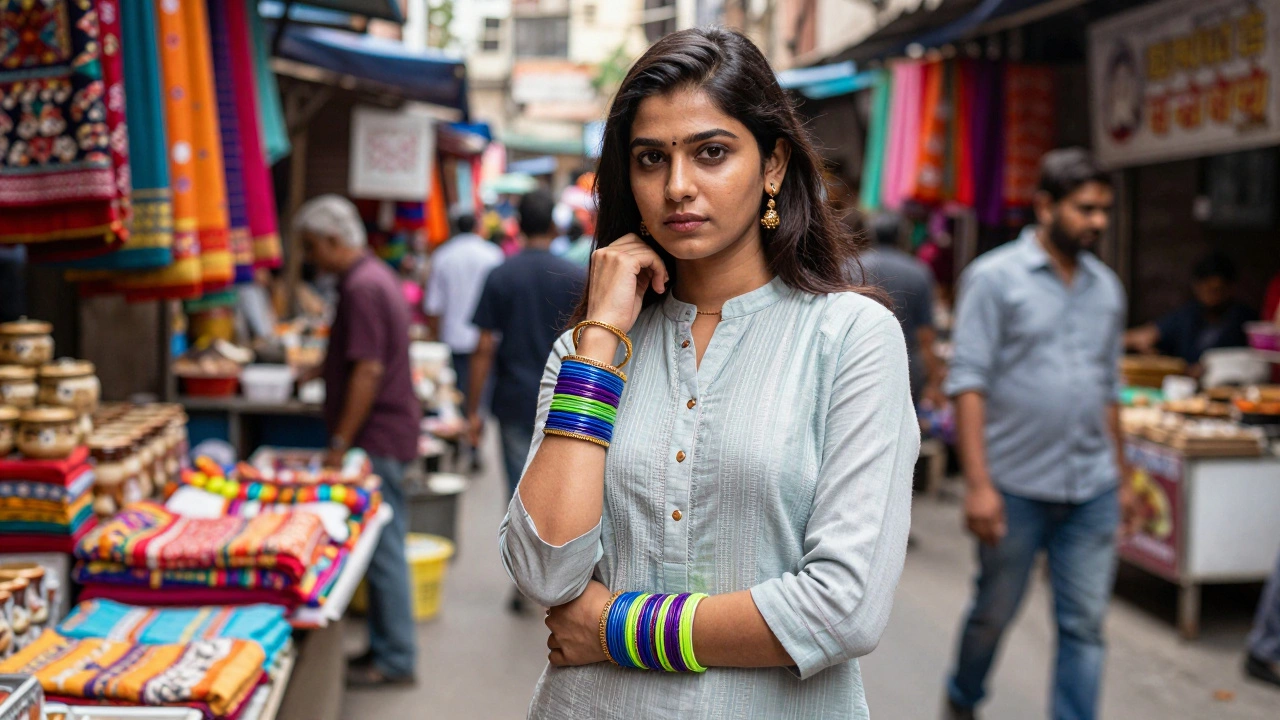
Why the Stack Matters: More Than Just Color
The number of bangles worn also matters. A bride might wear 21 bangles-seven each in red, green, and gold-to represent the seven vows of marriage. In some communities, women wear as many as 40 or 50, especially during festivals. The sound of bangles clinking together isn’t just pleasant-it’s a signal. It tells others she’s married, she’s present, she’s alive in her role.
There’s also a practical side. In many villages, women wear bangles to protect their wrists from injury during daily chores. The thicker the bangle, the more protection it offers. That’s why lac and metal bangles are still preferred over fragile glass in households where women work in fields or kitchens.
What’s Changing Today?
Young women in cities are mixing bangle styles. A woman might wear a single gold bangle on one wrist and a few colorful plastic ones on the other. Some skip bangles entirely, choosing minimalist rings instead. But even then, many still wear red bangles on their wedding day-and keep them on for years after.
Designers are now creating bangles with embedded stones, engraved scripts, or even LED lights. But the core meaning hasn’t vanished. When a bride chooses her bangles, she’s still choosing what she wants to carry into her new life: strength, luck, love, or protection.
How to Choose the Right Colors Today
If you’re buying bangles for a wedding, a festival, or just for yourself, here’s what works:
- For a bride: Start with red and green. Add gold for tradition and weight.
- For daily wear: Mix one or two colors that match your skin tone and mood. Red for energy, green for calm, gold for elegance.
- For festivals: Go bright-yellow, orange, or even pink. These colors celebrate joy.
- For mourning or simplicity: Stick to white or cream, but know that this is a personal choice now, not a rule.
There’s no single "right" way anymore. But understanding the meaning behind each color helps you wear them with respect-even if you’re not Indian.
Why do Indian brides wear so many bangles?
Indian brides wear many bangles as a symbol of prosperity, marital status, and protection. The number-often 21 or more-represents completeness and good fortune. The sound of the bangles is also believed to ward off negative energy. In many families, the bangles are gifts from the bride’s maternal side, making them a link to her family’s blessings.
Can unmarried women wear colored bangles?
Yes, unmarried women can wear any color. Traditionally, red and gold were reserved for married women, but that’s changing fast. Today, young women wear green, blue, purple, and even neon bangles purely as fashion. The old rules are fading, especially in cities, where personal style overrides tradition.
Do all Indian communities follow the same bangle color rules?
No. Rules vary widely by region. In South India, green is central to bridal sets, while in the North, red dominates. In Bengal, white bangles are worn by brides early in the wedding rituals. Tribal communities like the Santhals or Gonds use natural dyes and unique patterns that don’t follow mainstream Hindu symbolism. There’s no single rulebook-just rich diversity.
Are glass bangles better than plastic or metal?
Glass bangles are traditional and make the classic tinkling sound, but they break easily. Plastic is durable and cheap, making it popular for daily wear. Metal bangles-especially gold or silver-are heirlooms and symbols of wealth. The best choice depends on use: glass for ceremonies, plastic for work, metal for legacy. Many women now mix them all.
What if a bangle breaks? Is it bad luck?
In many families, a broken bangle-especially red or gold-is seen as bad luck, and it’s replaced quickly. But this belief is fading. In modern homes, people see it as just a broken piece of jewelry. Still, some women keep the broken bangle as a keepsake, believing it holds the memory of a special day. There’s no universal answer-it’s personal.