Gold Purity Decoder & Guide
| Hallmark | Karat | Purity % | Best For |
|---|
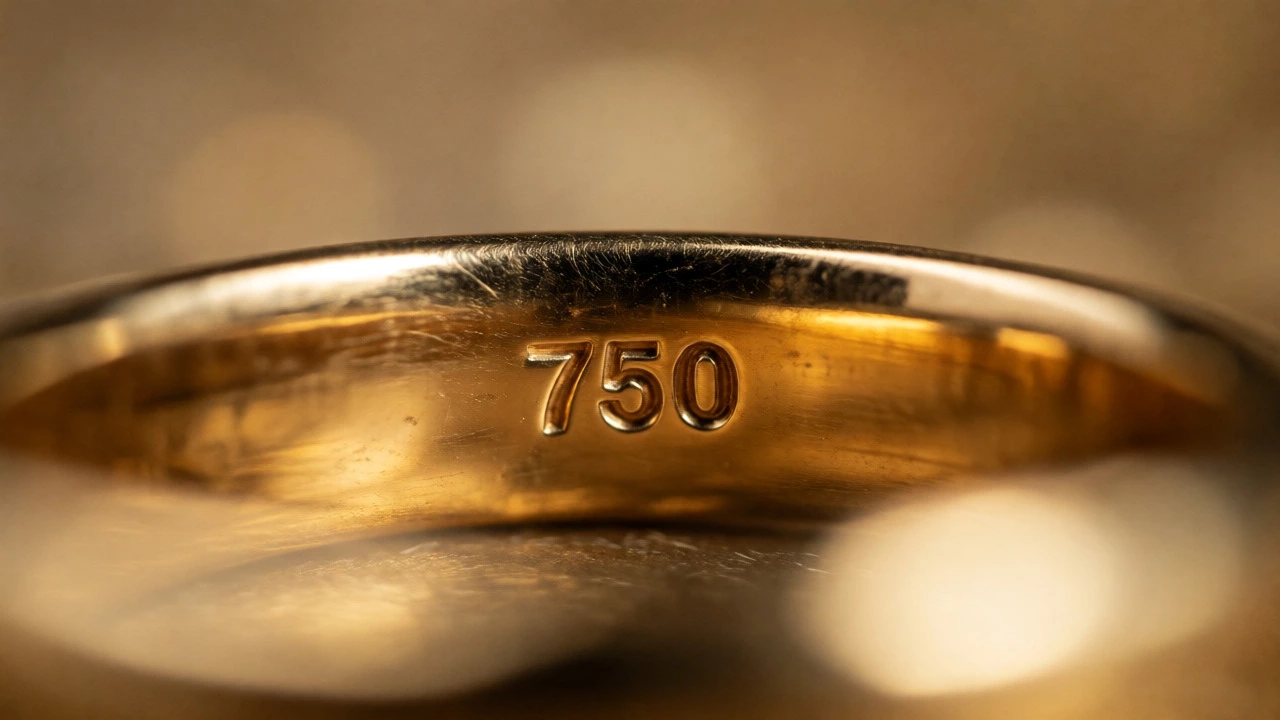
You pick up a ring, turn it over, and see the tiny number 750 stamped into the metal. It looks like a code from a spy movie, but it’s actually one of the most important pieces of information about your jewelry. If you’ve ever wondered why some rings are marked 750 while others say 916 or 585, you’re not alone. This number tells you exactly how much pure gold is in that band, which directly affects its value, durability, and color.
Understanding these stamps isn’t just for jewelers. Whether you’re buying an engagement ring, inheriting a family heirloom, or selling old pieces, knowing what 750 means protects your wallet. Let’s break down exactly what this hallmark signifies, how it compares to other common marks, and why it matters when you’re shopping for gold.
The Math Behind the Mark: Why 750 Equals 18 Karats
750 is a metric representation of gold purity measured in parts per thousand. It indicates that the alloy contains 750 parts of pure gold out of 1,000 total parts. In simpler terms, it is 75% pure gold. The remaining 25% consists of other metals like copper, silver, zinc, or nickel, added to strengthen the soft natural gold.
This system replaced the older, less precise methods of measuring purity. Before standardized hallmarks, buyers relied on trust or acid tests. Today, international standards require manufacturers to stamp the exact percentage. So, when you see 750, you know it corresponds to 18 Karats (18K). Since pure gold is 24 Karats, calculating the percentage is straightforward: (18 / 24) * 100 = 75%. Hence, the stamp 750.
Why use 750 instead of just saying "18K"? Because "Karats" can be confused with "Carats," the unit used for diamonds. Using the three-digit millesimal system removes ambiguity globally. A ring stamped 750 in Mumbai has the same gold content as one stamped 750 in Paris or New York.
Common Gold Hallmarks Compared
Not all gold is created equal. Different markets prefer different purities based on cultural preferences and durability needs. In India, for instance, higher purity is often prized for investment and traditional wear, whereas Western markets often favor lower purity for daily-wear durability. Here is how 750 stacks up against the other marks you’ll likely encounter.
| Hallmark | Karat Equivalent | Pure Gold Content | Other Metals | Best For |
|---|---|---|---|---|
| 999 | 24K | 99.9% | Trace impurities | Investment bars, coins |
| 916 | 22K | 91.6% | 8.4% alloys | Traditional Indian jewelry |
| 750 | 18K | 75.0% | 25.0% alloys | Diamond settings, durable rings |
| 585 | 14K | 58.5% | 41.5% alloys | Everyday wear, budget options |
| 375 | 9K | 37.5% | 62.5% alloys | Fashion jewelry, hard wear |
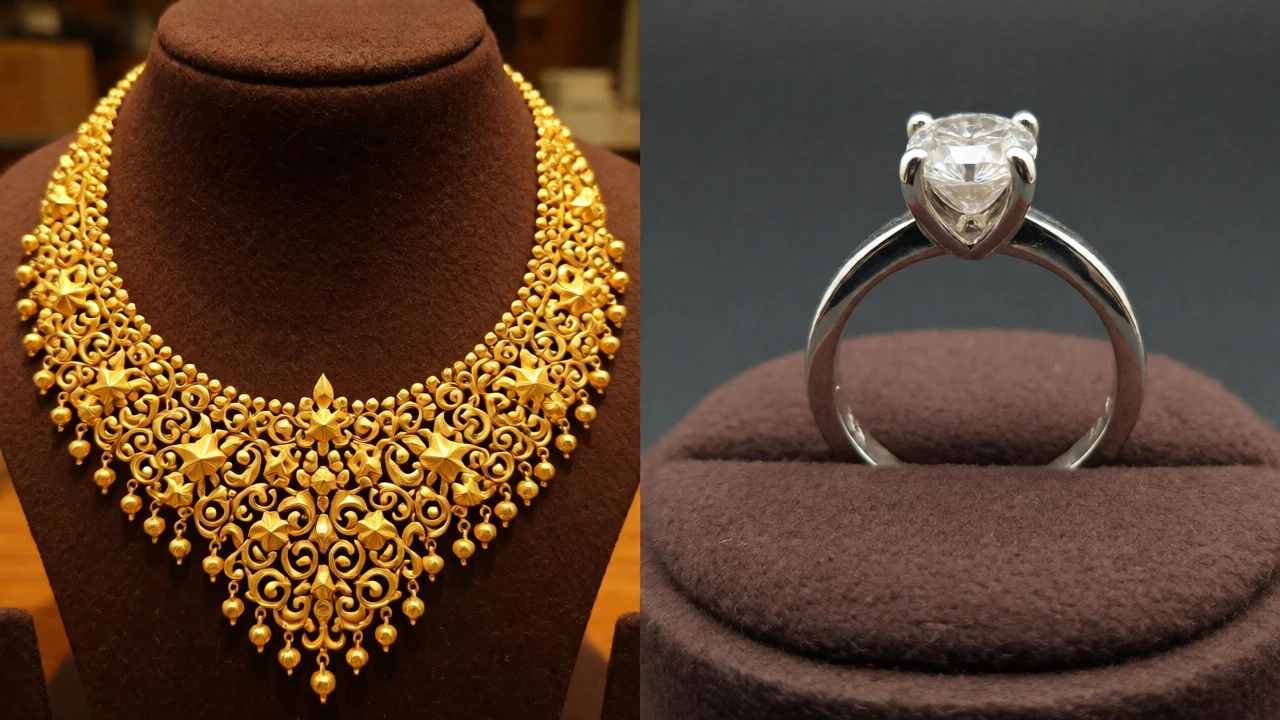
Notice the gap between 916 and 750. In India, 916 gold is extremely popular for necklaces and bangles because it retains the rich yellow color associated with wealth and tradition. However, 22K gold is quite soft. If you set a diamond in 916 gold, the prongs might bend over time, risking the stone falling out. That’s where 750 comes in.
Why Choose 750 Over 22K or 14K?
So, if 916 is purer, why would anyone choose 750? And if 585 is stronger, why pay more for 750? It’s all about balance.
Durability vs. Purity: Pure gold (24K) is incredibly soft. You can scratch it with a fingernail. To make it wearable, jewelers mix it with harder metals. At 750 (18K), the alloy is strong enough to hold gemstones securely without bending, yet it still contains enough gold to resist tarnishing better than 14K. If you have an active lifestyle, 750 offers a sweet spot. It won’t scratch as easily as 22K, but it won’t fade or cause skin reactions as quickly as some lower-purity alloys.
Color Consistency: The type of metal mixed with the gold changes the color. White gold, rose gold, and yellow gold at the 750 level look richer and more vibrant than their 14K counterparts. For example, Rose Gold gets its pink hue from copper. At 750 purity, there is enough copper present to create a deep, romantic blush tone that doesn’t look pale or washed out.
Allergy Considerations: Some people are allergic to nickel, a common alloy in white gold. Higher purity gold like 750 usually uses palladium or platinum group metals for whitening, which are hypoallergenic. Lower purity 14K white gold often relies on nickel, which can cause rashes in sensitive individuals.
How to Verify Your Ring’s Authenticity
A stamp is good, but it’s not proof. Unscrupulous sellers can stamp fake gold. Here is how you can check if your 750 ring is legit.
- Look for the BIS Hallmark: In India, the Bureau of Indian Standards (BIS) mandates a specific logo alongside the purity mark. A genuine 750 ring should have the BIS logo, the purity grade (750), the jeweler’s identification code, and the assay center’s mark. If it only says "750" without the other codes, be cautious.
- The Magnet Test: Gold is non-magnetic. If your ring sticks to a magnet, it’s likely plated or contains significant ferrous metals. Note that some clasps may contain steel springs, so test the band itself.
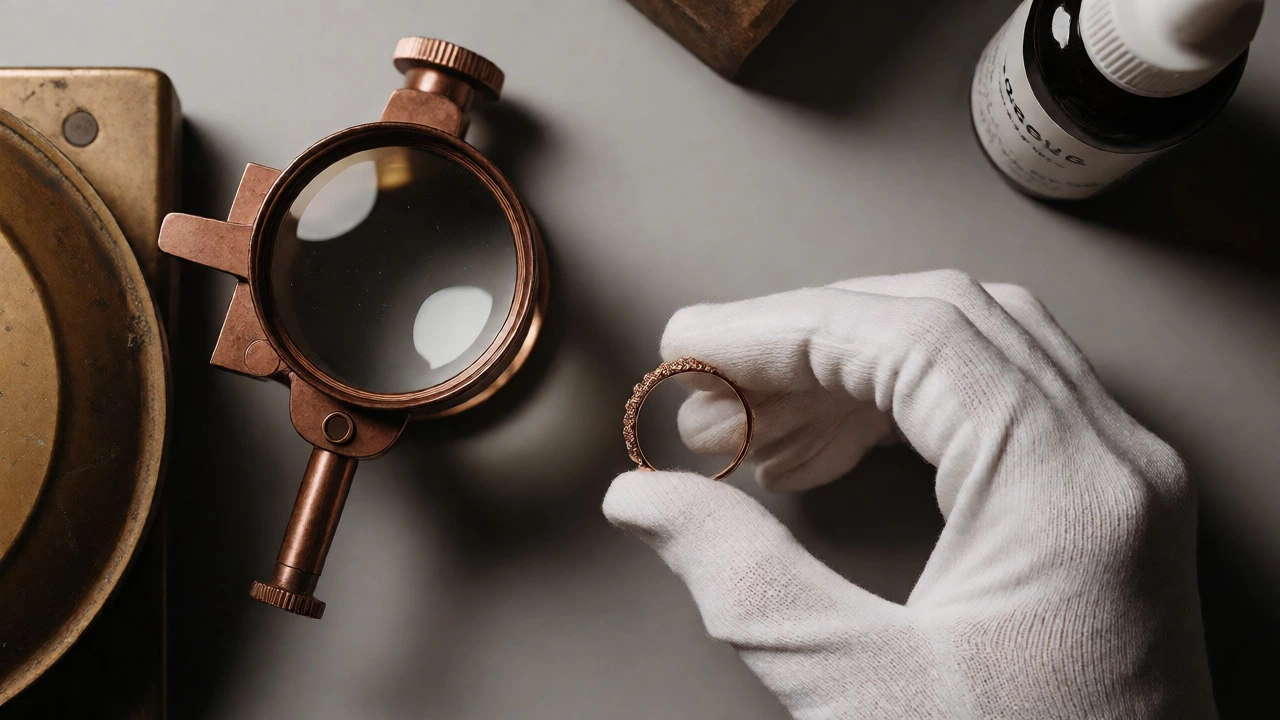
- Professional Assay: For high-value purchases, take the ring to a certified appraiser. They use X-ray fluorescence (XRF) guns or acid tests to determine exact composition without damaging the piece.
- Weight Check: Gold is dense. A solid 18K gold ring will feel heavier than a hollow 14K ring of the same size. Compare the weight to similar pieces online or in-store.
Caring for Your 750 Gold Jewelry
Even though 750 gold is durable, it’s not indestructible. The alloyed metals can react with chemicals, causing discoloration or weakening over years. Follow these simple steps to keep your ring shining.
Remove your ring before swimming in chlorinated pools or hot tubs. Chlorine attacks gold alloys, potentially causing stress cracks in the shank. Similarly, lotions, perfumes, and hairsprays can build up a film on the metal, making it look dull. Clean your ring regularly with warm water, mild dish soap, and a soft-bristled toothbrush. Gently scrub behind the setting where dirt accumulates.
If you notice your 750 white gold ring turning slightly yellowish, don’t panic. This is normal. White gold is naturally yellowish; it’s coated with rhodium to appear bright white. Over time, the rhodium plating wears off, revealing the underlying gold color. A local jeweler can re-plate it cheaply and quickly.
Buying Tips: Is 750 Right for You?
Deciding between 750, 916, or 585 depends on your priorities. Use this quick decision guide:
- Choose 750 if: You want a balance of luxury and practicality. You are buying a ring for daily wear, especially one with diamonds or gemstones. You live in a region where 18K is standard (like Europe or North America).
- Choose 916 if: You prioritize resale value and cultural tradition. You live in South Asia or the Middle East. You are buying chains or earrings that don’t need to hold heavy stones securely.
- Choose 585 if: Budget is a primary concern. You need maximum durability for rough manual work. You prefer a lighter-colored gold or want to save money on large pieces.
Remember, 750 gold holds its value well. While 24K is best for pure investment, 18K is highly liquid in global markets. Jewelers worldwide recognize and buy back 750 pieces easily. Just ensure you keep the original purchase invoice and certificate, which detail the weight and purity.
Is 750 gold real gold?
Yes, 750 gold is real gold. It contains 75% pure gold by weight. The term "real" sometimes confuses people who think anything mixed with other metals isn't "pure." However, 18K (750) is considered high-quality fine jewelry globally and is legally recognized as gold in most countries.
Which is better, 750 or 916 gold?
Neither is objectively "better"; they serve different purposes. 916 (22K) has higher gold content and resale value but is softer and less suitable for holding diamonds. 750 (18K) is harder, more durable, and ideal for intricate designs and gemstone settings. For daily wear rings, 750 is generally preferred.
Will 750 gold turn green?
Pure gold does not turn green. However, the alloys in 750 gold (especially if they contain copper or silver) can react with sweat, lotions, or chemicals, causing a slight discoloration on the skin. This is rare with high-quality 18K gold but more common with lower purity or plated items. Regular cleaning prevents this.
Can I wear 750 gold every day?
Yes, 750 gold is excellent for everyday wear. It is significantly harder than 22K or 24K gold, meaning it resists scratches and dents better. Many engagement rings and wedding bands are made from 750 gold specifically because they withstand daily activities while maintaining their luster.
What does the letter after 750 mean?
Letters following the number indicate the manufacturer or assay office. For example, "750 AB" might mean the ring was made by company AB. In some regions, letters denote the country of origin. Always cross-reference these codes with the BIS or relevant national hallmarking authority database to verify authenticity.