Bangle Symbolism Decoder
Select a bangle style to reveal its deep cultural significance:
Chooda
PunjabKanhaiya
Gujarat/Raj.Shakha-Pola
Bengal/AssamVilakku
Tamil NaduMourning
GeneralKaleere
North IndiaClick on a bangle style above to learn about its symbolism, material, and tradition.
Walk through any market in Mumbai or Delhi, and you will hear it first. The sharp, rhythmic clinking of glass against glass. It is the sound of bangles, circular ornaments worn on the wrists that hold deep cultural and spiritual significance in India. For many women across India, this sound is not just noise; it is music. It signals presence, celebration, and identity. But what exactly does wearing a bangle mean? Is it just fashion, or is there something deeper at play?
The answer lies in centuries of tradition. In India, a bangle is never just an accessory. It is a statement. Depending on the material, color, and occasion, it can signal marital status, religious devotion, regional pride, or even political stance. To understand the Indian woman’s relationship with her bangles, we have to look beyond the jewelry itself and into the stories woven into every strand.
The Sacred Circle: Why Bangles Mean More Than Decoration
In Western culture, jewelry often serves as a status symbol or a personal style choice. You buy a necklace because it looks good with your dress. In India, the logic is different. The circular shape of the bangle is significant. It has no beginning and no end, symbolizing eternity and completeness. When a woman wears them, she is embracing this concept of wholeness.
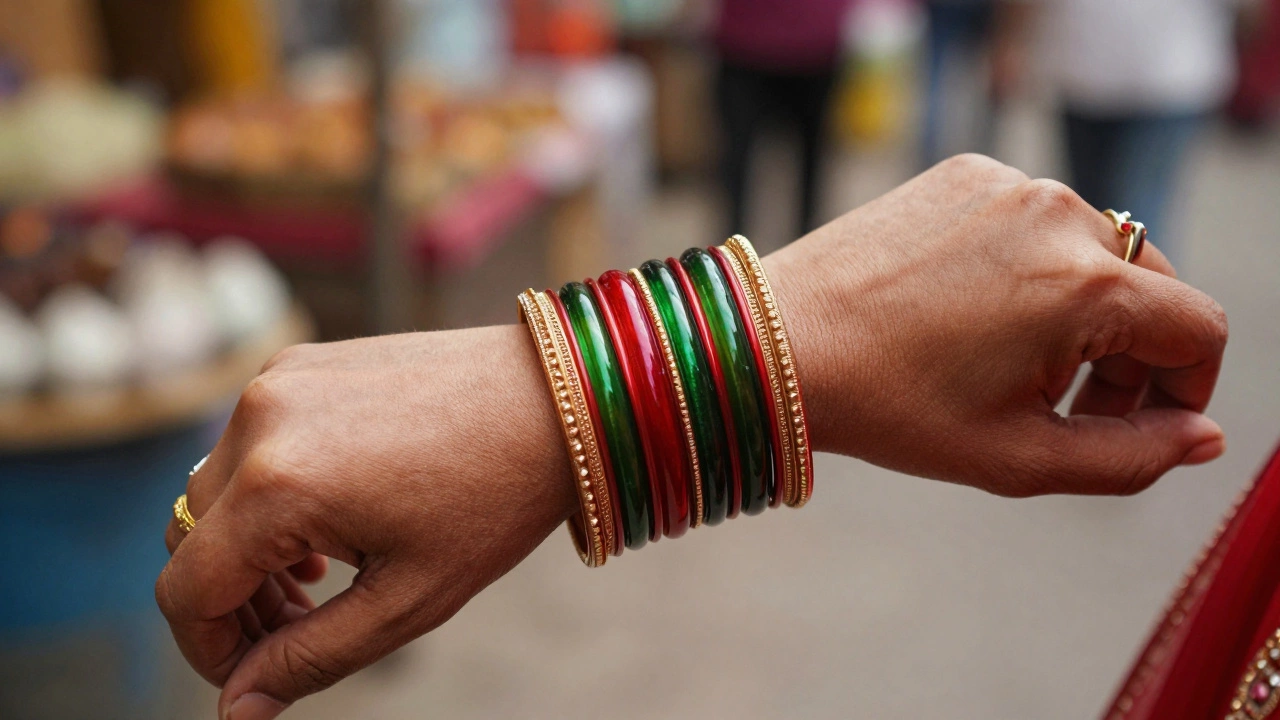
But the most powerful association is with marriage. For millions of Hindu women, the bangle is the primary indicator of being married. While the Mangalsutra, a sacred necklace worn by married Hindu women that signifies their marital bond is the central piece of jewelry, the bangles are its loud, visible counterpart. If you see a woman wearing red and green glass bangles, you instantly know she is married. This visual code helps maintain social structures and allows communities to recognize each other’s status without asking questions.
This isn’t about restriction; it’s about belonging. The bangle connects the woman to her husband and her new family. It is a daily reminder of her vows. In many households, if a married woman removes her bangles, it is considered bad luck or a sign of discord. So, the clinking sound you hear in the street is actually the sound of thousands of active marriages resonating through the city.
The Chooda: The Bride’s Armor and Identity
If you want to see the peak of bangle symbolism, look at a Punjabi wedding. Here, the bride wears the Chooda, a set of red and white ivory bangles given to the bride by her maternal uncle during the wedding ceremony. This is not just jewelry; it is a rite of passage. The Chooda consists of thick red and white bangles made from ivory (or synthetic alternatives today) and is tied together with a thread.
The symbolism here is intense. The red represents passion and prosperity, while the white stands for peace and purity. The maternal uncle, known as the 'Mama,' plays a crucial role. He gifts the Chooda, blessing his niece for her new life. The bride is expected to wear these bangles for at least forty days after the wedding. During this time, she must protect them at all costs. If they break or fall off, it is seen as an omen. Many brides sleep with their hands tucked under their pillows to keep the Chooda safe. It becomes her armor, protecting her transition from daughter to wife.
Regional Variations: How Geography Shapes Style
India is vast, and so are its bangle traditions. What a woman wears in Gujarat might look completely different from what a woman wears in Tamil Nadu. Understanding these differences reveals how local culture influences personal expression.
| Region | Bangle Type | Material & Color | Symbolism |
|---|---|---|---|
| Gujarat/Rajasthan | Kanhaiya / Glass | Bright colors, intricate patterns | Fertility, joy, and marital happiness |
| Punjab | Chooda | Red and White Ivory | Protection and new beginnings |
| Tamil Nadu | Vilakku / Gold | Solid gold, heavy designs | Wealth, status, and divine blessing |
| Assam/Bengal | Shakha-Pola | White Conch and Red Coral | Marital status and spiritual purity |
In Gujarat and Rajasthan, the Kanhaiya bangles, traditional glass bangles from Kutch known for their vibrant colors and detailed craftsmanship are iconic. Women wear stacks of them in bright yellows, pinks, and greens. These are not fragile; they are part of the daily grind. Farmers’ wives wear them while working in fields. The durability of the glass reflects the resilience of the women themselves.
In contrast, South Indian weddings feature heavy gold bangles. Here, the weight matters. The heavier the gold, the more respect and security the woman has. It is a form of financial independence wrapped in tradition. In Bengal and Assam, the Shakha-Pola-white conch shell bangles paired with red coral ones-are strictly for married women. Removing them is equivalent to removing the Mangalsutra. These variations show that while the core idea of the bangle remains constant, its execution adapts to local values.
Color Codes: Speaking Without Words
You don’t need to speak Hindi or Tamil to understand the message a woman sends with her bangles. The colors act as a language. Red is the most dominant color. It symbolizes love, fertility, and the goddess Parvati. A newlywed woman will almost always wear red. As she ages or as seasons change, the palette might shift to pink, orange, or yellow, but red remains the anchor.
Green is another critical color. It represents nature, growth, and prosperity. Often, red and green are worn together. This combination is auspicious and is believed to bring good fortune to the household. Black bangles, however, tell a different story. They are typically worn by widows or during periods of mourning. In some regions, unmarried girls may wear black or blue, but once married, the switch to red and green is mandatory.
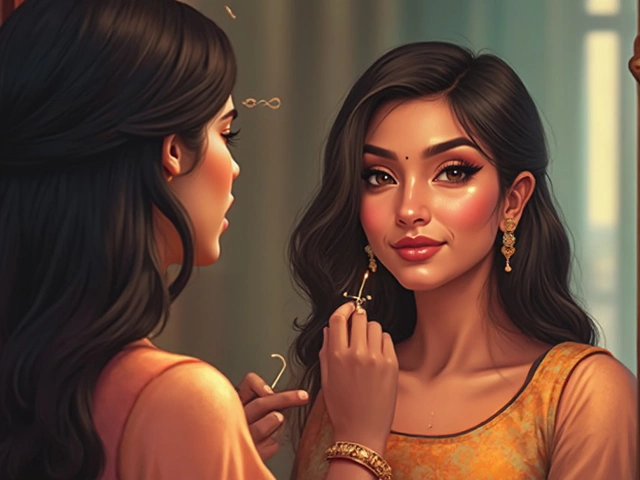
There is also the concept of 'Kaleere.' These are golden floral ornaments hung from the bangles of a bride in North India. They sway with her movements, creating a gentle jingle. The groom’s task during the wedding is to pluck these Kaleere from her bangles. Each one he removes brings him closer to winning her heart. It is a playful yet symbolic interaction that highlights the intimacy of the union.
Spiritual Significance: The Connection to Deity
Beyond social status, bangles have a spiritual dimension. Many women believe that wearing bangles enhances their feminine energy, or 'Shakti.' In Hindu mythology, Goddess Durga and Goddess Lakshmi are often depicted wearing bangles. By wearing them, women align themselves with these divine figures. It is a way of invoking protection and strength.
During festivals like Karva Chauth or Teej, the ritual of applying tilak (a mark on the forehead) and exchanging bangles is central. On Karva Chauth, married women fast for their husbands’ longevity. At the end of the fast, they view their husband through a sieve, then apply tilak and exchange bangles. This act renews their bond and seeks blessings for a long, happy married life. The bangle becomes a conduit for prayer.
Even in non-Hindu communities, similar traditions exist. Sikh women may wear Kara (a steel bracelet), which shares the circular symbolism of eternity and restraint. Christian women in Kerala may wear gold bangles during weddings, blending local customs with religious ceremonies. The universal theme is that the wrist is a sacred space.
Modern Shifts: Comfort vs. Tradition
Today, the landscape is changing. Urban women in cities like Bangalore and Mumbai are balancing tradition with practicality. Glass bangles can be uncomfortable, especially in hot weather or while typing on a keyboard. Some women choose to wear them only on special occasions. Others opt for flexible plastic or fabric bangles that mimic the look without the risk of breaking.
However, the emotional attachment remains strong. Even modern women often refuse to remove their bangles when traveling abroad or during medical procedures. There is a fear that taking them off breaks the continuity of their identity. Jewelry brands have responded by creating lightweight, durable alternatives that retain the aesthetic appeal. But for many, nothing replaces the authentic feel of glass or gold.
The rise of e-commerce has also democratized access. Women who live far from their ancestral homes can now order traditional Kanhaiya bangles or Punjabi Chooda online. This keeps the tradition alive even among the diaspora. An Indian woman living in London or New York still hears the call of the clinking glass. She buys them not just for Diwali, but to feel connected to her roots.
Conclusion: The Enduring Cling
So, what does a bangle symbolize for an Indian woman? It symbolizes her journey. It marks her entry into marriage, her role in society, and her connection to the divine. It is a badge of honor, a shield of protection, and a piece of art all rolled into one. While styles may evolve and materials may change, the core meaning persists. As long as Indian women continue to wear them, the sound of their bangles will remain the heartbeat of the culture.
Why do Indian women wear bangles on both hands?
Wearing bangles on both hands balances the body's energy. In Ayurveda and yoga traditions, the left hand is considered receptive (moon energy) and the right hand is active (sun energy). Wearing them on both sides ensures harmony between receiving and giving. Additionally, it creates a symmetrical aesthetic that is culturally preferred.
Can unmarried girls wear bangles in India?
Yes, unmarried girls can wear bangles, but the type and color matter. They usually avoid red and green combinations, which are reserved for married women. Unmarried girls often wear pastel colors, blue, or black. In some regions, wearing specific bangles before marriage is considered taboo, so local customs should be respected.
What happens if a married woman’s bangle breaks?
Traditionally, a broken bangle is seen as a bad omen or a sign of impending trouble. However, many modern women view it simply as an accident. Superstitious families may perform a small puja (prayer) to ward off negative energy. It is generally advised to replace the broken pair immediately with a new one to restore balance.
Are glass bangles better than plastic ones?
Glass bangles are preferred for their authenticity, sound, and cultural value. They are made from natural materials and have a distinct shine that plastic cannot replicate. Plastic bangles are lighter and safer for children or sports, but they lack the spiritual and social weight of glass. For weddings and festivals, glass is the standard.
Do all Indian religions follow bangle traditions?
While the practice is most prominent in Hinduism, it is also found in Jainism, Buddhism, and Sikhism, though with variations. Sikhs wear the Kara, a steel bracelet, instead of glass bangles. Muslim women in India may wear bangles as fashion accessories without the strict marital symbolism. Christian women in certain regions adopt local customs, including bangle-wearing, during weddings.