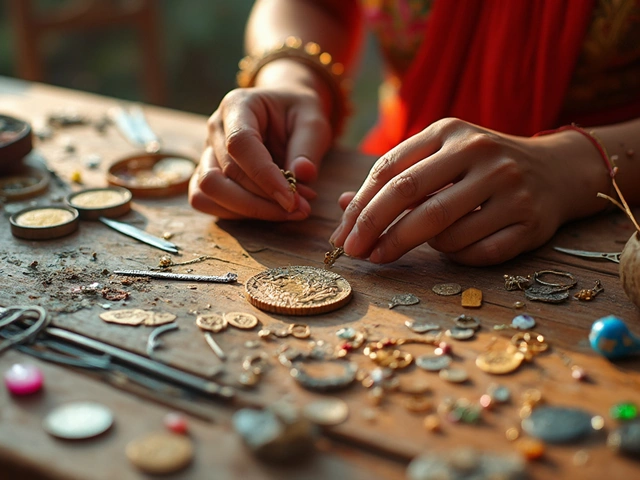
Kerala Temple Jewelry Authenticity Checker
Use this tool to verify if your temple jewelry is authentic. The black gold of Kerala requires careful authentication based on specific criteria from the article.
Step 1: Weight
How heavy does the jewelry feel?
Step 2: Black Finish
What's the appearance of the blackened silver?
Step 3: Engraving
Look at the details under magnification:
Step 4: Smell
Does it have a characteristic smell?
Step 5: Price
How much did you pay for this piece?
When people talk about the black gold of Kerala, they’re not talking about oil. They’re talking about something far older, far more sacred, and far more beautiful - the intricate temple jewelry worn by dancers and deities in Kerala’s temples and classical dance forms. This isn’t just jewelry. It’s history, devotion, and artistry fused into gold and blackened silver.
What Exactly Is Black Gold?
Black gold is a local term for the darkened silver used in traditional Kerala temple jewelry. Unlike regular silver, it’s treated with a special process that turns its surface pitch-black, creating a dramatic contrast against the bright gold elements. The result? A piece that looks like it was carved from shadow and light - the blackened parts holding intricate patterns, while the gold parts glow like sunlight on temple walls. This isn’t just for looks. The blackening technique, called kalai, has been used for centuries in South India. It’s made by applying a paste of sulfur and other natural ingredients to the silver, then heating it. The sulfur reacts with the silver to form silver sulfide - a stable, non-tarnishing black layer. This process doesn’t just change the color. It makes the metal harder and more durable, perfect for jewelry that’s handled, worn, and offered to gods daily.Why Is It Called Gold?
The name black gold might confuse you. After all, gold is yellow. But in Kerala, the term doesn’t refer to the metal itself. It refers to value. In a place where temple rituals are woven into daily life, this jewelry isn’t just ornamentation. It’s sacred. A single piece can cost more than a month’s salary for an average worker. Families save for years to buy one for a daughter’s debut in Bharatanatyam. Temples invest in these pieces as offerings - some are centuries old, passed down like heirlooms. So when people say black gold, they mean: something precious, irreplaceable, and deeply rooted in culture. The black silver isn’t gold, but its worth? It’s higher.The Anatomy of Kerala Temple Jewelry
Kerala temple jewelry isn’t mass-produced. Each piece is handmade by artisans in places like Thrissur, Kottayam, and Alappuzha. The designs follow ancient temple carvings - gods, goddesses, peacocks, lotuses, and conch shells. Here’s what you’ll typically find:- Headpieces (Mukutam): Elaborate crowns with dangling chains, often worn by dancers during performances.
- Necklaces (Haram): Multiple layers of gold and blackened silver beads, sometimes with a central pendant shaped like a temple gopuram.
- Earrings (Karnaphool): Large, bell-shaped or lotus-shaped designs that sway with every movement.
- Bangles (Churika): Thick, engraved bands, often worn in stacks.
- Belt Ornaments (Vanki): Wide waistbands with hanging chains that jingle as the dancer moves.
Temple Jewelry and Bharatanatyam
The connection between this jewelry and Bharatanatyam isn’t accidental. In the 19th century, when temple dancers - called devadasis - were pushed out of temples, their art and adornments were nearly lost. But in the 1930s, cultural revivalists in Kerala and Tamil Nadu brought back the dance form. They revived the jewelry too, because they knew: you can’t separate the dancer from the ornament. Today, every Bharatanatyam dancer in Kerala wears temple jewelry on stage. It’s not fashion. It’s identity. The blackened silver catches the light differently than gold. It makes the dancer’s movements look even more fluid, more divine. The jingle of the belt, the sway of the earrings - they’re part of the music.How It’s Made: A Slow, Sacred Process
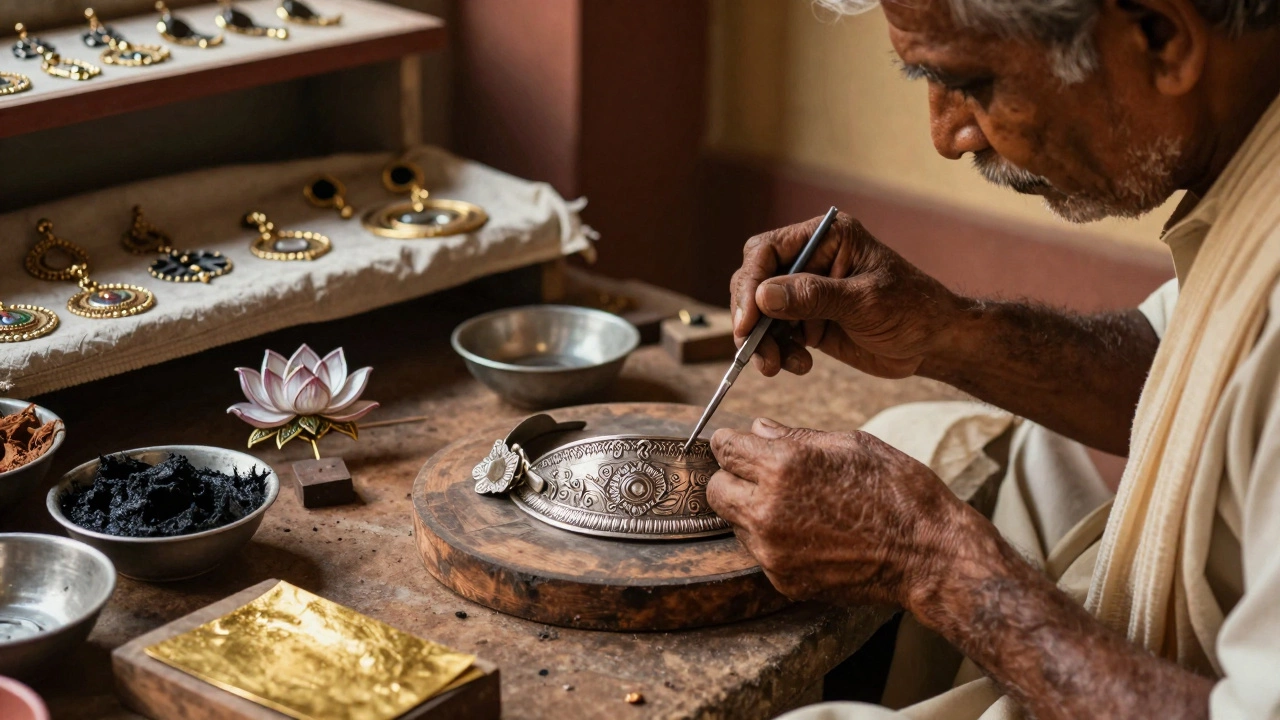
Making a single necklace can take 45 to 60 days. Here’s how it works:- Design sketching: Artisans study temple murals and ancient texts to recreate traditional motifs.
- Metal shaping: Gold sheets are hammered into shape. Silver is shaped separately for the blackened parts.
- Repoussé work: Designs are raised using small chisels and hammers.
- Filigree: Tiny silver wires are twisted into lace-like patterns and soldered on.
- Blackening: The silver parts are treated with sulfur paste and heated over a low flame.
- Polishing and assembly: The final piece is polished with a soft cloth and assembled with hooks and clasps.
Where to Find Authentic Temple Jewelry
If you’re looking for real temple jewelry, avoid tourist shops in Kochi or Munnar. Most of what’s sold there is machine-made, plated brass with fake blackening. Authentic pieces come from:- Thrissur’s jewelry lanes: Around the Vadakkunnathan Temple, you’ll find workshops where artisans work in open courtyards.
- Kottayam’s artisan cooperatives: These are government-supported groups that ensure fair wages and traditional methods.
- Temple trusts: Some temples sell replicas of their own sacred pieces - these are the most authentic.

Why This Matters Today
Global fashion loves gold. But Kerala’s black gold? It’s different. It doesn’t follow trends. It doesn’t change. It’s not worn for Instagram. It’s worn to honor gods, to tell stories, to carry the soul of a culture forward. Younger generations are starting to wear it outside the stage - to weddings, to festivals. But they’re also asking questions: Who made this? How long did it take? Is it real? That’s a good sign. When people care about the story behind the jewelry, the tradition survives.How to Tell Real from Fake
Here’s how to spot the difference:- Weight: Real temple jewelry is heavy. Silver and gold are dense metals. If it feels light, it’s probably alloy or plated.
- Black finish: Real blackening is matte and deep, not glossy. It doesn’t rub off with a cloth.
- Engraving: Handmade pieces have slight imperfections - tiny bumps, uneven lines. Machine-made pieces look too perfect.
- Smell: Fake jewelry often smells like metal or chemicals. Real pieces have no smell - just the faint scent of oil from polishing.
- Price: If it’s under ₹5,000 for a necklace, it’s not real.
What Happens If You Don’t Care?
If you treat this as just another type of ethnic jewelry - something to buy on vacation - you’re not just missing out. You’re contributing to its decline. When demand shifts to cheap imitations, artisans stop teaching their children. Workshops close. The knowledge vanishes. This isn’t about nostalgia. It’s about survival. The black gold of Kerala is one of the last untouched traditions of South Indian craftsmanship. It’s not protected by laws. It’s protected by people who choose to value it.Is black gold of Kerala made of real gold?
Yes, but only partially. The bright parts are made of 22-karat gold. The dark parts are made of silver that’s been blackened using a traditional sulfur process. The term "black gold" refers to its cultural value, not its metal content.
Can I wear temple jewelry daily?
Yes, but with care. These pieces are heavy and delicate. Avoid wearing them while showering, swimming, or doing heavy work. Clean them gently with a soft cloth. Store them separately to prevent scratches. Many families wear them only on special occasions to preserve them.
How is black gold different from regular temple jewelry from Tamil Nadu?
Kerala temple jewelry uses more blackened silver and thicker gold elements. Tamil Nadu pieces, like those from Kumbakonam, often feature more intricate filigree and enamel work. Kerala designs are bolder, with heavier chains and larger motifs inspired by temple architecture. Tamil pieces tend to be more delicate and floral.
Why is the blackening process important?
The blackening process isn’t just decorative. It hardens the silver, making it more durable for daily wear in rituals. It also creates visual contrast that makes the gold details pop. Without it, the jewelry would look flat. The technique is ancient, natural, and unique to South India.
Where can I buy authentic black gold jewelry online?
Stick to verified artisans or cooperatives based in Kerala. Look for sellers who show videos of the making process, mention the artisan’s name, and provide certificates of authenticity. Avoid platforms that sell it under "ethnic jewelry" without details. Reputable sellers often ship directly from Thrissur or Kottayam workshops.
If you ever see a dancer in Kerala, moving slowly under temple lights, the jewelry catching the glow - the black silver like midnight, the gold like dawn - you’ll understand why this isn’t just jewelry. It’s the soul of a place, worn on the body. And it’s still alive.