India Travel Wardrobe Planner
Trip Parameters
Adjust the parameters and click "Generate" to see your customized packing list.
Based on the Modest but Breathable strategy.Quick Tips for Your Suitcase
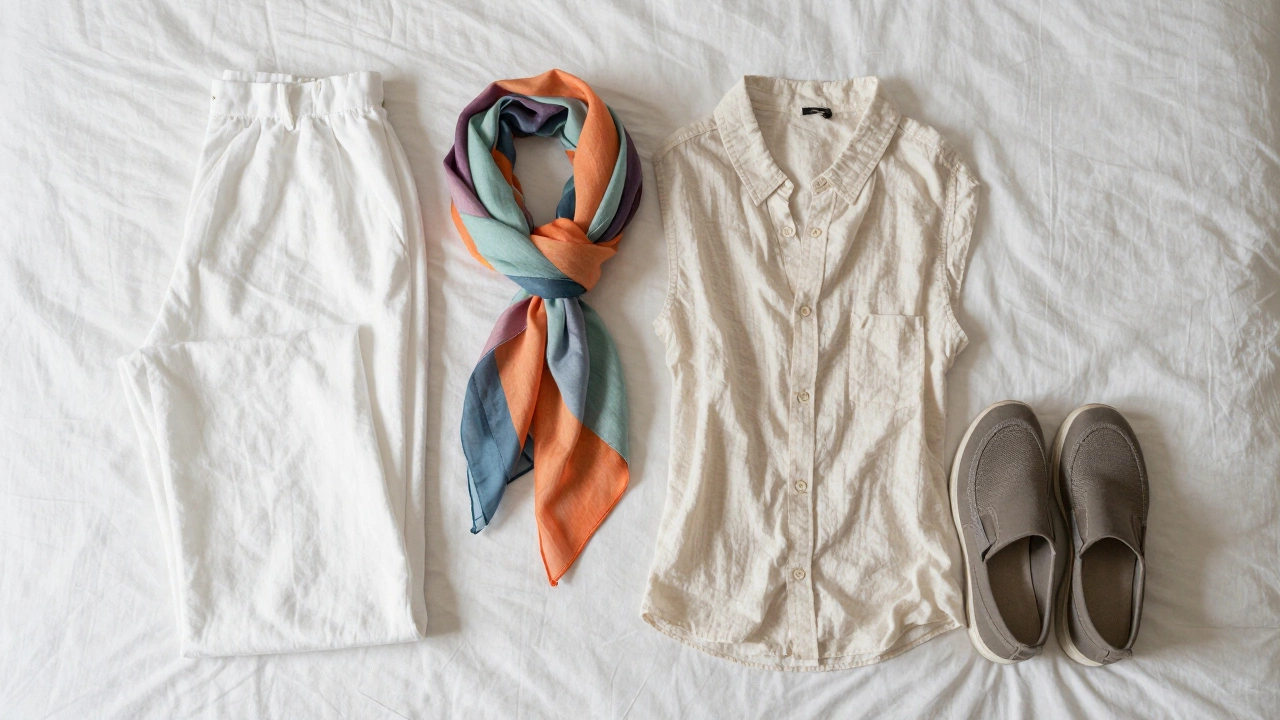
- Stick to breathable fabrics like organic cotton, linen, and rayon.
- Always carry a lightweight scarf or shawl for spontaneous temple visits.
- Prioritize loose-fitting silhouettes over tight clothing.
- Pack a mix of neutral colors with a few bright pieces to feel the local energy.
- Choose closed-toe walking shoes for city trekking and easy slip-ons for indoors.
Mastering the Art of Modest Dressing
If you're coming from a culture where leggings or tank tops are standard for errands, you'll need to pivot. In India, the general rule of thumb is to keep your shoulders and knees covered. This isn't just about tradition; it's actually a lifesaver against the harsh sun and the dust of the streets.
For women, Linen is your best friend. A pair of wide-leg linen trousers paired with a loose cotton shirt is a classic 'traveler look' that works everywhere from Delhi to Kerala. If you prefer skirts, make sure they hit mid-calf or ankle. A great hack is to wear a simple cotton maxi dress; it's airy, modest, and looks effortless. Avoid anything too sheer-the bright Indian sun has a way of making thin fabrics transparent.
Men have it a bit easier, but the same logic applies. Lightweight chinos or breathable trousers are better than short shorts, which can look a bit too casual or out of place in many cities. A simple polo or a breathable button-down shirt is the gold standard. If you're heading to a more rural area, avoid wearing flashy jewelry or expensive-looking watches, as this can make you a target for aggressive street vendors.
The Magic of the Scarf and Shawl
If you only pack one accessory, make it a large scarf. In India, a scarf is more than a fashion statement; it's a multipurpose tool. You can wrap it around your head when entering a mosque, drape it over your shoulders when visiting a temple, or use it to shield your face from dust during a rickshaw ride.
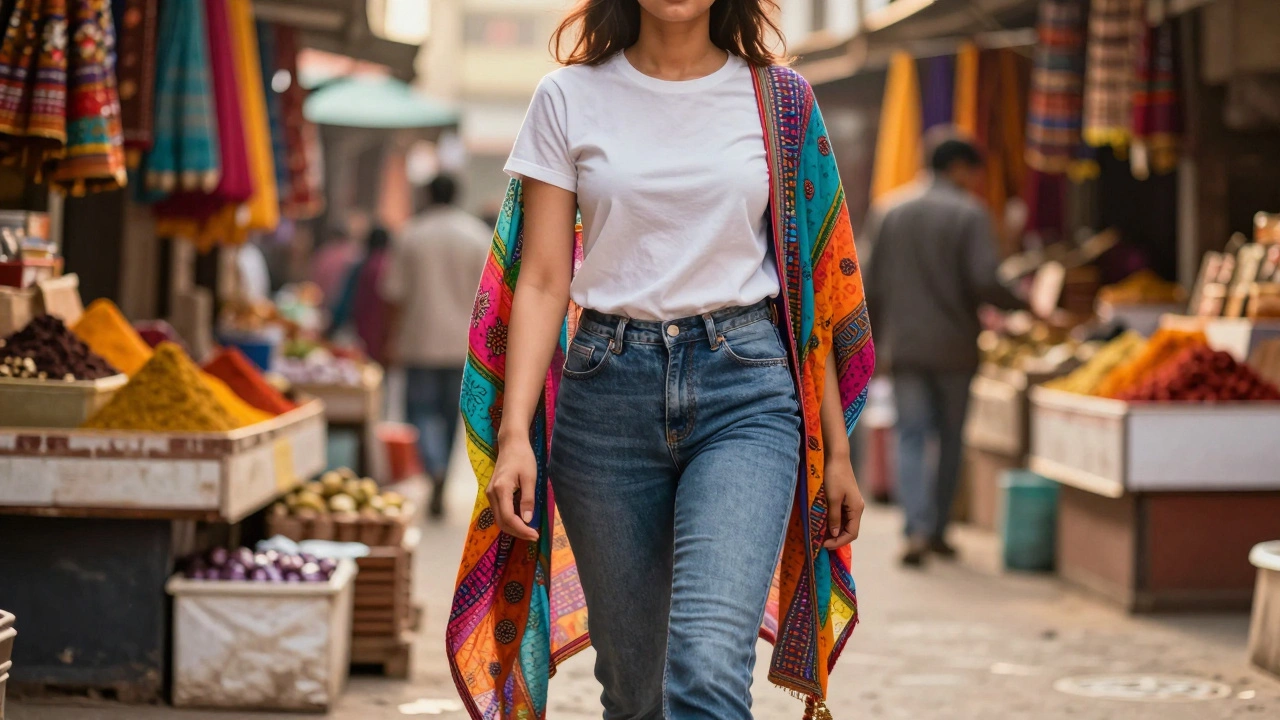
For those who want to embrace the local style, consider the Dupatta. A dupatta is a long, multicolored scarf traditionally worn with a salwar kameez. You can easily buy a beautiful, hand-block printed one at any local market. Pairing a bright dupatta with a plain white t-shirt and jeans is a great way to nod to the culture without feeling like you're wearing a costume.
Dressing for Religious Sites and Temples
This is where the rules get strict. Whether you're visiting the Golden Temple in Amritsar or a local shrine in Mumbai, modesty is non-negotiable. Many sites require you to cover your head, and some may even ask you to remove your shoes before entering.
Avoid wearing tight leggings as pants; instead, opt for loose trousers. If you are wearing a dress, ensure it doesn't have a high slit. A common mistake is thinking a thin cardigan over a tank top is enough. In many traditional spaces, the goal is to minimize the outline of the body. When in doubt, look at what the local women are wearing-usually Saris or Salwar Kameez-and try to mimic that level of coverage.
Elevating Your Look with Indian Fashion Accessories
Once you've got the basics down, it's time to have some fun. India is a goldmine for accessories that can transform a basic travel outfit into something special. Instead of bringing a lot of jewelry from home, leave some room in your bag to shop locally.
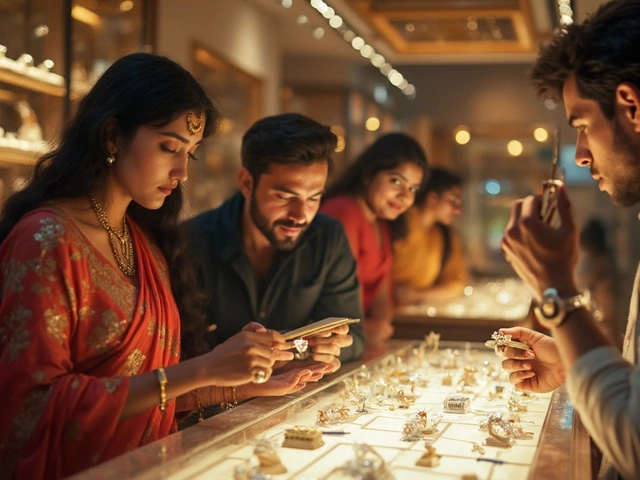
Start with Jhumkas. These are traditional bell-shaped earrings that add an instant ethnic touch to any outfit. They come in everything from oxidized silver to gold-plated designs. Pair them with a simple black dress, and you're ready for a nice dinner in Jaipur.
Another essential is the Bindi. While it has deep religious and cultural roots, many travelers wear a small decorative dot on their forehead as a gesture of appreciation. If you're unsure, just ask your host or a local guide if it's appropriate for the specific setting you're in.
| Item | Wear This (Recommended) | Avoid This (Not Recommended) |
|---|---|---|
| Bottoms | Linen pants, Maxi skirts, Chinos | Mini skirts, Short shorts, Ripped jeans |
| Tops | Cotton shirts, Tunics, Loose blouses | Halter tops, Crop tops, See-through fabrics |
| Footwear | Comfortable sandals, Slip-on loafers | High heels, Flip-flops (for temples) |
| Accessories | Scarves, Jhumkas, Cloth bags | Overly expensive jewelry, Large flashy logos |

Adapting to Different Indian Climates
India is huge, and the weather varies wildly. If you're visiting the North during the winter (December to February), don't be fooled by the sunny photos. Delhi and Rajasthan can get surprisingly chilly, especially at night. You'll want a light jacket or a wool pashmina. A medium-weight sweater is usually enough for the daytime, but a fleece or light down jacket is necessary for early morning outings.
In the South, like Chennai or Kochi, the humidity is the real enemy. Here, the focus is entirely on moisture-wicking fabrics. Avoid heavy denim at all costs; it takes forever to dry and feels like wearing a cardboard box in the humidity. Opt for lightweight rayon or specialized travel fabrics that dry quickly. Also, keep in mind that rainy season (the Monsoon) can turn any street into a river. A sturdy umbrella and a pair of waterproof sandals are more important than any fashion accessory during this time.
Integrating Local Wear: Should You Do It?
Many Americans wonder if they should buy and wear traditional Indian clothes like a Kurti (a long tunic). The answer is a resounding yes! Wearing a Kurti with jeans or leggings is incredibly common, even for locals. It's a practical way to stay cool and modest while feeling connected to the environment.
If you want to go all out and wear a Sari for a special event, like a wedding, definitely do it. However, be aware that draping a sari is an art form. Don't try to do it yourself based on a YouTube video ten minutes before the party. Ask a local friend or hire a professional draper. They will ensure the pleats are perfect and the fabric stays in place while you move.
One pro tip for shopping: visit the local markets (bazaars) rather than the high-end malls for your ethnic wear. You'll find more authentic hand-loomed fabrics and can often negotiate the price. Just remember to check the stitching and fabric quality before you pay, as some mass-produced items can be quite scratchy.
Is it offensive for foreigners to wear traditional Indian clothes?
Not at all! In fact, most Indians find it flattering and appreciative when visitors wear traditional attire like Kurtis or Saris. The only key is to ensure you are wearing them respectfully-meaning they are draped correctly and are not being used as a 'costume' in a mocking way.
Do I really need to cover my head in every temple?
It depends on the religion of the site. In Gurdwaras (Sikh temples) and Mosques, covering your head is mandatory for everyone. In many Hindu temples, it's not always required for women, but it is a sign of respect. Always look for signs at the entrance or observe what other visitors are doing.
What are the best shoes for walking in Indian cities?
Go for a sturdy pair of walking sneakers or supportive sandals. You'll be doing a lot of walking on uneven pavement. However, since you'll be taking your shoes off frequently at temples and homes, avoid shoes with complicated laces. Slip-ons or sandals with a secure strap are the most practical choice.
How do I handle the heat without sacrificing modesty?
Focus on the fabric rather than the style. Linen and organic cotton allow air to circulate. Instead of tight clothing, choose oversized silhouettes. A long-sleeved cotton tunic is actually cooler than a t-shirt because it protects your skin from direct sunlight and prevents the fabric from sticking to your body.
Are leggings acceptable as pants in India?
Leggings are acceptable if they are paired with a long top (like a Kurti) that covers the hips and upper thighs. Wearing leggings alone with a short t-shirt is generally considered too revealing in many social and religious settings. When in doubt, go for loose-fitting trousers.
Next Steps for Your Trip
If you're still feeling overwhelmed, start by picking out a few neutral-colored linen pieces. Once you land in India, head to a local market to pick up a few colorful scarves and maybe a pair of Jhumkas. If you're visiting during the monsoon, invest in a high-quality, lightweight raincoat. For those heading to the mountains (like Leh or Shimla), remember that layering is the only way to survive the unpredictable temperature swings.