Emerald Jewelry Care Calculator
Enter your planned wear duration and activities to see the risk level and care recommendations for your emerald jewelry.
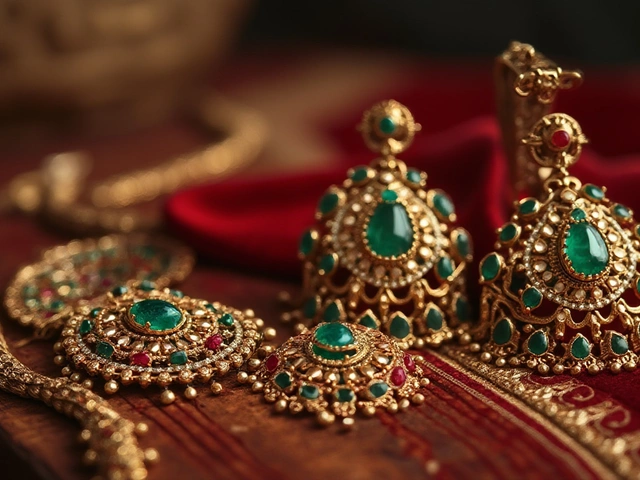
Many people in India fall in love with emeralds the first time they see them-deep green, glowing under temple lights, worn during festivals or weddings. But if you’ve ever been told, "Don’t wear your emerald every day," you’re not alone. It’s not just superstition. There’s real science, tradition, and practicality behind why emeralds in temple jewelry are treated differently from gold bangles or diamond studs.
Emeralds Are Fragile, Even When They Look Strong
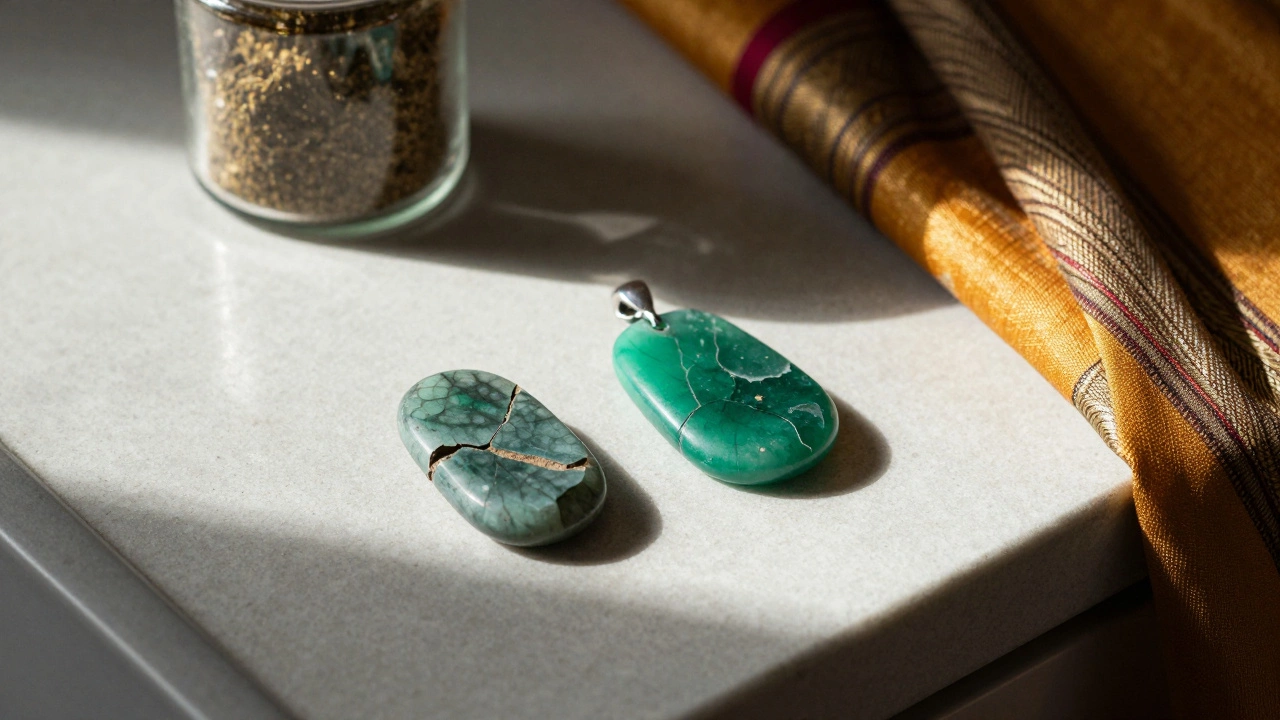
Emeralds are a type of beryl, and while they’re hard on the Mohs scale (7.5-8), they’re also brittle. That means they can crack under pressure, even if they don’t scratch easily. Temple jewelry emeralds are often set in intricate, open-back designs to let light pass through and enhance their color. But that also leaves them exposed. A simple bump against a kitchen counter, a sudden tug from a saree pallu, or even a hard hug can cause internal fractures.
Most emeralds used in Indian temple jewelry are natural and heavily included. These inclusions-tiny cracks and mineral traces-are what give emeralds their character, but they also make them vulnerable. A stone that looks perfect to the eye might have hidden weaknesses. Jewelers in Kanchipuram or Jaipur know this. That’s why they rarely recommend daily wear for emerald pieces, even if they’re set in gold.
Temple Jewelry Was Never Meant for Daily Use
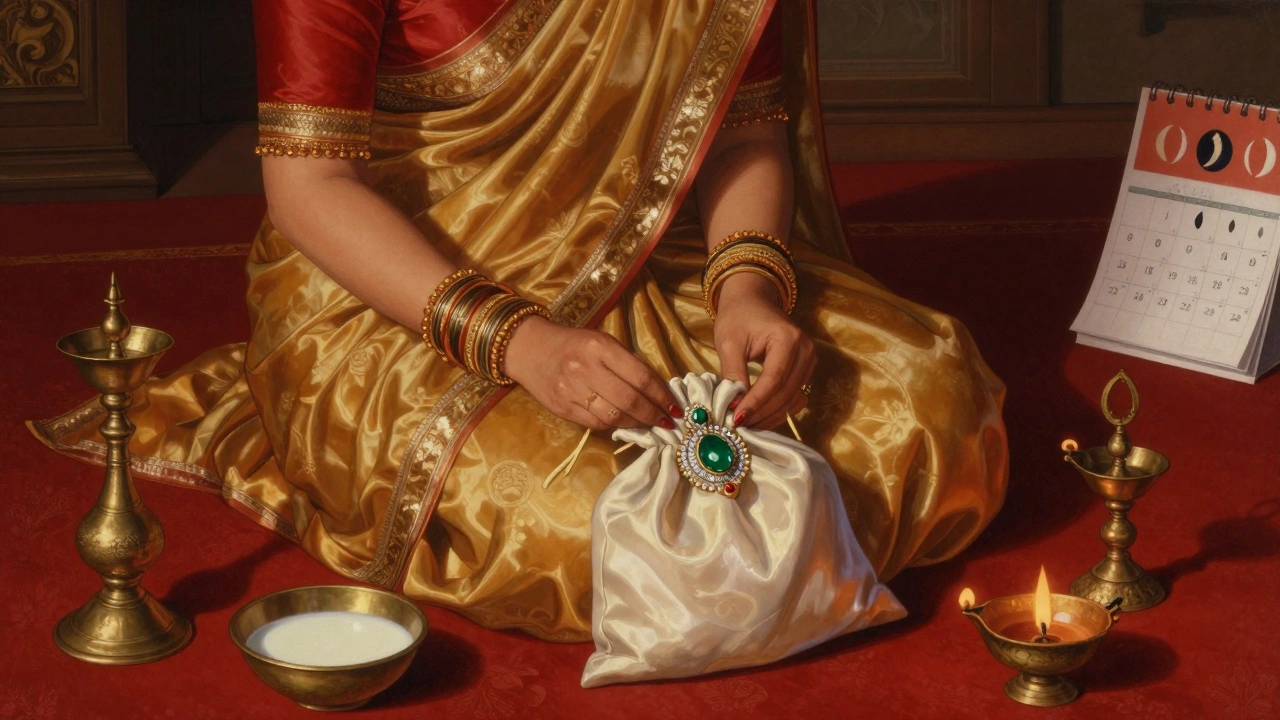
Temple jewelry didn’t evolve as fashion. It was crafted for ritual. Each piece-whether it’s a nose pin with emerald drops, a chest ornament with emerald borders, or a headpiece with green stones-was made to be worn during pujas, temple processions, or wedding ceremonies. These weren’t accessories you put on before heading to the office. They were sacred objects, blessed, cleaned with milk and water, and stored carefully after use.
In Tamil Nadu, Kerala, and Andhra Pradesh, families often keep their temple jewelry locked away for most of the year. The emeralds are cleaned once a month during the new moon, not because of astrology, but because the oil used in cleaning can seep into the stone’s fractures if handled too often. Constant exposure to sweat, perfume, and dust dulls the surface and accelerates wear. Over time, the color fades. The setting loosens. The stone loses its glow.
Sweat, Chemicals, and Heat Are Emeralds’ Worst Enemies
India’s climate doesn’t help. Humidity, sweat, and high temperatures are constant. When you wear an emerald pendant in Mumbai’s monsoon heat, your skin releases salts and oils. These don’t just sit on the surface-they seep into the tiny cracks inside the stone. Over months, this causes the emerald to look cloudy, even if it’s never been scratched.
And then there’s makeup and perfume. Most Indian women apply kohl, sindoor, and attar daily. These contain oils, alcohol, and pigments that can stain or erode the surface of untreated emeralds. Even a light spritz of rose water can leave a residue that dulls the stone’s shine over time. Gold settings can tarnish too, but emeralds don’t recover like metal does. Once the color fades, it’s gone for good.
Emeralds Need Special Care-And Most People Don’t Know How
Unlike diamonds, which can be scrubbed with toothpaste or ultrasonic cleaners, emeralds are delicate. The only safe way to clean them is with lukewarm water, a soft brush, and a drop of mild soap. No ammonia. No bleach. No steam. No jewelry dips sold at roadside stalls.
But here’s the problem: most people don’t know this. They see their grandmother’s emerald nose pin and assume it’s just another piece of jewelry. They wash it with dish soap, dry it with a paper towel, and toss it into a drawer with other bangles. That’s how emeralds get chipped, cracked, or permanently discolored. A study by the Gemological Institute of India found that over 60% of temple emeralds brought in for repair had damage caused by improper cleaning or daily wear.
Why Do People Still Wear Emeralds Daily?
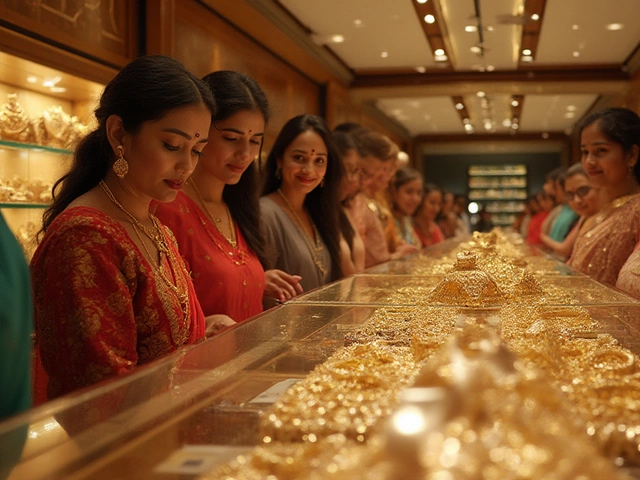
There’s a growing trend now-especially among younger women-to wear temple jewelry as fashion. A gold chain with an emerald pendant? Sure. A pair of emerald-studded jhumkas for a party? Why not? And that’s fine, if you treat them like fine art, not everyday accessories.
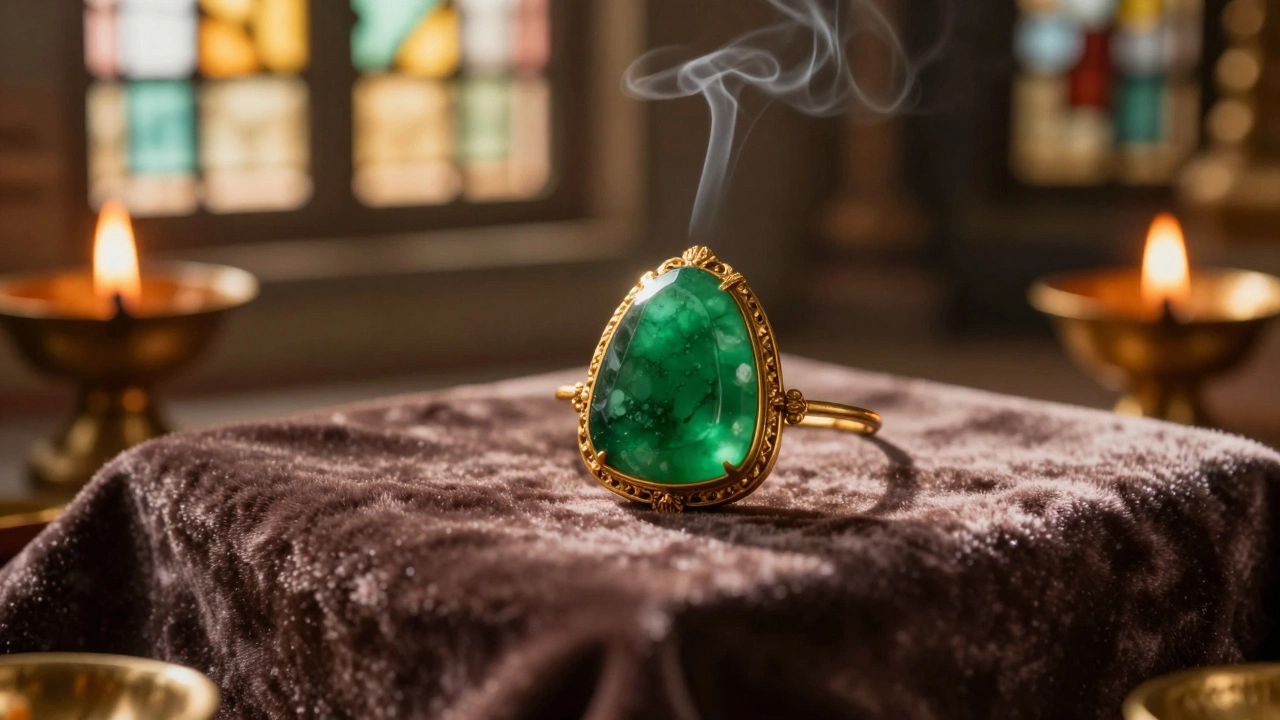
But when someone wears a temple emerald ring to the market, to cook, to carry groceries, or to the gym, they’re asking for trouble. Emeralds in temple jewelry are rarely treated with oil or resin anymore. Modern buyers want natural stones. That means no fillers to hide fractures. No synthetic coatings to protect the surface. Just pure, untreated emerald. And that’s beautiful-but fragile.
What Should You Do Instead?
If you own temple jewelry with emeralds, here’s what works:
- Wear it only for special occasions-festivals, weddings, temple visits.
- Store it in a soft cloth pouch, separate from other jewelry. No metal-on-stone contact.
- Get it checked by a trusted jeweler once a year. They’ll tighten settings and inspect for hidden cracks.
- Never clean it yourself unless you know the proper method. Take it to a specialist who understands temple jewelry.
- If you want daily green jewelry, opt for peridot or green onyx. They’re durable, affordable, and look similar.
There’s no shame in keeping your emeralds safe. In fact, it’s a sign of respect-for the craftsmanship, the tradition, and the stone itself. A temple emerald that’s been cared for for 50 years still glows. One worn daily might not last five.
Emeralds in Temple Jewelry Are More Than Gems
In South India, emeralds are linked to the planet Mercury and believed to bring clarity and wisdom. But the real wisdom lies in knowing when to wear them-and when to let them rest. These stones carry stories: of temple rituals, of brides walking into mandaps, of mothers passing down heirlooms. They’re not meant to be taken for granted.
Wearing an emerald every day doesn’t make you more connected to tradition. It makes you more likely to lose it. And once it’s cracked, no amount of astrology or prayer can fix it.
What About Synthetic or Treated Emeralds?
Some modern jewelers sell emerald-looking stones that are lab-grown or treated with glass fillers. These are cheaper and tougher. But they’re not temple jewelry. True temple pieces are handcrafted with natural stones, often sourced from Colombia or Zambia, and set using traditional techniques passed down for generations. If you’re buying for heritage, go for the real thing-and treat it like one.
Can I wear emerald temple jewelry on weekends only?
Yes, if you take proper care. Wear it on weekends for outings, but avoid activities like cooking, cleaning, or exercising. Clean it gently after each use and store it separately. Even weekend wear adds up over time, so limit it to special weekends, not every Saturday.
Why do temple jewelers avoid setting emeralds in rings?
Rings get the most wear. They knock against surfaces, catch on fabric, and absorb sweat daily. Emeralds are too soft and brittle for this kind of stress. Temple jewelry rings with emeralds are rare for this reason-when they exist, they’re usually worn only for ceremonies.
Is it okay to wear emerald jewelry if I don’t believe in astrology?
Absolutely. Whether you believe in planetary influences or not, the physical reality remains: emeralds are fragile. Their value lies in craftsmanship and natural beauty, not mysticism. Protecting them is about preserving art, not following belief.
Can emeralds be repaired if they crack?
Minor chips can sometimes be polished, but deep cracks are permanent. Once an emerald fractures internally, no repair can restore its original strength or clarity. That’s why prevention matters more than repair. A cracked emerald loses 70-90% of its value.
What’s the best alternative to emerald for daily wear?
Green onyx, peridot, or even high-quality green glass beads are excellent alternatives. They look similar under light, hold up to daily wear, and cost a fraction of the price. Many modern Indian designers now use these in fusion jewelry that honors tradition without risking priceless stones.