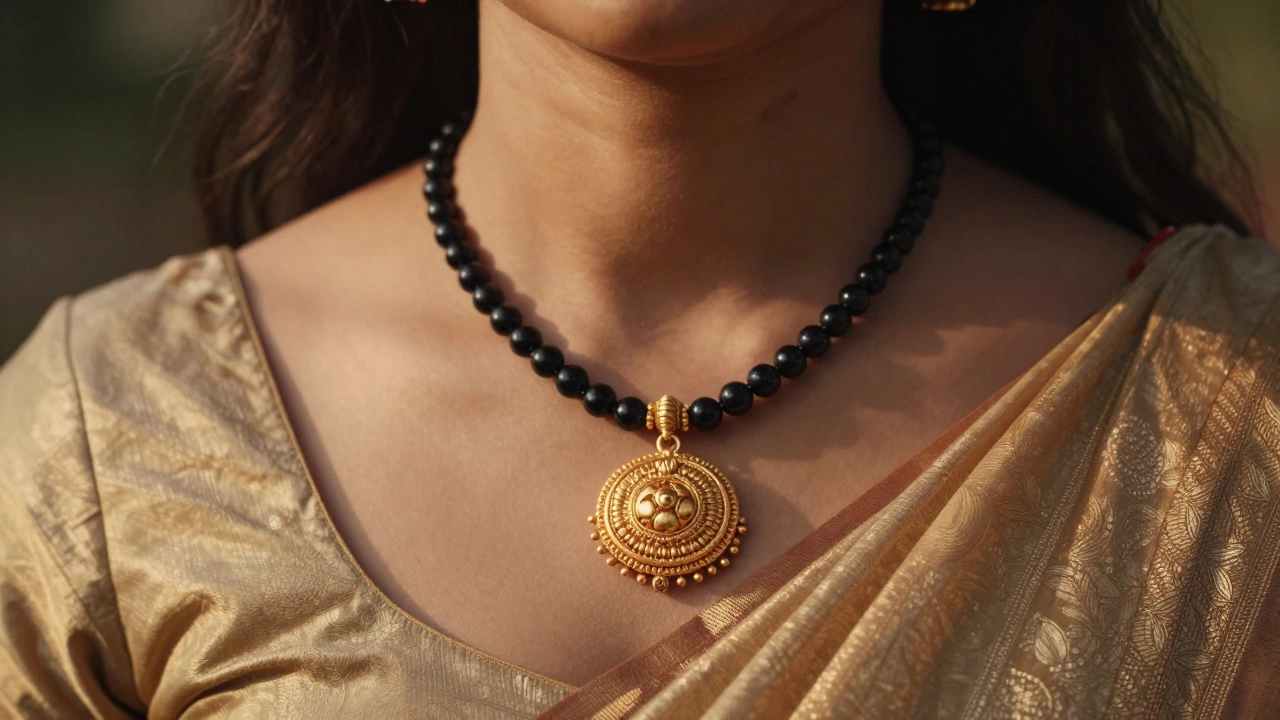
The mangalsutra isn’t just jewelry. It’s a symbol woven into the daily life of millions of married women across India and among the Indian diaspora. You see it every day - a black bead chain with gold pendants resting against the collarbone. But why the neck? Why not the wrist? Or the ankle? The answer isn’t just about tradition. It’s about history, belief, and identity.
It’s Not Just a Necklace - It’s a Sacred Thread
The word mangalsutra comes from two Sanskrit words: mangal (auspicious) and sutra (thread). From its earliest roots, it was never meant to be a fashion statement. It was a spiritual anchor. In Hindu weddings, the groom ties this thread around the bride’s neck during the ceremony, often while chanting mantras for her long life and well-being. That moment isn’t decorative. It’s binding. The necklace becomes a living reminder of the vows made under the sacred fire.
Unlike rings or bracelets, which can be removed easily, the mangalsutra is worn continuously. It’s put on every morning with the same ritual as brushing teeth. For many women, taking it off feels like stepping out of their married identity - even if they’re just running to the grocery store. This isn’t about control. It’s about continuity.
Why the Neck? The Energy Connection
In Ayurveda and Vedic science, the neck is considered a vital energy center. It’s where the throat chakra (Vishuddha) sits - the point of communication, truth, and self-expression. The mangalsutra, with its black beads and gold pendant, is believed to protect this energy channel. Black beads are thought to absorb negative energy, while gold conducts positive vibrations. Together, they form a shield.
There’s also a practical reason. The neck is exposed. It’s visible. Wearing it there means the symbol is always seen - by family, by strangers, by the woman herself in the mirror. It’s a quiet declaration: I am married. In cultures where arranged marriages were the norm, this visual cue helped avoid misunderstandings. It told others - without a word - that she was not available. That’s not outdated. It’s still relevant in many households today.
Black Beads and Gold: More Than Aesthetics
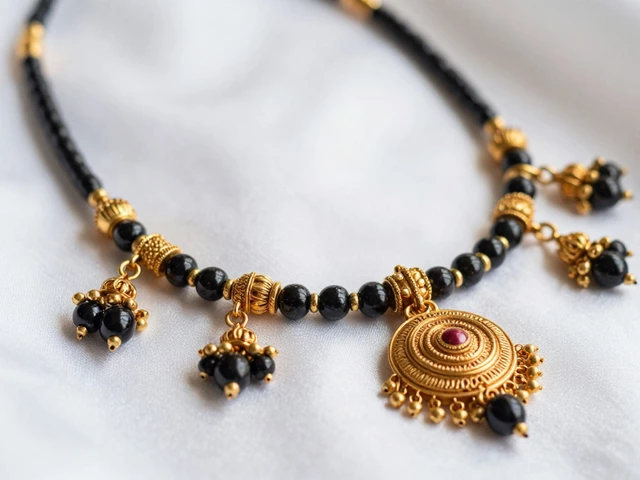
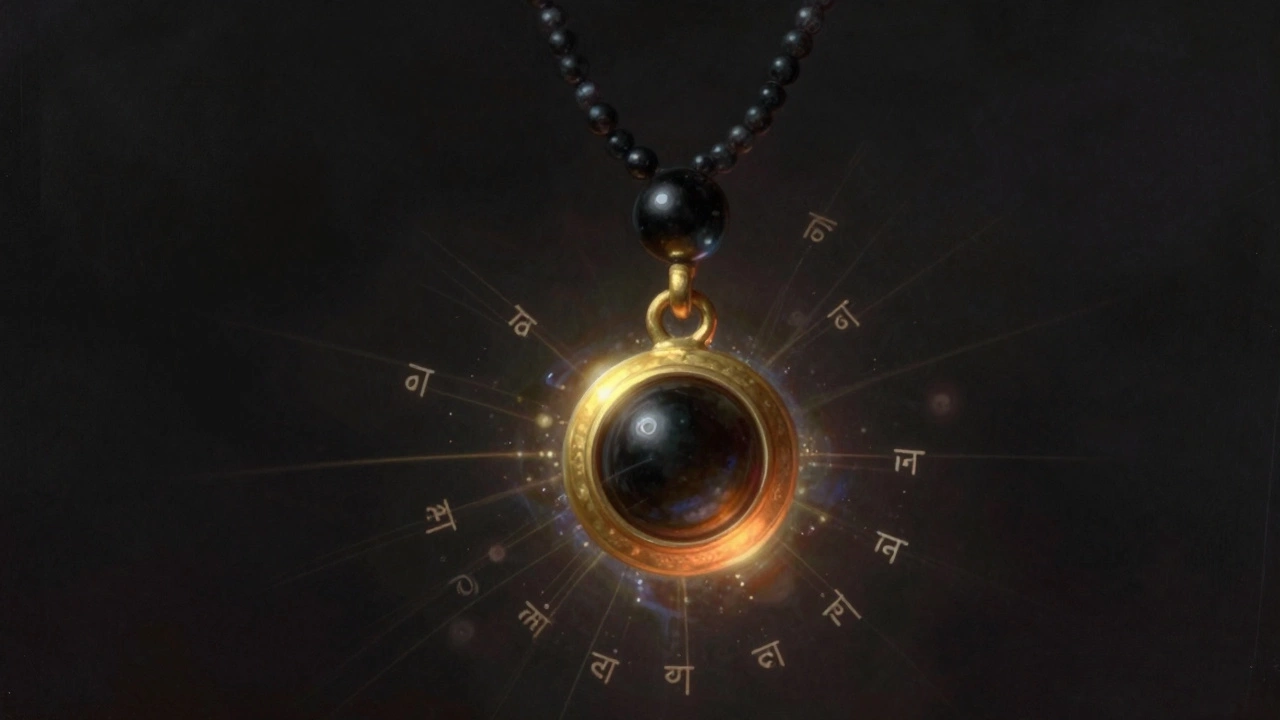
Look closely at a traditional mangalsutra. You’ll see small black beads strung tightly, often with a single gold pendant hanging in the center. The black beads aren’t chosen for their color alone. In Indian folk belief, black is protective. It’s the color that absorbs envy, ill will, and the evil eye. Gold, on the other hand, represents purity, prosperity, and divine energy.
The number of beads matters too. Some families use 9, 11, or 13 beads - each number tied to specific blessings. One common design has seven beads on each side of the pendant, representing the seven vows taken during the wedding ceremony. The pendant itself often resembles a sun, a coin, or a leaf - each shape carrying its own meaning. The sun symbolizes life and light. The coin stands for abundance. The leaf reflects growth and harmony.
Modern designs still follow this pattern. Even when the chain is replaced with diamonds or platinum, the black beads are rarely removed. That’s because the symbolism isn’t in the material - it’s in the structure.

Regional Variations, Same Purpose
While the core meaning stays the same, the mangalsutra looks different depending on where you are in India. In Maharashtra, it’s the famous matha patt - two gold plates connected by a chain, often with a diamond or emerald in the center. In Tamil Nadu, it’s called thali, and it’s usually a gold pendant shaped like a temple or a leaf, tied with a yellow thread. In Bengal, it’s a simple gold chain with a small coin pendant. In Karnataka, the minnu is often shaped like a tulsi leaf.
These differences reflect local culture, not conflicting beliefs. Every variation serves the same purpose: to mark the woman as married and protected. Even in urban centers like Bangalore or Hyderabad, where women wear jeans and work in tech startups, the mangalsutra is still worn - sometimes hidden under a turtleneck, sometimes proudly on display. It adapts, but it doesn’t disappear.
Modern Women, Same Symbol
Some say the mangalsutra is outdated. That it’s a relic of patriarchy. But many women today wear it because they choose to - not because they’re forced to. In Mumbai, a doctor I spoke with told me she wears hers every day, even during surgeries. “It’s not about my husband,” she said. “It’s about me. It reminds me of who I am, where I come from, and what I’ve built.”
Young couples now design their own mangalsutras. Some use rose gold. Others add tiny charms - a heart, a star, even a fingerprint. One woman in Delhi had her mangalsutra engraved with her wedding date and her husband’s initials. These aren’t rejections of tradition. They’re reimaginings. The meaning evolves, but the core remains: a personal, sacred marker of union.
And in diaspora communities - in Melbourne, Toronto, or London - the mangalsutra becomes a bridge. It’s how a woman connects to her roots while living in a different world. At school drop-offs or work meetings, it’s a quiet conversation starter. “Where are you from?” someone asks. “India,” she replies. “Oh, that necklace? That’s a mangalsutra.”
What Happens When It’s Removed?
In some communities, the mangalsutra is taken off after the husband’s death. In others, women continue wearing it as a sign of lifelong commitment. There’s no universal rule. What matters is personal choice. For some, removing it brings relief. For others, it feels like losing a part of themselves.
A widow in Pune told me she still wears hers every morning. “I didn’t wear it for him,” she said. “I wore it for me. And I still do.”
There’s no law, no scripture that says you must wear it forever. But for millions, it’s not about obligation. It’s about belonging. It’s about carrying something sacred on your skin - not as a burden, but as a blessing.
It’s Not About Fashion. It’s About Faith.
When you see a mangalsutra, don’t just see jewelry. See centuries of belief. See a woman’s quiet strength. See a thread that connects her to her ancestors, her marriage, and her own sense of self. It’s worn on the neck because that’s where the heart beats - and where the soul remembers.
Is wearing a mangalsutra mandatory for married Hindu women?
No, it’s not mandatory. While it’s a deeply rooted tradition in many Hindu communities, modern women choose whether or not to wear it based on personal, cultural, or religious reasons. There’s no religious text that enforces it as a requirement. Many women today wear it as a symbol of pride, identity, or connection to their heritage - not out of obligation.
Can non-Hindus wear a mangalsutra?
Yes, anyone can wear it as jewelry. However, if worn without understanding its cultural and spiritual significance, it can come across as appropriation rather than appreciation. Many women from other backgrounds choose to wear it respectfully - learning its meaning, honoring its origins, and avoiding wearing it in sacred rituals. It’s about context, not restriction.
Why are black beads used in mangalsutra?
Black beads are used because, in Indian tradition, black is believed to absorb negative energy and protect against the evil eye. The color symbolizes strength and resilience. Combined with gold, which represents purity and prosperity, the black beads create a balance - shielding the wearer from harm while inviting good fortune. This isn’t superstition to those who wear it; it’s a lived spiritual practice.
Can a mangalsutra be worn with other necklaces?
Yes, many women layer their mangalsutra with delicate gold chains or pendants. Modern designs often include adjustable lengths so it can sit higher or lower. Some even wear it with a choker for a contemporary look. The key is to keep the mangalsutra visible - it’s meant to be honored, not hidden. As long as the core design remains intact, combining it with other jewelry is perfectly acceptable.
What’s the difference between a mangalsutra and a thali?
They’re essentially the same thing, just called by different names in different regions. In North India, it’s called mangalsutra. In South India, especially Tamil Nadu and Andhra Pradesh, it’s known as thali. The thali is usually a single gold pendant tied with a yellow or black thread, while the mangalsutra often includes black beads. The ritual of tying it during the wedding is similar across regions - the meaning is identical, even if the style varies.
Do men wear anything similar to a mangalsutra?
There’s no direct male equivalent, but men often wear a sacred thread called the janeyu or upanayana during religious ceremonies. In some communities, married men wear a simple gold ring or a black thread on the right wrist. These serve as symbols of marital status or spiritual commitment, but they’re not as universally recognized or worn as the mangalsutra. The mangalsutra remains uniquely tied to the identity of married women in Hindu culture.