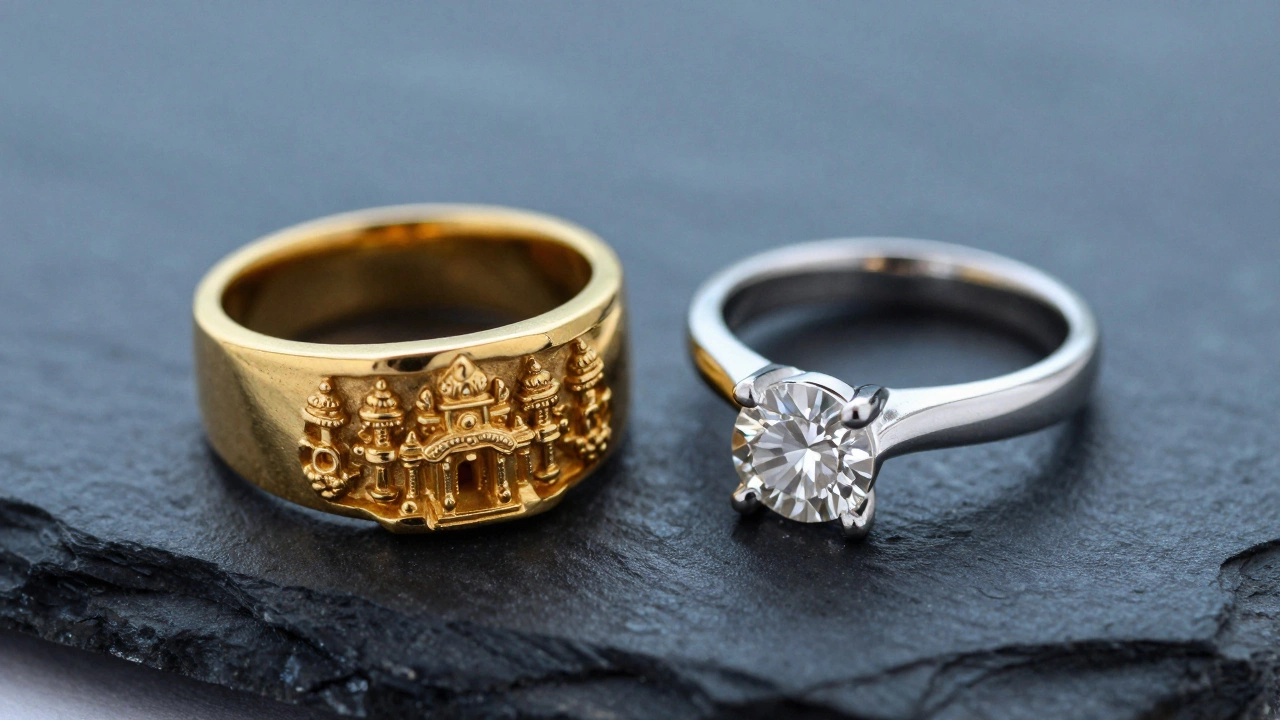
Walk into any jewelry store in Mumbai, and you’ll notice the same debate happening at every counter. One customer wants the warm, traditional glow of yellow gold, while another is drawn to the sleek, modern shine of white gold. It’s not just about color; it’s about lifestyle, maintenance, and how the metal interacts with your daily routine. So, which one is actually better? The answer isn’t black and white-it depends on what you value more: timeless tradition or contemporary ease.
Both metals are real gold, but they achieve their distinct looks through different chemical processes. Understanding these differences helps you pick a piece that lasts longer, looks better, and fits your budget without surprise costs down the line.
The Chemistry Behind the Color
Pure gold, known as 24-karat (24K) gold, is too soft for everyday jewelry. If you wore a pure gold ring, it would bend after a single accidental bump against your desk. To make it durable, jewelers mix gold with other metals. This mixture is called an alloy. The ratio of gold to other metals determines the karat weight-18K means 75% gold, while 22K means 91.6% gold.
Yellow gold is created by mixing pure gold with copper and silver. Copper gives it that rich, reddish-yellow hue, while silver lightens it slightly. This is the classic look we associate with Indian weddings and temple jewelry. It requires no additional plating, so the color you see is the actual metal beneath the surface.
White gold starts with pure gold mixed with white metals like nickel, palladium, or manganese. Even then, it doesn’t look truly white; it has a faint yellowish tint. To fix this, jewelers dip the finished piece in rhodium, a platinum-group metal. Rhodium plating gives white gold its bright, mirror-like finish similar to platinum. Without this coating, white gold would look dull and grayish over time.
Durability and Daily Wear
If you work with your hands, type all day, or do household chores, durability matters. Yellow gold alloys, especially those with higher copper content, are naturally harder and more scratch-resistant than uncoated white gold. A 22K yellow gold bangle will hold up well against daily friction because the alloy structure is stable.
White gold relies heavily on its rhodium plating for protection. While rhodium is extremely hard, it wears off. Most people need to replate their white gold rings every 12 to 18 months, depending on usage. In humid climates like Mumbai’s coastal areas, sweat and moisture can accelerate this wear. If you hate the idea of returning to the jeweler for maintenance, yellow gold might be less hassle. However, if you prefer the crisp look of white gold, factor in ₹500-₹1,500 per year for replating.
| Feature | Yellow Gold | White Gold |
|---|---|---|
| Base Composition | Gold + Copper + Silver | Gold + Nickel/Palladium + Rhodium Plating |
| Maintenance Frequency | Low (polishing only) | Medium-High (replating every 1-2 years) |
| Allergy Risk | Very Low | Higher (if nickel-based) |
| Cost Over Time | Stable | Higher due to replating |
| Resale Value Perception | High (traditional preference) | Equal (based on gold weight) |
Skin Tone and Aesthetic Harmony
Your choice should complement your natural coloring. People with warm undertones-veins appear greenish, and skin looks golden or olive-tend to glow in yellow gold. It enhances the warmth in your complexion. If you have cool undertones-veins look blue or purple, and skin appears pink or fair-white gold creates a striking contrast that brightens your face.
Consider your wardrobe too. If you mostly wear earthy tones, pastels, or traditional silks, yellow gold blends seamlessly. For those who favor neutrals, blacks, whites, or corporate attire, white gold offers a subtle elegance that doesn’t clash. Many women own both: yellow gold for festivals and family gatherings, white gold for office wear and evening events.
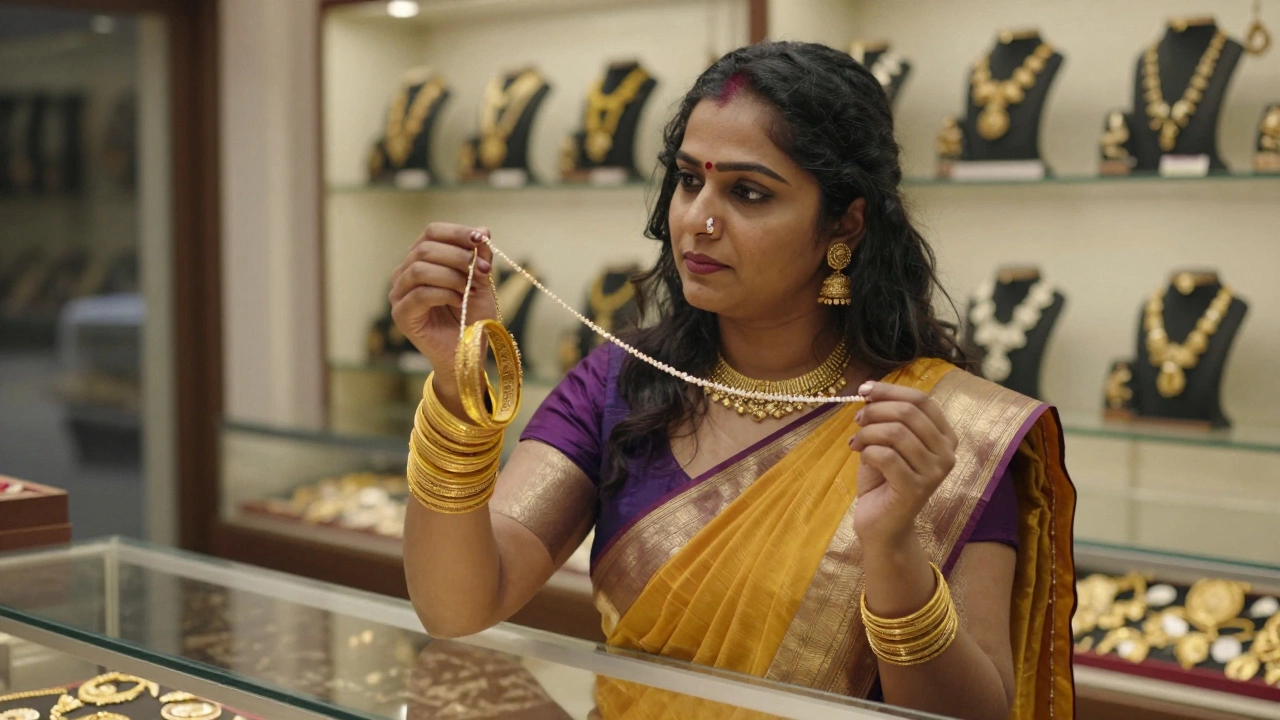
Allergies and Sensitivity
This is where many buyers get caught off guard. Yellow gold is generally hypoallergenic because copper and silver rarely cause reactions. White gold, however, often contains nickel-a common allergen. If you’ve ever worn cheap costume jewelry and developed redness or itching, you likely have a nickel sensitivity.
Ask your jeweler specifically about the alloy composition. Palladium-based white gold is safer but more expensive. Always request a “nickel-free” certificate if you have sensitive skin. Wearing nickel-containing white gold against bare skin for hours can lead to contact dermatitis, which looks like a rash and feels itchy.
Design Versatility and Trends
Yellow gold carries cultural weight in India. Temple jewelry, jhumkas, and heavy necklaces traditionally use yellow gold because its warmth matches intricate craftsmanship. It ages gracefully; scratches add character rather than ruining the look. Antique pieces from the 1970s still shine today because the metal itself hasn’t changed.
White gold dominates modern solitaire settings. Diamonds look brighter against white gold because there’s no yellow reflection interfering with the stone’s fire. Engagement rings and minimalist bands favor white gold for its clean lines. Fashion trends shift quickly, but white gold remains popular in urban centers like Delhi and Bangalore for its contemporary appeal.
Investment and Resale Reality
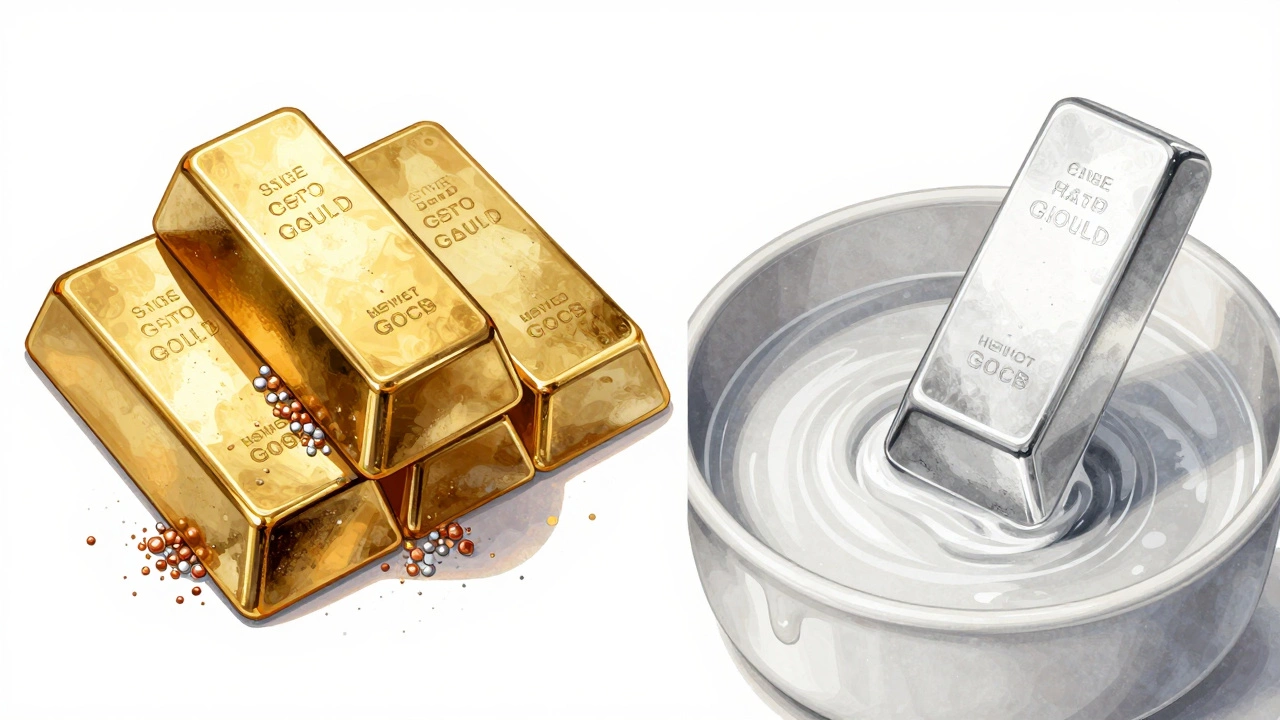
When selling back gold, jewelers melt it down. They care only about the pure gold content, not the color. An 18K yellow gold chain and an 18K white gold chain of equal weight fetch the same price based on current market rates. However, perception plays a role. Older buyers often prefer yellow gold, assuming it’s “more pure,” even though karat weight is identical. Younger sellers may find white gold easier to trade in international markets where it’s standard for engagement rings.
Keep original receipts and hallmarks intact. BIS hallmarking ensures purity regardless of color. Never sell unmarked pieces expecting full value-they’ll be tested destructively, reducing trust.
How to Choose: A Quick Decision Guide
- Choose Yellow Gold if: You want low maintenance, have warm skin tones, plan to pass jewelry as heirlooms, or prefer traditional designs.
- Choose White Gold if: You set diamonds prominently, work in professional environments requiring subtle accessories, have cool skin tones, or dislike the “heavy” look of yellow gold.
- Avoid White Gold if: You have nickel allergies and can’t afford palladium alternatives, or you live far from reputable jewelers for replating.
- Stick with Yellow Gold if: You buy infrequently and want pieces that last decades without upkeep.
Does white gold turn yellow over time?
Yes, when the rhodium plating wears off, the underlying gold-nickel/palladium alloy shows through, appearing slightly yellowish or gray. Replating restores the bright white finish. This is normal and expected, not a defect.
Is 22K gold available in white?
Technically yes, but it’s rare. High-karat gold is softer, making it harder to maintain rhodium plating. Most white gold jewelry is 14K or 18K for better durability. If you insist on 22K white gold, expect frequent replating and higher costs.
Can I mix yellow and white gold in one piece?
Absolutely. Two-tone designs combine both metals for visual interest. Ensure the jeweler uses compatible alloys to prevent galvanic corrosion where metals meet. Popular styles include yellow gold chains with white gold pendants.
Which gold holds value better?
Neither. Resale value depends solely on gold weight and purity (karat), not color. Both yellow and white gold of the same karat and weight yield identical returns when melted down. Hallmarking and documentation matter more than shade.
Is white gold cheaper than yellow gold?
Initial cost is nearly identical for the same karat and design complexity. However, white gold incurs hidden long-term costs due to replating. Factor in ₹1,000 annually for maintenance when comparing total ownership expenses.