Jewelry Business Pricing & Profit Calculator
Product Details
Business Estimates
Results Analysis
Recommended Pricing Strategy
*Based on standard jewelry industry markup formula.
Monthly Projection
Starting an online jewelry business feels like a dream come true for many creatives. You see the pretty pins on social media, imagine your own brand name on a box, and think about the freedom of working from home. But before you order that logo design or buy your first kilo of silver beads, you need to look at the cold, hard numbers. The question isn't just 'can I make it?' but 'how much will it actually cost to get started?'
The short answer is: it depends entirely on your model. You can launch a minimalist dropshipping store with under $500, or you can build a high-end handmade brand with a starting budget of $5,000 or more. For most people looking to create their own designs using jewelry making kits, which are pre-packaged collections of beads, findings, and tools designed to simplify the crafting process for beginners, the sweet spot usually lands between $1,000 and $2,500. This range covers essential materials, basic equipment, packaging, and initial marketing without breaking the bank.
Before we break down every rupee or dollar, let's address the elephant in the room: where do you find inspiration and community? The creative world is vast, and sometimes you need to look outside your immediate niche for networking ideas or even just a change of perspective. For example, if you are interested in global market trends or diverse customer profiles, resources like this directory offer interesting insights into how different regions structure service-based businesses, though obviously, the application here is purely observational regarding market dynamics. Back to our main topic-let's talk about your actual startup costs.
The Core Costs: Materials and Tools
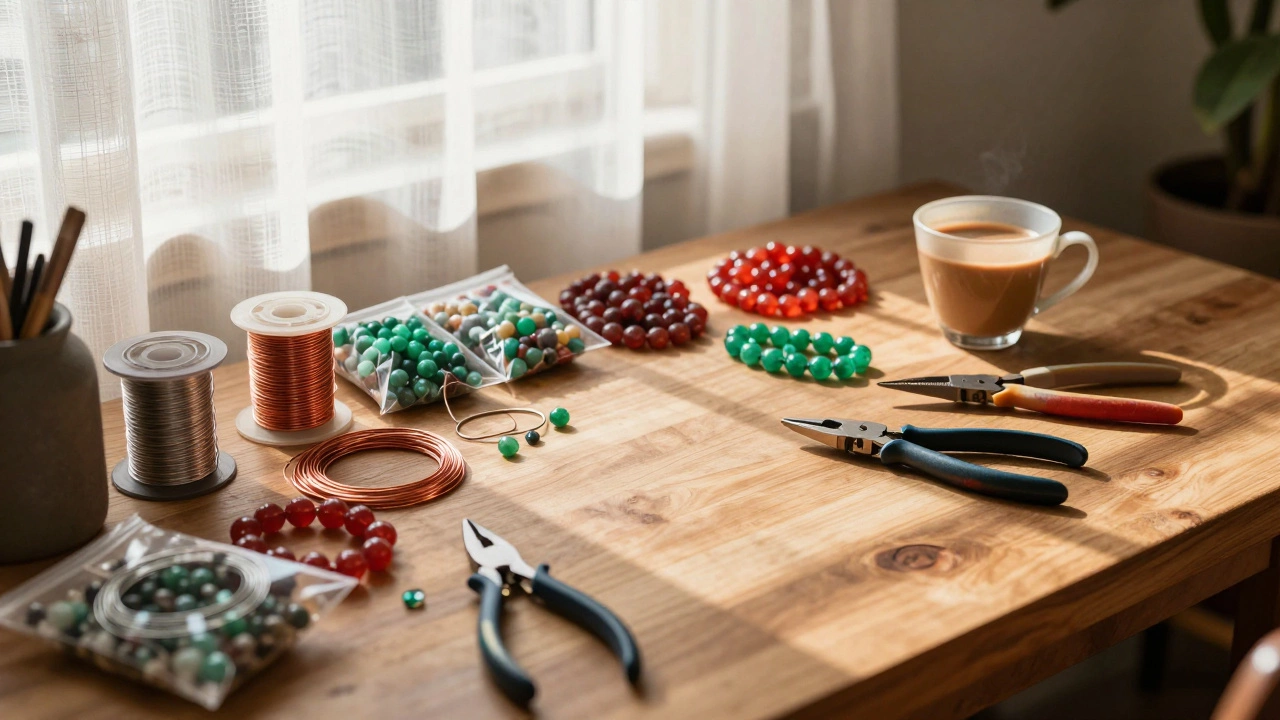
Your biggest expense upfront will be your inventory and tools. If you are buying finished pieces to resell (dropshipping), this cost is near zero initially. But if you are making the jewelry yourself, you need gear. You don't need a professional workshop day one. A good pair of chain-nose pliers, wire cutters, and round-nose pliers will set you back about $30 to $50. Add a bead mat, a ring mandrel, and some jump rings, and you are looking at roughly $100 for a solid starter toolkit.
Then there are the materials. This is where budgets vary wildly. Are you using semi-precious stones, gold-filled wire, or glass beads? A single strand of quality freshwater pearls might cost $20, while a spool of copper wire is $5. To stock enough inventory for your first 20-30 products, plan to spend between $300 and $800. Don't skimp here; customers can feel cheap materials through a screen. If your clasp breaks in a week, they won't come back. Invest in durable findings and attractive stones that justify your price point.
Setting Up Your Digital Storefront
You need a place to sell. Building a custom website from scratch requires coding skills you probably don't have time to learn. Instead, use an e-commerce platform. Platforms like Shopify, BigCartel, or Etsy are the standard for a reason. They handle security, payments, and mobile responsiveness for you.
- Etsy: Low barrier to entry. Listing fees are $0.20 per item, plus a transaction fee of around 6.5%. No monthly cost until you make sales. Great for testing waters.
- Shopify: More professional control. Starts at around $29-$39 per month. You pay for the domain name separately (about $15/year). Better for building a standalone brand.
- WooCommerce (WordPress): Free plugin, but you pay for hosting ($5-$25/month) and potentially premium themes. Steeper learning curve.
For a new maker, I recommend starting with Etsy to validate your designs with zero monthly overhead. Once you are consistently selling out, migrate to a Shopify store to capture higher margins and build email lists directly. Budget about $50-$100 for your first month of platform fees and domain registration if you go the independent route.
Photography: The Make-or-Break Factor
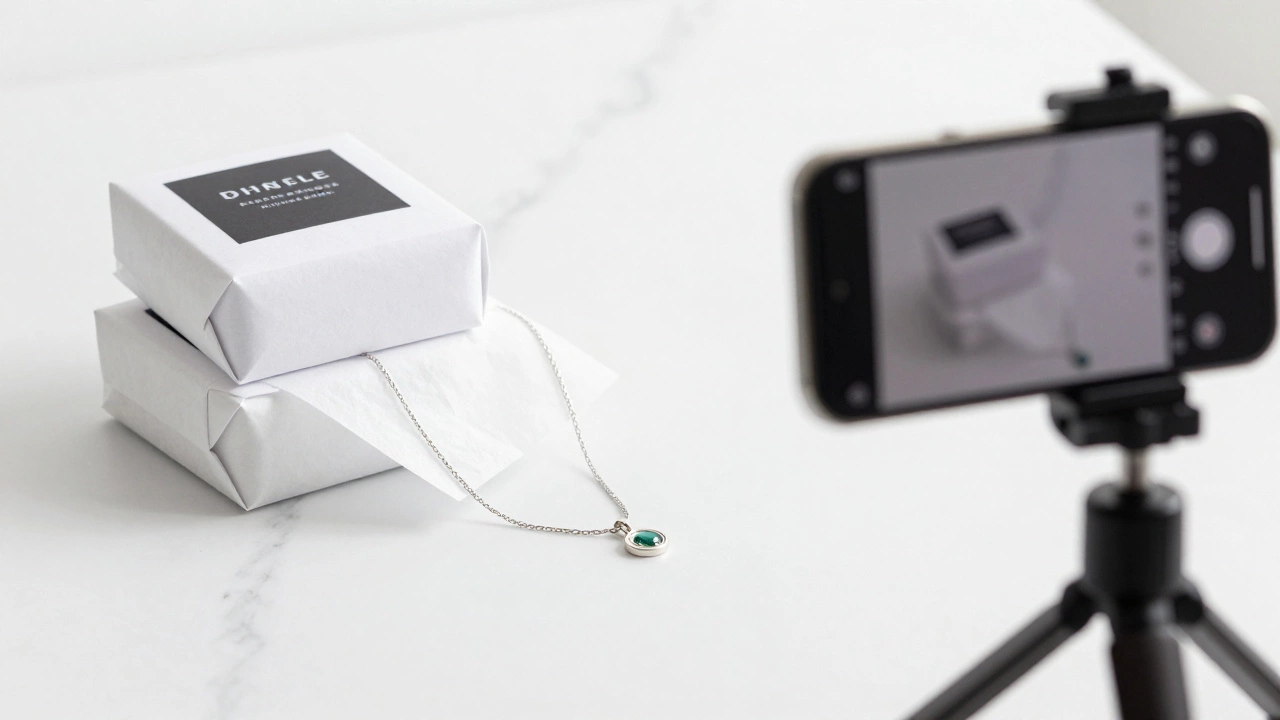
In online jewelry sales, photography is not optional; it is the product. Customers cannot touch or try on your rings. They buy what they see. Bad lighting kills sales faster than high prices. Do not spend thousands on a studio setup yet. Natural light is your best friend.
You need three things: a clean background (white paper or marble contact sheet works wonders), a tripod for your phone, and a diffuser (a sheer white curtain over a window does the trick). If you want to step up your game, a small LED ring light costs about $20-$40. Avoid using flash; it creates harsh reflections on metal and gems that look amateurish. Spend time learning angles. Show the scale by wearing the piece. Show the detail with macro shots. This investment is mostly time, not money, but it is critical.
Packaging and Branding
The unboxing experience is part of the product. When a customer receives your jewelry, it should feel special. You don't need luxury boxes, but you do need consistency. Plain poly mailers are fine for shipping, but inside, wrap the item in tissue paper with your logo printed on it. Include a thank-you card. These small touches encourage reviews and repeat business.
Budget about $1-$3 per package for materials like boxes, bags, stickers, and cards. If you are shipping 50 orders a month, that’s $50-$150. As you grow, bulk ordering these supplies will drive the per-unit cost down significantly. Remember, branding is also your voice. How you write your product descriptions matters. Are you whimsical? Minimalist? Bohemian? Your text should match your visual style.
Marketing and Customer Acquisition
This is where most new businesses fail. They build a beautiful store and wait for customers to arrive. They won't. You have to push traffic to your site. Organic social media is free but slow. Paid ads are fast but expensive. A balanced approach is best.
Start with Instagram and Pinterest. Post daily. Use relevant hashtags. Engage with other creators. This takes hours each week but builds a loyal following over time. For paid advertising, set aside a small test budget of $100-$200 for Facebook or Instagram ads. Target interests like "handmade gifts," "wedding accessories," or specific styles like "boho jewelry." Track your return on ad spend (ROAS). If you spend $1 to make $3, scale up. If you spend $1 to make $0.50, stop and tweak your creative.
Don't forget SEO. Optimize your product titles and descriptions with keywords people actually search for, like "sterling silver stacking rings" or "personalized birthstone necklace." This brings in free, long-term traffic. Consider offering a discount code for first-time buyers who sign up for your newsletter. Email marketing has the highest ROI of any channel because you own the list.

Hidden Costs and Legal Requirements
There are expenses that fly under the radar until they bite you. First, taxes. Depending on your location, you may need to collect sales tax or VAT. Registering as a sole proprietorship or LLC involves filing fees, which can range from $50 to $500 depending on your state or country. Keep meticulous records of every receipt. Software like QuickBooks Self-Employed or Wave (free) can help track income and expenses.
Second, payment processing fees. Stripe, PayPal, and Square take a cut of every transaction, typically 2.9% + $0.30 per sale. Factor this into your pricing. If you sell a necklace for $50, you keep about $47.50 after fees. Third, returns and shipping insurance. Jewelry is small, but it gets lost. Buy shipping insurance for valuable items. Have a clear return policy posted on your site to avoid disputes. Finally, consider liability insurance. If someone has an allergic reaction to a nickel-containing clasp, you could be liable. A general liability policy might cost $300-$500 a year. It’s peace of mind.
| Expense Category | Low-End Estimate | High-End Estimate | Notes |
|---|---|---|---|
| Tools & Equipment | $50 | $200 | Pliers, cutters, mandrels, storage |
| Initial Inventory/Materials | $300 | $800 | Beads, metals, chains, clasps |
| Website/E-commerce Platform | $0 (Etsy) | $100 (Shopify + Domain) | First month only |
| Packaging Supplies | $50 | $150 | Boxes, tissue, labels, thank-you cards |
| Marketing (Ads & Samples) | $100 | $300 | Social media ads, influencer gifting |
| Legal & Insurance | $50 | $500 | Business license, liability insurance |
| Total Estimated Startup Cost | $550 | $2,050 | Varies by material quality and scale |
Pricing Your Products Correctly
Many makers underprice their work, leading to burnout. To calculate your price, use this formula: (Cost of Materials + Labor Time x Hourly Wage) x 2 = Wholesale Price. Then multiply Wholesale Price by 2 to get Retail Price. The first multiplier covers your overhead and profit margin. The second ensures you have room for discounts, wholesale orders, and platform fees. If a bracelet takes you 30 minutes to make and uses $5 in materials, and you value your time at $20/hour, your base cost is $15. Wholesale is $30. Retail is $60. Charge $60. Do not apologize for it. You are selling art and craftsmanship.
Scaling and Future Growth
Once you have consistent sales, reinvest profits into better tools, larger inventory batches, and perhaps hiring a virtual assistant for customer service. Look into wholesale opportunities with local boutiques. Attend craft fairs to build brand awareness offline. The key is to stay agile. Listen to customer feedback. If everyone asks for earrings, make earrings. If a certain stone sells out instantly, order more. The jewelry market is trend-driven, so staying current with colors and styles is vital.
Starting an online jewelry business is absolutely achievable on a modest budget if you prioritize essentials and grow organically. Focus on quality, tell your story, and treat every customer like a friend. The initial investment is small compared to the potential rewards of building a brand you love.
Can I start a jewelry business with no money?
Technically, yes, if you already have tools and materials at home and use a free platform like Etsy. However, you will need some capital for listing fees, packaging, and eventually restocking. Starting with zero budget limits your growth speed significantly. A minimal budget of $100-$200 is recommended to cover initial supplies and fees.
Is handmade jewelry profitable?
Yes, handmade jewelry can be highly profitable due to high markup potential. Unlike mass-produced items, handmade pieces command higher prices because of their uniqueness and craftsmanship. Profitability depends on efficient production times, proper pricing strategies, and effective marketing to reach the right audience.
What is the easiest type of jewelry to sell online?
Earrings and simple necklaces are often the easiest to sell because they are lightweight (low shipping costs), easy to photograph, and popular as gifts. Personalized jewelry, such as name necklaces or birthstone rings, also sells well because it offers a unique, emotional connection for the buyer.
Do I need a business license to sell jewelry online?
In most jurisdictions, yes. Even if you operate from home, you likely need a general business license and possibly a seller's permit to collect sales tax. Requirements vary by city, county, and state/country. Check with your local government offices to ensure compliance and avoid fines.
How do I price my handmade jewelry?
Use the formula: (Materials + Labor) x 2 = Wholesale Price. Then Wholesale Price x 2 = Retail Price. This ensures you cover all costs, including hidden overheads, and maintain a healthy profit margin. Always factor in platform fees, payment processing charges, and packaging costs when calculating your final retail price.