Nakshi vs. Temple Jewellery Identifier
Not sure if the piece you are looking at is Nakshi or Temple style? Answer these quick questions to identify it.
Awaiting Analysis
Fill out the form to determine if the jewelry is Nakshi or Temple style.
Key Characteristics Detected:
Quick Comparison Reference
| Attribute | Temple Jewellery | Nakshi Jewellery |
|---|---|---|
| Primary Technique | Repousse, Casting, Granulation | Filigree (Wire Twisting) |
| Weight | Heavy, Substantial | Light, Delicate |
| Visual Texture | Solid, Raised Motifs | Lace-like, Openwork |
| Cultural Origin | Tamil Nadu, Kerala (South India) | Hyderabad, Rajasthan, Lucknow (North/Central) |
| Typical Use | Bridal, Classical Dance, Rituals | Daily Wear, Fusion Fashion, Casual |
You’re standing in a jewelry store in Chennai or perhaps browsing online from your living room in Melbourne, and you see two stunning pieces of gold. One is heavy, solid, and looks like it belongs on a deity’s statue. The other is intricate, delicate, and seems to tell a story through tiny metal threads. You ask the shopkeeper, "Is this Nakshi?" He says, "No, that's Temple." But wait-aren't they both South Indian? Aren't they both gold? Why do people treat them as completely different categories?
This confusion is incredibly common. Both Nakshi and Temple Jewellery originate from the same cultural soil-South India-and both rely heavily on gold craftsmanship. However, treating them as the same thing is like confusing a painting with a sculpture. They share materials, but their techniques, purposes, and visual languages are worlds apart.
If you are looking to buy authentic traditional wear, understanding the difference between these two styles will save you money and ensure you get exactly what you want. Let’s break down the anatomy of each style so you never mix them up again.
The Core Difference: Technique vs. Inspiration
To understand why these two are distinct, we need to look at how they are made. This isn't just about aesthetics; it's about metallurgy and artistry.
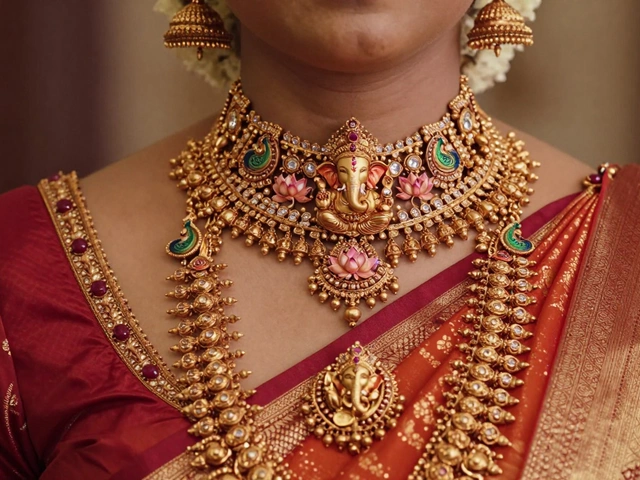
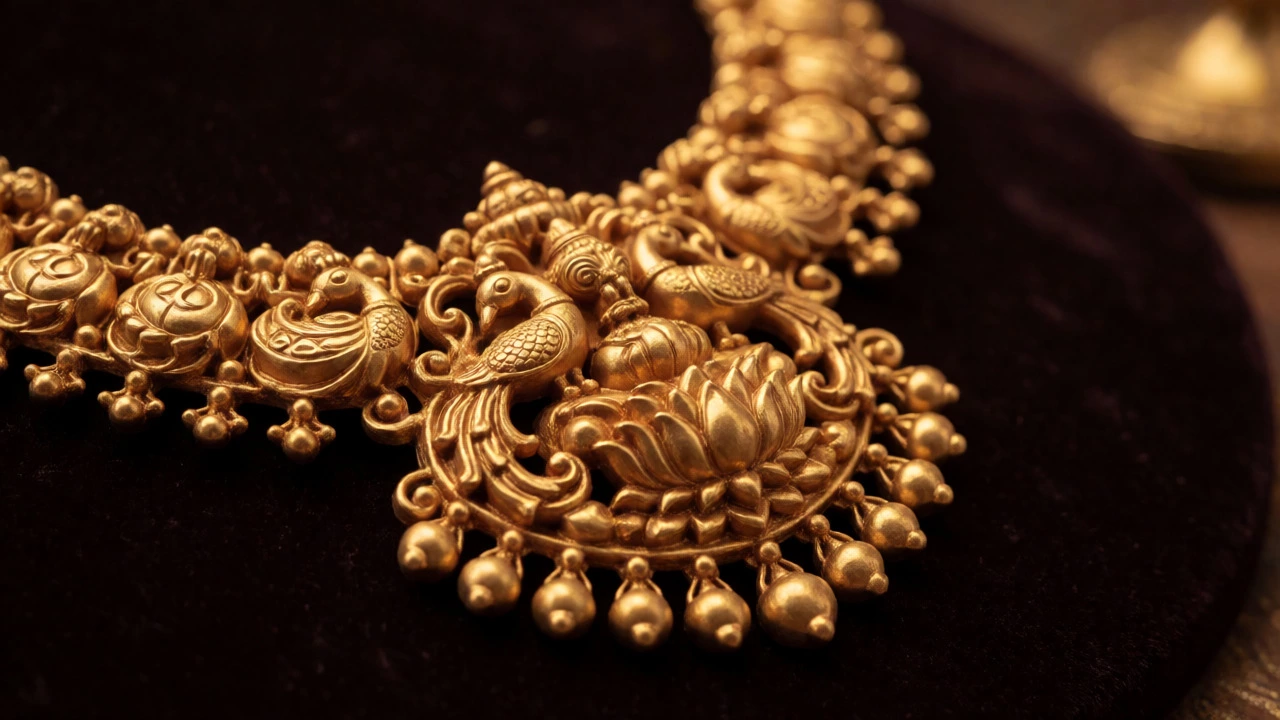
Temple Jewellery is defined by its inspiration. It mimics the ornaments worn by idols in Hindu temples, particularly those in Tamil Nadu and Kerala. The key characteristic here is the use of repousse work (hammering metal from the reverse side to create raised designs) and granulation. These pieces are often solid gold or high-karat gold plated over silver. They are designed to be substantial, durable, and visually imposing, reflecting the grandeur of divine statues.
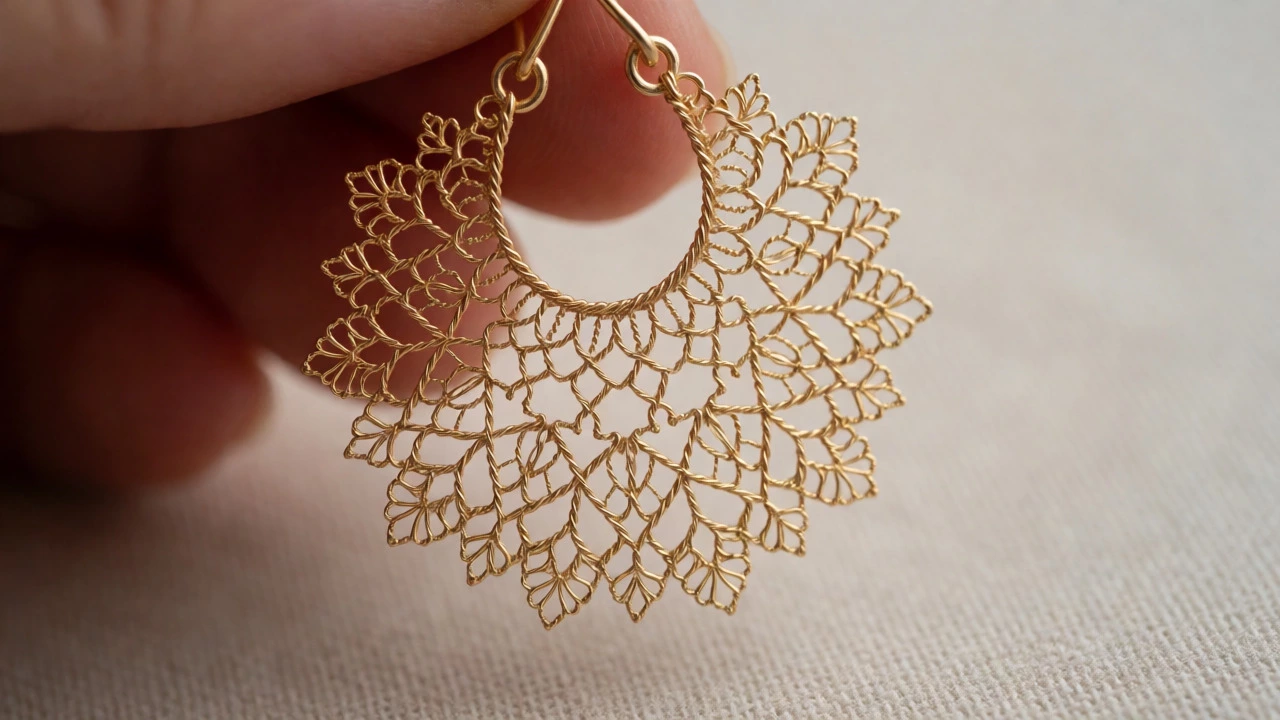
Nakshi, on the other hand, is defined by its technique. It is a form of filigree work. In Hindi and Urdu, "Nakshi" means design or drawing. This craft involves twisting fine wires of gold or silver and soldering them together to create lace-like patterns. Think of it as embroidery in metal. Unlike Temple jewellery, which relies on mass and shape, Nakshi relies on intricacy and lightness. While Temple jewellery is associated with South India, Nakshi has strong roots in North India, particularly in regions like Hyderabad and Rajasthan, though it is now popular across the subcontinent.
Visual Identification: How to Spot Them Instantly
When you hold these pieces in your hand, the differences become obvious. Here is a practical guide to identifying them without needing a jeweler’s loupe.
Look for weight and solidity. If the piece feels surprisingly heavy for its size and has a solid, cast appearance, it is likely Temple jewellery. The surfaces are usually smooth with raised motifs of gods, goddesses, peacocks, or lotus flowers. There are rarely open spaces; the metal fills the area.
Now look for transparency and delicacy. If you can see light passing through the jewelry, or if the pattern looks like a net or web made of thin wires, you are holding Nakshi. The edges are often jagged or floral, formed by curled wire ends. Nakshi pieces feel lighter because they are hollow structures made of wire rather than solid metal blocks.
| Attribute | Temple Jewellery | Nakshi Jewellery |
|---|---|---|
| Primary Technique | Repousse, Casting, Granulation | Filigree (Wire Twisting) |
| Weight | Heavy, Substantial | Light, Delicate |
| Visual Texture | Solid, Raised Motifs | Lace-like, Openwork |
| Cultural Origin | Tamil Nadu, Kerala (South India) | Hyderabad, Rajasthan, Lucknow (North/Central) |
| Typical Use | Bridal, Classical Dance, Temple Rituals | Daily Wear, Fusion Fashion, Casual Events |
Material Composition and Value
Price is often the deciding factor when choosing between these styles, but the pricing models differ significantly due to labor intensity.
Temple jewellery is typically priced based on gold weight. Because it uses solid gold or thick gold plating, the value is tied closely to the current market rate of gold. A pure gold temple necklace might cost a fortune simply because of the grams of metal used. Labor costs exist, but the material dominates the price tag.
Nakshi is expensive for a different reason: labor. Creating filigree requires immense patience. An artisan must twist thousands of microscopic wires and solder them without melting the structure. Even if the piece is made of silver or low-karat gold, the price can be high because of the hours spent crafting it. When buying Nakshi, you are paying for the artist’s time more than the raw metal. This makes Nakshi an excellent entry point for luxury-looking jewelry without the massive investment required for solid gold Temple pieces.
Styling Tips: When to Wear What
You don’t need to choose one forever. Many women own both, using them for different occasions. Here is how to style them effectively.
Wear Temple jewellery when you need presence. It pairs best with traditional silk sarees like Kanjeevaram or Banarasi. The heaviness of the jewelry balances the heavy fabric. It is ideal for weddings, Bharatanatyam performances, or religious ceremonies where tradition dictates a specific aesthetic. Pair it with matching jhumkas (bell-shaped earrings) and a maang tikka. Keep the rest of your makeup bold, as the jewelry demands attention.
Wear Nakshi when you want elegance without bulk. Because it is lightweight, it works well with lighter fabrics like chiffon, georgette, or cotton kurtas. It bridges the gap between traditional and modern. A Nakshi pendant looks sophisticated with a business suit, while Nakshi earrings add a touch of heritage to a simple jeans-and-top outfit. Since the design is intricate, avoid busy patterns on your clothes that might compete with the jewelry’s detail.
Care and Maintenance: Keeping Them Beautiful
Maintaining these two types requires different approaches due to their structural fragility.
Temple jewellery is robust. You can clean it with warm water and mild soap. A soft brush can reach into the crevices of the repousse work. However, if it is gold-plated over silver, avoid harsh chemicals that might strip the plating. Store it wrapped in cloth to prevent scratches from harder stones.
Nakshi is fragile. The wire connections can snap if pulled or crushed. Never wear Nakshi while sleeping or exercising. Cleaning is tricky-you cannot scrub it hard. Use a soft dry cloth to dust it. If it gets dirty, use a cotton swab dipped in a very mild cleaning solution, being careful not to tug at the wires. Store Nakshi in separate compartments so heavier jewelry doesn’t crush the delicate filigree.
Common Misconceptions
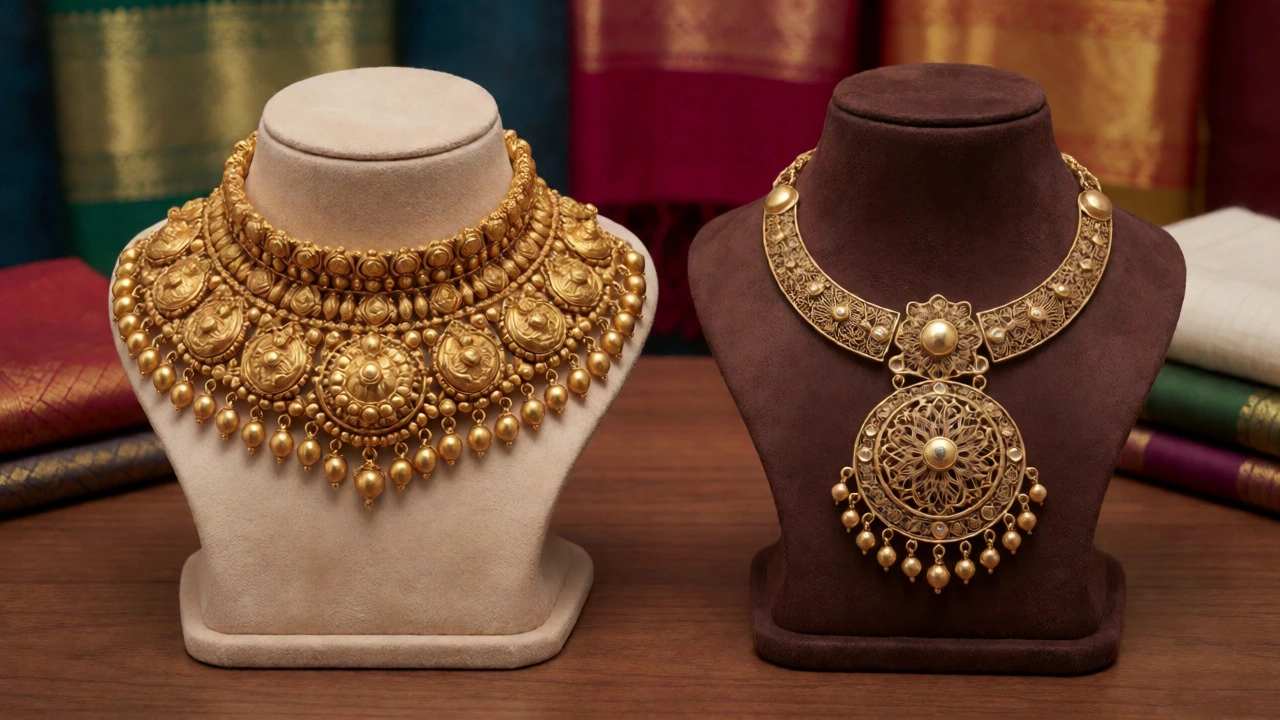
One major myth is that all South Indian jewelry is Temple jewellery. This is false. South India has many styles, including antique finishes, diamond-studded sets, and yes, even filigree work adopted locally. Just because a piece comes from Chennai doesn’t make it Temple style.
Another misconception is that Nakshi is only for casual wear. While it is lighter, high-end Nakshi pieces made of pure gold are considered formal bridal accessories in some communities, particularly in Hyderabad. The distinction is less about "casual vs. formal" and more about "delicate vs. bold."
Finally, people often think Nakshi is cheaper because it is "fake." It’s not fake; it’s just constructed differently. High-quality Nakshi uses real gold or sterling silver. Cheap versions use base metals, but that applies to Temple jewellery too. Always check the hallmark.
Why This Distinction Matters for Buyers
Understanding the difference helps you negotiate better. If a seller tries to charge you Temple prices for a Nakshi piece, know that you are paying for craftsmanship, not just gold weight. Conversely, if you want a piece that lasts generations and holds intrinsic value, solid gold Temple jewellery is the better investment. Nakshi is about beauty and artistry; Temple is about heritage and asset value.
As trends evolve, designers are blending these styles. You might see a Temple-inspired motif created using Nakshi techniques. This fusion creates unique pieces that honor tradition while offering modern comfort. Knowing the basics allows you to appreciate these hybrids rather than being confused by them.
Is Nakshi jewellery always made of silver?
No, Nakshi can be made from gold, silver, or platinum. While silver filigree is historically common and affordable, high-end Nakshi is frequently crafted in 18K or 22K gold. The defining feature is the wire-twisting technique, not the metal type.
Can I wear Temple jewellery every day?
It depends on the piece. Traditional Temple jewellery is often heavy and bulky, making it uncomfortable for daily office wear. However, modern adaptations feature smaller, lighter motifs that are suitable for everyday use. Look for pieces described as "lightweight temple style" if you want daily wear options.
Which is more expensive, Nakshi or Temple?
Solid gold Temple jewellery is generally more expensive due to the high volume of precious metal used. Nakshi can also be expensive if made of gold due to high labor costs, but silver Nakshi is much more affordable. Price comparisons should always be done per gram of metal versus per hour of labor.
How do I clean intricate Nakshi jewellery?
Use a soft, dry microfiber cloth for regular dusting. For deeper cleaning, use a cotton swab lightly dampened with mild soapy water. Avoid soaking it or using ultrasonic cleaners, as the vibrations can loosen the delicate wire solder joints.
Is Temple jewellery only for brides?
While it is a staple for South Indian brides, Temple jewellery is worn by women of all ages during festivals, classical dance performances, and religious ceremonies. It is not restricted to marital status.