Find Your Perfect Jewellery Maker
Answer these questions to discover which type of maker aligns best with your project goals.
Recommended Maker Type:
Key Questions to Ask This Maker:
You walk into a store, see a ring that catches your eye, and wonder: who actually made this? Was it a machine in a factory, or did a human being with calloused hands and a magnifying glass spend forty hours shaping that metal? The question who is the best jewellery maker isn't just about fame; it's about trust. It’s about knowing whether your heirloom will last fifty years or tarnish in five.
There is no single "best" person on Earth. Instead, there are different types of makers, each with distinct skills, tools, and philosophies. Some are masters of traditional Indian craftsmanship, others are avant-garde designers using CAD software, and some are hobbyists turning passion into profit. Understanding these differences helps you decide who should make your next piece-or if you should pick up the tools yourself.
The Myth of the Single "Best" Maker
We love rankings. We want a top ten list. But jewelry is too subjective for a single winner. If you ask a diamond cutter who the best is, they’ll point to a master polisher in Antwerp. If you ask a temple jewelry enthusiast, they might name a specific family workshop in Kerala. If you ask a modern minimalist, they might praise a Scandinavian studio.
The "best" maker depends entirely on what you value. Do you care about historical accuracy? Then look for artisans specializing in heritage techniques like Kundan or Meenakari. Do you care about precision and consistency? Look for makers who integrate technology with hand-finishing. Do you care about uniqueness? Look for independent artists who don’t mass-produce.
This distinction matters because hiring the wrong type of maker leads to disappointment. You wouldn’t hire a sculptor to repair a delicate chain link, and you shouldn’t expect a mass-production factory to capture the soul of a custom engagement ring.
Types of Jewellery Makers: Who Does What?
To find the right person, you need to know the roles within the industry. Jewelry creation is rarely done by one person from start to finish unless you’re dealing with a small solo artist. Here are the main categories:
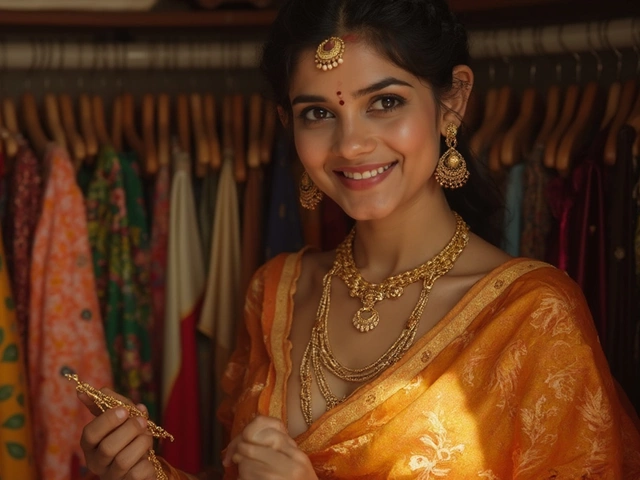
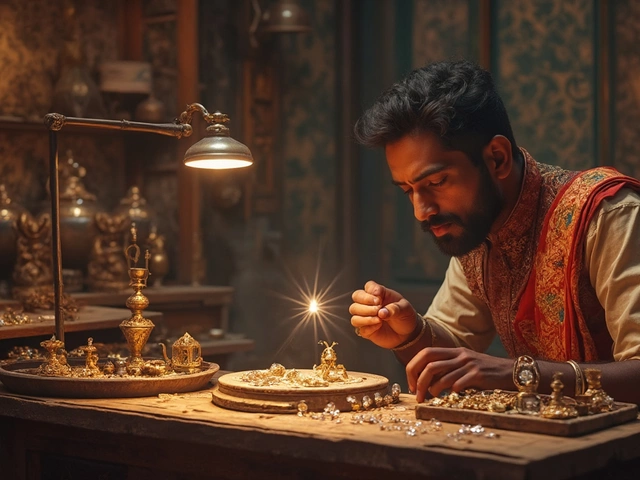
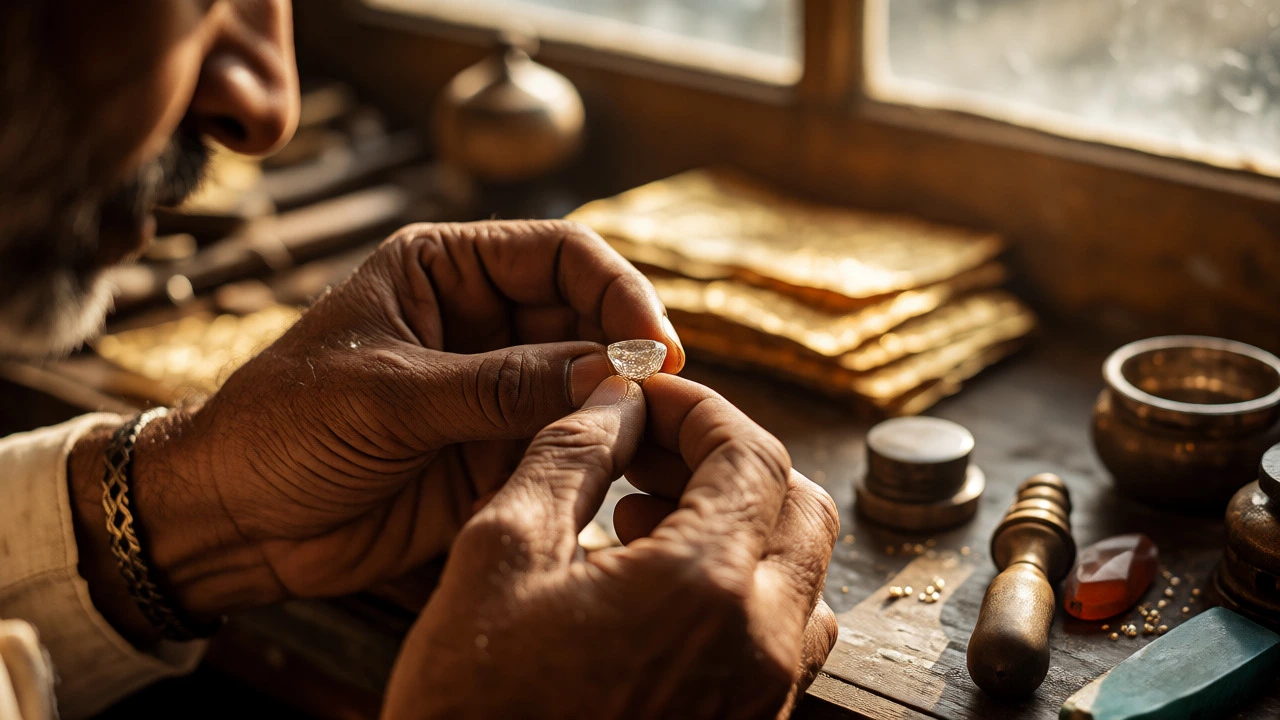
- The Traditional Artisan: These makers rely on centuries-old techniques. In India, this includes experts in Kundan work, where uncut diamonds are set in gold foil, or Meenakari, which involves intricate enamel painting. They often work in clusters like Jaipur or Hyderabad. Their strength is authenticity and cultural depth.
- The Modern Designer-Artist: This group blends art with engineering. They might use wax carving or direct metal casting. Many now use Computer-Aided Design (CAD) to create complex geometries that would be impossible by hand alone. Think of brands that focus on architectural shapes or organic forms inspired by nature.
- The Bench Jeweler: Often overlooked, these are the technicians who handle repairs, resizing, and setting stones. While they may not design the initial concept, their skill determines the durability of the final piece. A beautiful design executed poorly by a bench jeweler will fail.
- The DIY Enthusiast: With the rise of high-quality jewelry making kits, many people are becoming their own makers. These aren't just craft projects anymore; advanced kits allow for professional-grade results at home.
How to Evaluate a Jewellery Maker’s Skill
If you are commissioning a piece, how do you spot talent? Ignore the marketing fluff. Look at the details. Here is a practical checklist for assessing a maker’s competence:
- Check the Finish: Run your finger over the metal. Is it smooth? Are there file marks? A great maker spends as much time polishing as they do designing. High polish should reflect light evenly without ripples.
- Inspect Stone Settings: Look closely at prongs or bezels. Are they symmetrical? Do they hold the stone securely without obscuring too much of it? Poor settings lead to lost stones.
- Ask About Materials: Ask what alloy they use. Pure gold (24k) is too soft for daily wear. A skilled maker knows the exact ratio of copper or silver to add for durability while maintaining color. For example, 18k yellow gold typically contains 75% gold and 25% other metals.
- Review Portfolio Consistency: Does every piece look equally well-made? Or does one stand out while others look rushed? Consistency indicates discipline and quality control.
A common pitfall is confusing "expensive" with "well-made." Sometimes you pay for brand name, not craftsmanship. Always prioritize visible evidence of skill over price tags.
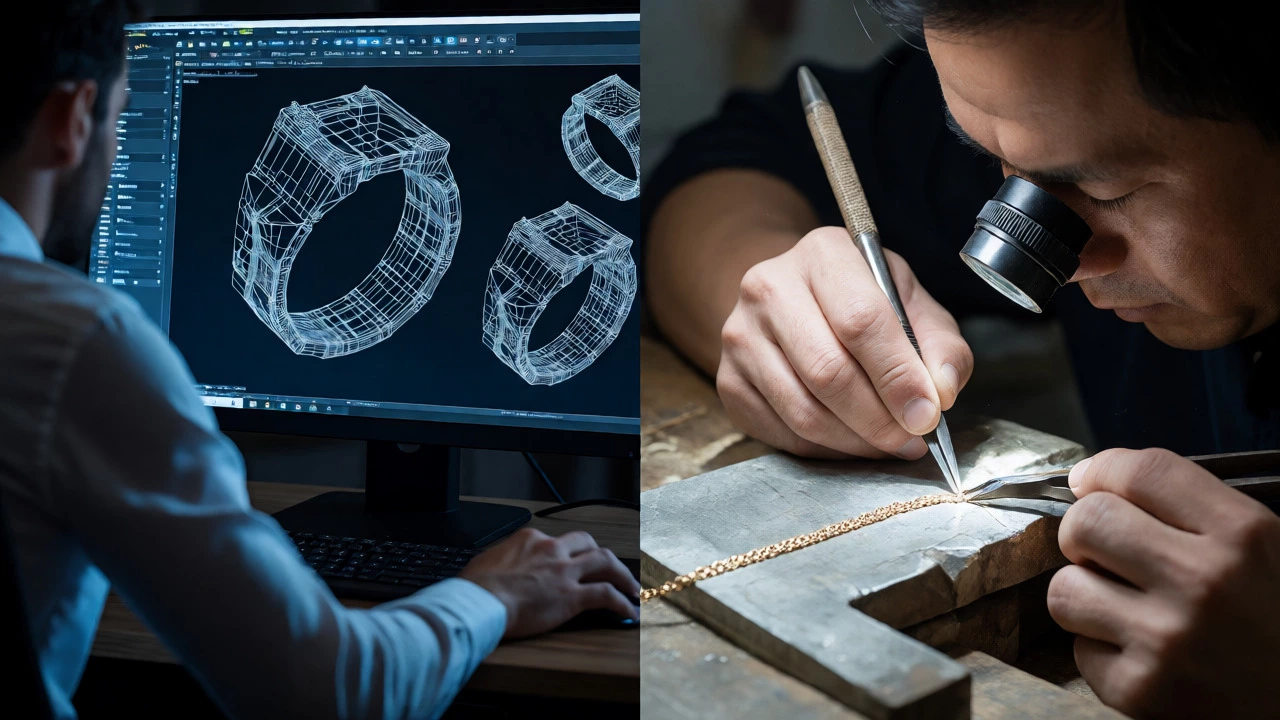
Technology vs. Tradition: Who Wins?
This is the biggest debate in the industry today. On one side, we have 3D printing and laser cutting. On the other, we have hammer and anvil. Who makes better jewelry?
| Feature | Traditional Handcrafting | Modern Digital Fabrication |
|---|---|---|
| Design Complexity | Limited by manual dexterity; best for organic, flowing lines. | High; can create intricate lattice structures and precise geometry. |
| Uniqueness | Every piece is slightly different due to human variation. | Identical copies possible; ideal for consistent branding. |
| Turnaround Time | Slower; requires days or weeks per piece. | Faster; prototypes can be printed in hours. |
| Cost Structure | Higher labor costs; lower tooling costs. | Lower labor costs; higher initial setup/machine costs. |
| Emotional Value | High; carries the story of the artisan's effort. | Moderate; valued for design innovation rather than process. |
The truth? The best makers combine both. A designer might sketch a concept, model it in Rhino or MatrixGold software, print a wax prototype, and then hand-finish the cast piece. This hybrid approach offers the precision of machines with the soul of human touch. If a maker refuses to adapt to new tools, they might lack efficiency. If they rely solely on machines, they might lack character.
Regional Masters: Where to Find Specific Styles
Certain regions dominate specific styles. Knowing this helps you narrow down your search for the "best" maker for your needs.
India remains the global hub for intricate gemstone setting. Cities like Jaipur are renowned for Kundan and Polki work. If you want heavy, ornate bridal jewelry, look for artisans here. They specialize in working with uncut diamonds and pearls in ways Western jewelers often overlook.
Italy is famous for goldsmithing and chain-making. Italian artisans have perfected the art of creating lightweight yet durable gold chains. Their technique for hollow-forming gold allows for large-looking pieces that are comfortable to wear. If you prefer elegant, wearable luxury, Italian-trained makers are often superior.
France has a legacy of haute joaillerie (high jewelry). French houses emphasize artistic expression and rare gemstones. While often associated with big brands, independent French-trained artisans excel in complex pavé settings and platinum work.
Japan focuses on minimalism and precision. Japanese makers are known for incredibly tight tolerances and clean finishes. If you like simple bands or geometric designs with perfect symmetry, look for makers influenced by Japanese aesthetics.
Becoming Your Own Best Maker: The Kit Revolution
Why hire someone when you can make it yourself? The market for jewelry making kits has exploded. But not all kits are created equal.
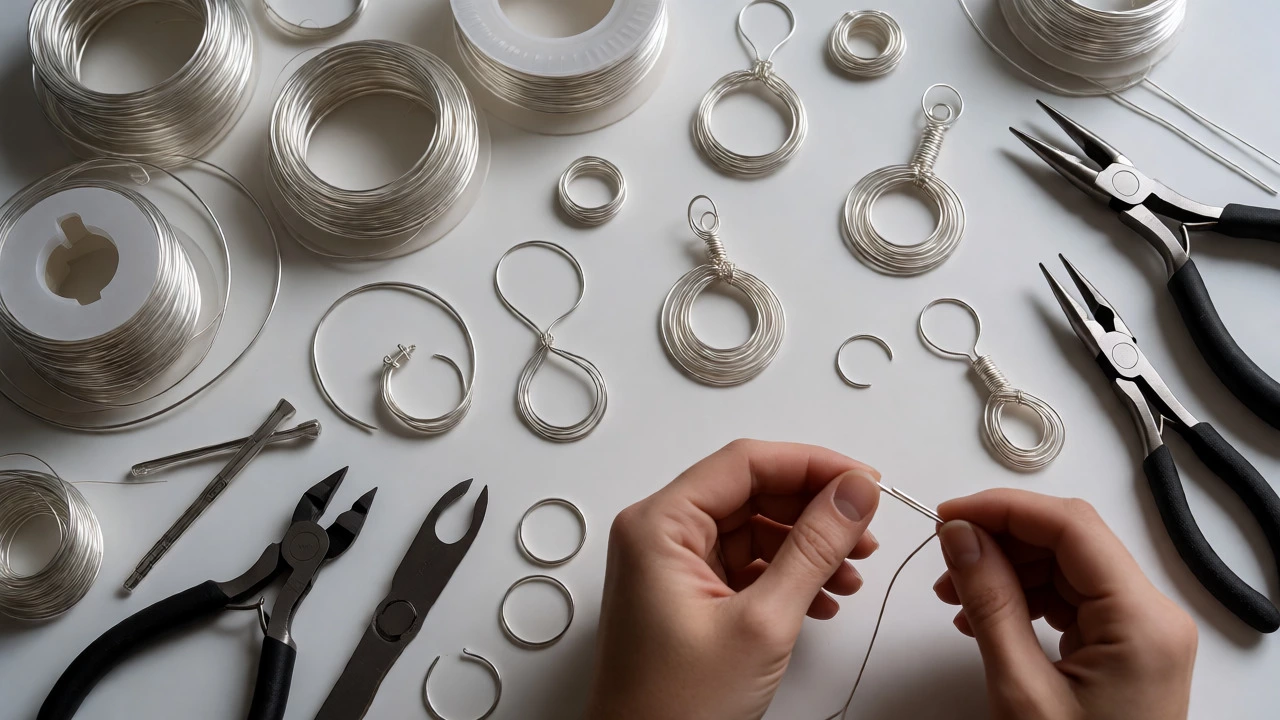
Beginner kits usually contain pre-cut components and glue. Advanced kits include raw wire, sheet metal, pliers, and soldering irons. If you want to truly understand who makes good jewelry, try making a pair of earrings. You’ll quickly learn why a good maker is worth paying for.
Here’s how to choose a kit that teaches real skills:
- Look for Tool Quality: Cheap pliers slip and scratch metal. Invest in kits that include flush cutters and round-nose pliers made of hardened steel.
- Material Authenticity: Ensure the kit provides real sterling silver or gold-filled wire, not plated base metal. Working with real metal gives you the true experience of hardness and malleability.
- Instruction Depth: Video tutorials are essential. Reading instructions doesn’t teach you how to hold your wrist or apply pressure. Look for makers who provide step-by-step video guidance.
Making your own jewelry changes your perspective. You stop looking at a finished ring as just an object and start seeing the hours of filing, soldering, and polishing behind it. That appreciation makes you a smarter customer.
Questions to Ask Before Hiring a Custom Maker
If you decide to commission a piece, treat it like hiring a contractor. You need clear communication. Here are the critical questions to ask:
- Can I see a similar piece you’ve made? Photos can be edited. Ask for videos or physical samples.
- What is the timeline? Be realistic. Good things take time. If they promise a custom ring in three days, they are likely outsourcing or rushing.
- Do you offer after-sales service? Will they resize it later? Will they re-polish it? A confident maker stands behind their work.
- How do you handle stone sourcing? Do they buy loose stones themselves, or do you need to provide them? Transparency here prevents markup surprises.
Trust your gut during these conversations. If a maker seems dismissive of your ideas or pushes you toward only what they want to make, walk away. The best makers listen first, then advise.
Conclusion: Finding Your Perfect Match
So, who is the best jewellery maker? It’s the one whose style aligns with yours, whose technical skills meet your durability requirements, and whose communication style makes you feel heard. There is no universal champion. There is only the right maker for your specific project.
Whether you’re hunting for a heritage artisan in Jaipur, a tech-savvy designer in New York, or picking up a kit to make your own pendant, the key is knowledge. Understand the methods, inspect the details, and respect the craft. When you do, you won’t just buy jewelry-you’ll invest in artistry.
Is handmade jewelry always better than machine-made?
Not necessarily. Machine-made jewelry offers superior consistency and precision, especially for mass-produced items like chains or standard bands. Handmade jewelry offers uniqueness and emotional value. The "better" option depends on whether you prioritize uniformity or individuality.
How much does it cost to hire a custom jewellery maker?
Costs vary widely based on materials and complexity. Labor alone can range from $50 for simple repairs to $500+ for complex custom designs. Material costs (gold, gems) are separate. Always ask for a breakdown of labor vs. material costs to avoid hidden fees.
Can I use jewelry making kits to make gifts?
Yes, absolutely. Many advanced kits produce professional-looking results suitable for gifting. Start with simpler projects like wire-wrapped pendants or bead-stringed bracelets before attempting soldering-intensive rings.
What qualifications should a professional jeweler have?
While formal degrees aren't mandatory, certifications from recognized bodies like the Gemological Institute of America (GIA) or local guilds indicate training. However, a strong portfolio and positive client reviews are often more reliable indicators of current skill level than certificates alone.
Which country is famous for the best gold jewelry?
Different countries excel in different areas. Italy is renowned for gold chain craftsmanship and finishing. India is famous for intricate gold designs with gemstones. Turkey also produces high-quality gold jewelry with unique Middle Eastern influences. Choose based on the style you prefer.