Handcrafted Temple Jewelry: Tradition, Design, and Why It's Back in Style
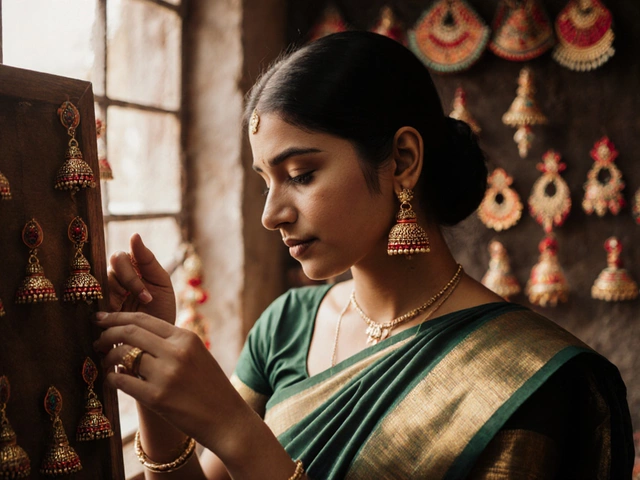
When you think of handcrafted temple jewelry, a centuries-old form of Indian adornment originally made for temple deities and later worn by royalty. Also known as kalinga jewelry or South Indian temple jewelry, it’s not just ornament—it’s wearable history. Unlike mass-produced pieces, each item is shaped by hand, hammered with precision, and often set with kempu stones—deep red garnets that glow like fire. This isn’t fashion fluff. It’s art passed down through generations of artisans in Tamil Nadu, Andhra Pradesh, and Karnataka.
What makes temple jewelry, a distinct category of Indian gold and silver adornment featuring intricate motifs of gods, goddesses, and sacred symbols so special isn’t just the gold. It’s the details: the tiny lotus petals, the miniature chariots, the fluted edges that catch light like water. These aren’t random designs—they’re sacred geometry. And today, young women in Delhi and Bangalore are swapping their minimalist studs for these bold, heavy pieces—not for weddings, but for brunch. Why? Because kempu stones, natural red garnets used traditionally in temple jewelry for their symbolic power and vibrant color offer a richness no lab-grown diamond can match. They’re durable, authentic, and tied to a story older than most modern brands.
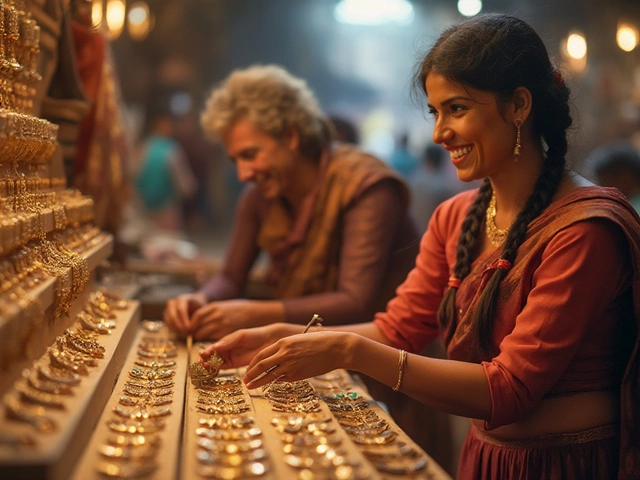
The revival isn’t accidental. In 2024, sales of temple jewelry jumped 40% in India, according to industry reports. More people are asking: Is this real gold? Are the stones genuine? Can I wear this daily? The answers lie in the making. True handcrafted pieces show slight asymmetry—proof they weren’t stamped by a machine. They’re heavier because they’re solid, not hollow. And the clasp? Often a simple hook, not a modern latch. You’ll find these details in the posts below—how to tell real from fake, which designs work for everyday wear, and why some women now wear temple jewelry with jeans.
There’s also the cultural layer. While temple jewelry was once reserved for rituals and brides, today it’s reclaiming space in street style, photoshoots, and even corporate offices. It’s no longer about religion—it’s about identity. The same hands that once shaped deities now craft necklaces for women who want to carry heritage without looking like they’re in a museum. And that’s the quiet revolution: tradition isn’t frozen. It’s being remade, one hand-hammered piece at a time.
Below, you’ll find real insights—from how to clean your temple jewelry without damaging the stones, to why some designs are better for fine hair, to the surprising truth about resale value. No fluff. Just what matters if you own it, want it, or wonder why it’s everywhere now.
Where Do Indians Get Their Temple Jewelry From?
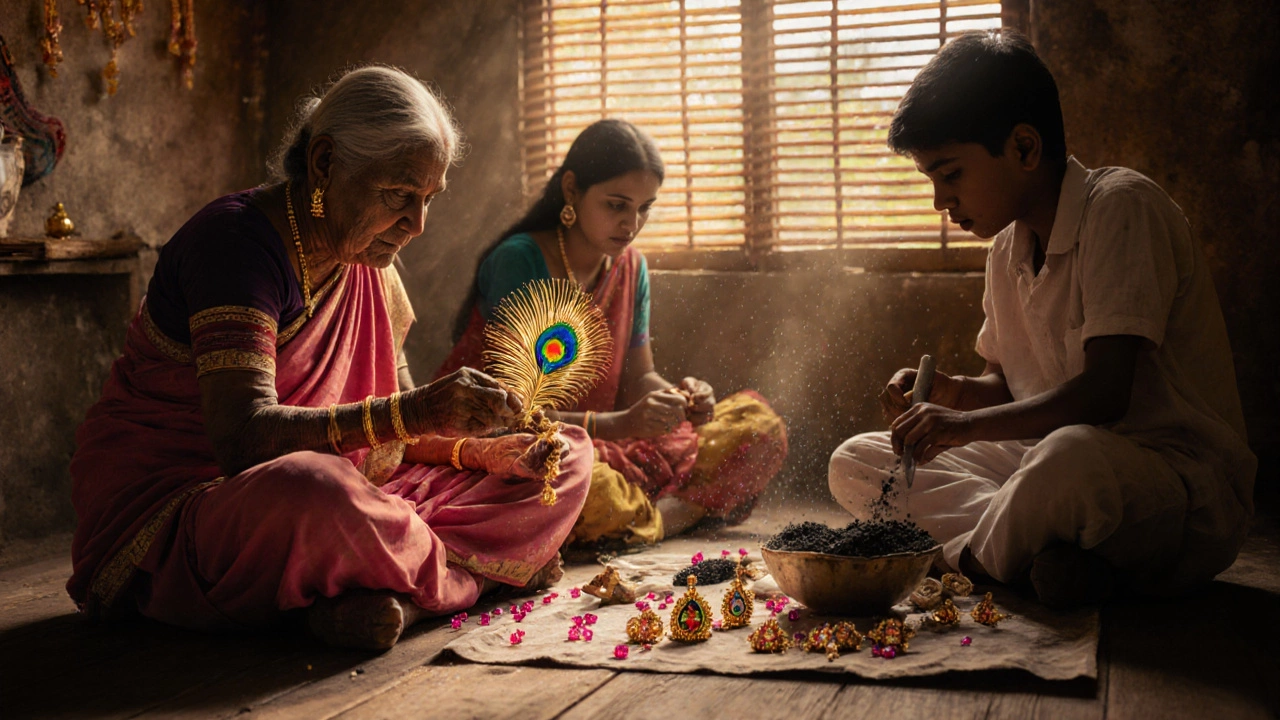
Temple jewelry in India comes from small workshops in Tamil Nadu and Andhra Pradesh, where artisans handcraft sacred designs passed down for centuries. It's not bought-it's inherited, made with skill, and rooted in temple traditions.