Nakashi Jewellery Authenticity Checker
Select the characteristics of the jewelry piece you are examining to determine if it is likely authentic Nakashi or a modern imitation.
Analysis Result
Select features on the left and click "Check Authenticity" to see the analysis.
Have you ever wondered why certain pieces of Indian jewelry look like they were carved directly from the walls of an ancient shrine? That distinct, heavy, and intricate style is known as Nakashi jewellery. It is not just a fashion statement; it is a wearable piece of history. If you have seen brides in Tamil Nadu or Karnataka wearing elaborate headpieces that resemble temple architecture, you have seen Nakashi work. But what exactly makes it different from regular gold jewelry?
The term "Nakashi" comes from the Urdu word for "designer" or "artisan." In the context of jewelry, it refers to a specific technique of metalwork where artisans create intricate designs by engraving, embossing, and setting stones into metal. While modern jewelry often focuses on minimalism, Nakashi jewellery is about grandeur, weight, and detailed craftsmanship. It is deeply rooted in the cultural heritage of South India, particularly associated with the temples of Tamil Nadu.
The Roots of Nakashi: More Than Just Decoration
To understand Nakashi, you need to look back at the Chola dynasty (9th to 13th century). This era was a golden age for art and architecture in South India. The temples built during this time were not just places of worship but also centers of artistic expression. Sculptors and jewelers worked side by side. The motifs used in temple carvings-lotus flowers, peacocks, deities, and geometric patterns-were translated into jewelry designs.
Temple jewellery is a style of jewelry inspired by the ornate decorations found in South Indian Hindu temples. Nakashi is the technical method used to create these pieces. Unlike contemporary jewelry that might use casting alone, traditional Nakashi involves hand-engraving. An artisan uses tools called "chisels" to carve out designs on soft metals like copper or silver, which are then plated with gold. This process gives the jewelry its signature depth and texture.
The connection between religion and adornment is strong here. Historically, these jewels were offered to deities. Over time, they became part of bridal trousseaus, symbolizing prosperity and divine blessing. Wearing Nakashi jewellery is still considered auspicious in many South Indian households, especially during weddings and festivals like Pongal or Diwali.
How Nakashi Jewellery is Made: The Craftsmanship
You might assume that because it looks like gold, it is solid gold. Here is the secret: most traditional Nakashi jewellery is not made of pure gold. Instead, it uses a base metal, usually copper or silver, which is then heavily plated with gold. This technique allows artisans to create large, statement pieces without the prohibitive cost of solid gold.
The manufacturing process is labor-intensive and requires skilled hands:
- Design Sketching: The artisan starts with a sketch of the design, often based on traditional temple motifs.
- Metal Shaping: Copper or silver sheets are cut and shaped into the desired form.
- Engraving (Nakashi): Using specialized chisels, the artisan engraves intricate patterns onto the metal surface. This step defines the "Nakashi" aspect-it is the art of designing through engraving.
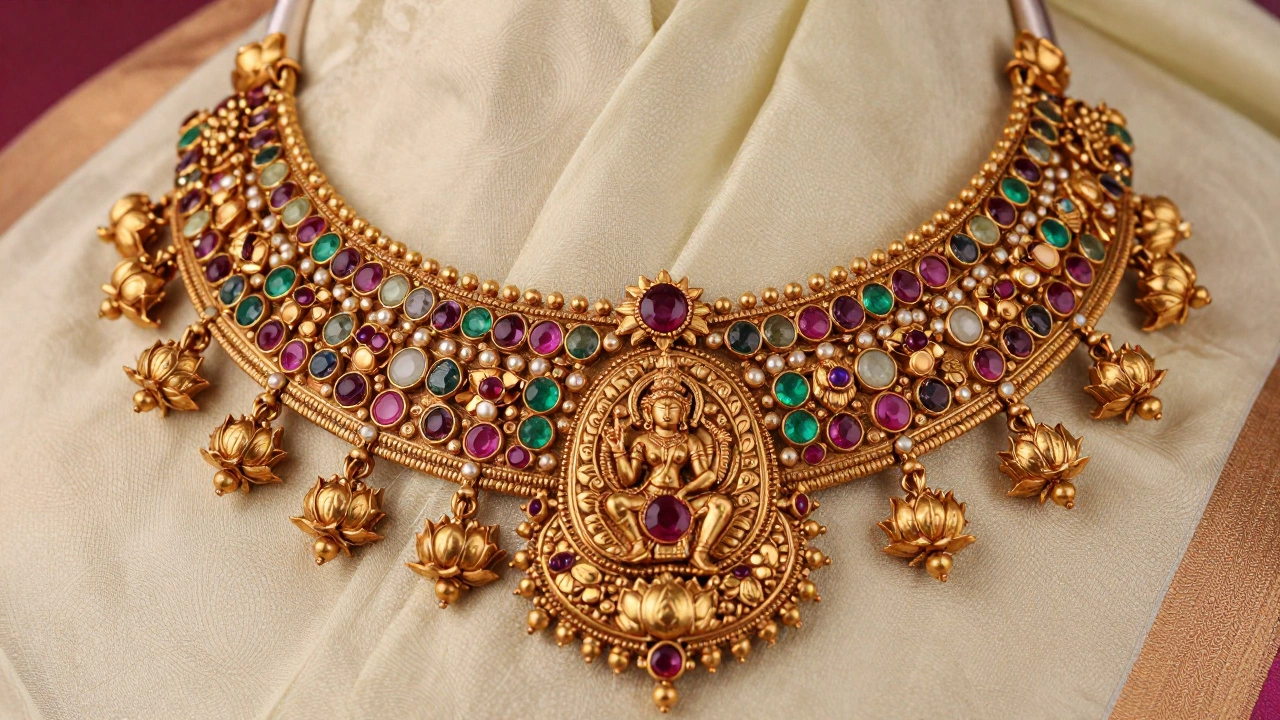
- Stone Setting: Semi-precious stones like rubies, emeralds, and garnets are set into the engraved areas. These stones are often cabochon-cut (smooth and rounded) rather than faceted, giving them a vintage look.
- Gold Plating: The entire piece is dipped in a gold solution. High-quality Nakashi jewellery undergoes multiple layers of plating to ensure durability and a rich color.
- Polishing: Finally, the piece is polished to bring out the shine of the gold and the luster of the stones.
This method is different from Kundan jewellery, which is a North Indian jewelry style involving uncut gemstones set in a gold foil matrix. Kundan focuses on the stone setting technique, while Nakashi focuses on the metal engraving and overall structural design inspired by temples.
Key Features of Authentic Nakashi Jewellery
If you are looking to identify genuine Nakashi jewellery, there are several visual cues to watch for. First, look at the motifs. You will frequently see lotus buds, mango shapes (mangalsutra pendants), and figures of gods and goddesses. These are not random choices; they are symbolic elements taken directly from temple iconography.
Second, observe the stones. Traditional Nakashi uses semi-precious stones such as:
- Ruby (for red accents)
- Emerald (for green highlights)
- Garnet (for deep red tones)
- Pearl (often used in centerpieces)
The stones are usually set closely together, creating a mosaic-like effect. The gold plating should have a warm, yellow hue, not the bright white-gold tone seen in modern Western jewelry. Also, check the weight. Because these pieces are designed to be worn as statement items, they tend to be heavier than everyday jewelry. A lightweight pair of earrings claiming to be traditional Nakashi is likely a modern imitation using plastic or low-quality alloy.
Nakashi vs. Modern Imitations: What’s the Difference?
In recent years, the popularity of temple jewellery has exploded globally. With this demand came mass-produced imitations. Many brands now sell "temple-style" jewelry that lacks the authentic Nakashi craftsmanship. How can you tell the difference?
| Feature | Authentic Nakashi Jewellery | Modern Mass-Produced Imitation |
|---|---|---|
| Base Material | Copper or Silver | Brass, Alloy, or Plastic |
| Plating Quality | Thick, multi-layered gold plating | Thin electroplating that fades quickly |
| Stones | Semi-precious stones (Ruby, Emerald) | Glass beads or acrylic stones |
| Weight | Heavy and substantial | Lightweight and flimsy |
| Detailing | Hand-engraved, unique imperfections | Molded, uniform, machine-made |
When you hold authentic Nakashi jewellery, you feel the weight of the metal. The details are sharp because they were carved by hand. In contrast, imitations often have blurred edges and a lighter feel. Additionally, authentic pieces may come with hallmarks indicating the purity of the gold plating and the quality of the base metal. Always buy from reputable artisans or established brands that specialize in South Indian traditional jewelry.
Popular Types of Nakashi Jewellery Pieces
Nakashi jewellery is not limited to one type of accessory. It encompasses a full range of adornments that cover the body from head to toe. Here are some of the most iconic pieces:
Jhumkas: These are bell-shaped earrings that dangle gracefully. In Nakashi style, they are often large and feature intricate floral designs with hanging pearls. They are a staple in any South Indian bride's collection.
Kasulu Mala: This is a necklace made of thick gold chains interspersed with small pendant-like designs. It sits close to the neck and adds a regal touch to the neckline of a saree.
Mathapatti: Also known as a maang tikka, this piece rests on the forehead and hairline. In the Nakashi tradition, it is elaborate, often featuring a central deity motif surrounded by smaller flowers and stones.
Vaddanam: A long, layered necklace that extends down to the waist. It is typically reserved for special occasions due to its size and weight. The Vaddanam is a centerpiece of temple jewellery sets.
Bangles: Gold-plated bangles with engraved patterns are common. They are often worn in stacks to complement the other heavy jewelry pieces.
Caring for Your Nakashi Jewellery
Since Nakashi jewellery relies on gold plating over a base metal, proper care is essential to maintain its beauty. The plating can wear off over time if exposed to harsh chemicals or moisture. Here are some practical tips:
- Avoid Water Exposure: Do not wear your Nakashi jewellery while swimming, showering, or doing household chores. Water can cause the base metal to tarnish, which will show through the gold plating.
- Store Properly: Keep each piece in a separate soft cloth pouch or a lined jewelry box. This prevents scratches and tangling. Moisture is the enemy, so consider adding silica gel packets to your storage area.
- Apply Makeup First: Always put on perfume, lotion, and makeup before wearing your jewelry. Chemicals in these products can corrode the gold plating.
- Clean Gently: Use a soft, dry cloth to wipe off dust and oils after each wear. For deeper cleaning, consult a professional jeweler who specializes in plated items. Avoid abrasive cleaners or ultrasonic machines unless advised by an expert.
With proper care, a high-quality Nakashi piece can last for generations. Many families pass down their temple jewellery sets from mother to daughter, preserving both the aesthetic and the cultural heritage.
Why Nakashi Jewellery Remains Relevant Today
In a world dominated by fast fashion and minimalist trends, Nakashi jewellery stands out for its richness and storytelling. It connects the wearer to a centuries-old tradition of artistry and devotion. Celebrities and influencers have also played a role in keeping this style alive. When Bollywood stars or international designers incorporate temple jewellery into their outfits, it sparks renewed interest among younger generations.
Moreover, the versatility of Nakashi jewellery has increased. While traditionally worn with silk sarees, modern stylists pair it with lehengas, gowns, and even fusion outfits. The bold colors and metallic sheen make it a perfect accent for festive attire. Whether you are attending a wedding, a festival, or a cultural event, Nakashi jewellery adds a layer of elegance and authenticity that synthetic alternatives cannot match.
Understanding what Nakashi jewellery is goes beyond recognizing a style. It is about appreciating the skill of the artisan, the history of the temple, and the cultural significance of adornment in Indian society. Next time you see a bride adorned in sparkling, heavy jewelry, take a closer look. You might just be witnessing the living legacy of Nakashi craftsmanship.
Is Nakashi jewellery real gold?
Traditional Nakashi jewellery is not made of solid gold. It is typically crafted from a base metal like copper or silver, which is then heavily plated with gold. This technique allows for intricate designs and larger sizes at a more affordable price point than solid gold jewelry, while still maintaining a luxurious appearance.
Where does Nakashi jewellery originate from?
Nakashi jewellery originates from South India, particularly the state of Tamil Nadu. Its designs are inspired by the architecture and sculptures of ancient Hindu temples built during the Chola dynasty. The term "Nakashi" itself refers to the artisan who creates the intricate engravings on the metal.
How can I tell if my temple jewellery is authentic Nakashi?
Authentic Nakashi jewellery is characterized by hand-engraved details, the use of semi-precious stones like ruby and emerald, and a heavy weight due to the copper or silver base. Look for traditional motifs such as lotuses and deities. If the piece feels very light or the stones look like glass, it is likely a modern imitation.
Can I wear Nakashi jewellery daily?
While you can wear Nakashi jewellery daily, it is best suited for special occasions due to its weight and delicate plating. Daily exposure to sweat, water, and chemicals can cause the gold plating to wear off faster. For everyday wear, consider lighter, simpler versions or store your Nakashi pieces properly when not in use.
What is the difference between Nakashi and Kundan jewellery?
Nakashi jewellery focuses on hand-engraved metalwork and gold plating, primarily originating from South India. Kundan jewellery, on the other hand, is a North Indian style that involves setting uncut gemstones in a gold foil matrix. While both are traditional and ornate, their techniques and regional origins differ significantly.