Indian Diamond Market Style & Value Calculator
Diamond Configuration
Analysis & Comparison
Configure your diamond above to see estimated values and style insights.
Key Insight from Article:
India is famous for two things: historically for the rare Golconda diamonds (Type IIa), and today for processing 90% of the world's diamonds in Surat. When buying in India, you pay less for "brand premium" compared to Western retail prices.
When people ask which diamond India is famous for, they often expect a single name like 'The Hope Diamond' or 'The Koh-i-Noor.' But the truth is more interesting. India isn't just famous for one specific stone; it is famous for being the original source of the world's finest diamonds and later becoming the global factory that cuts and polishes nearly all of them today.
If you are looking at diamond rings from India, you are likely buying a stone that was polished in Gujarat or designed in Mumbai, even if the rough diamond came from Africa. This dual identity-historical miner and modern manufacturer-is what makes Indian diamonds unique.
The Historical Giant: Golconda Diamonds
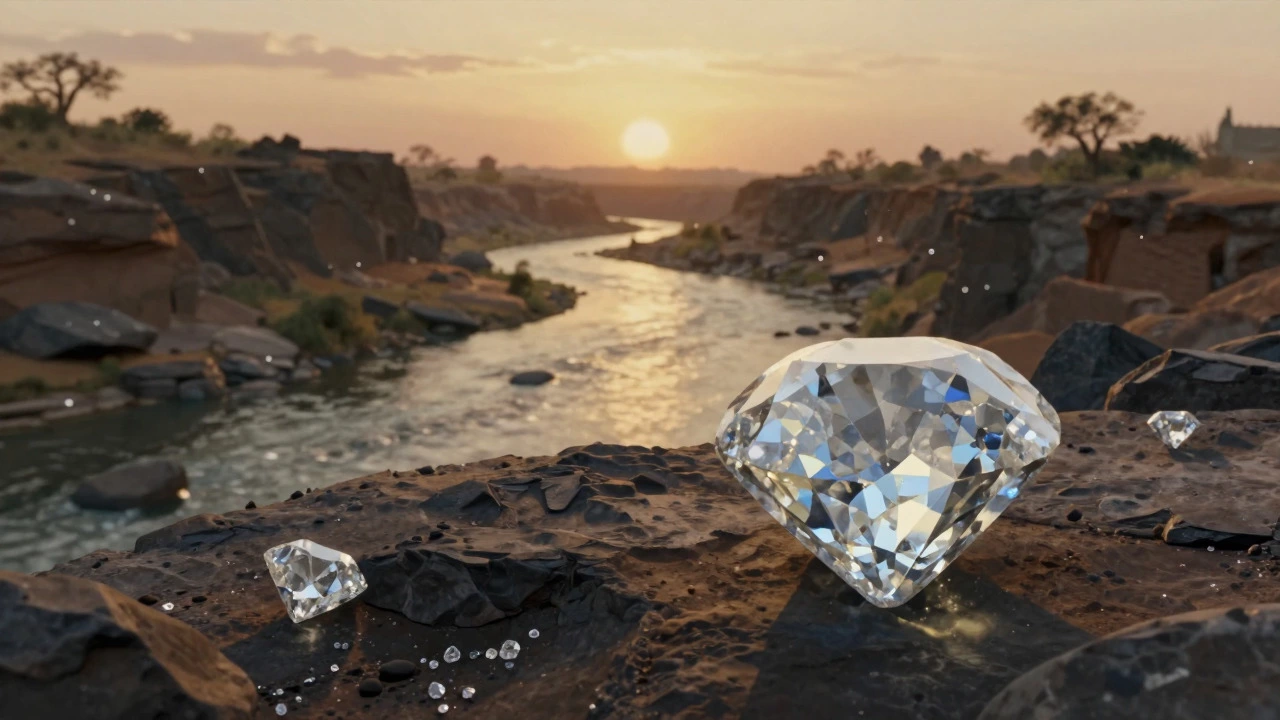
To understand which diamond India is famous for historically, we have to look back over 600 years. Before the discovery of diamonds in Brazil in the 1700s or South Africa in the 1800s, India was the only place on Earth where diamonds were found. Specifically, the region known as Golconda is a historic kingdom in present-day Telangana and Andhra Pradesh, famous for producing some of the world's most legendary gemstones.
The mines around the Krishna River, particularly the Kollur Mine is an ancient diamond mine located near the Krishna River, credited with producing many of the world's most famous large diamonds., yielded stones that traveled along trade routes to Europe and Asia. These are collectively known as Golconda diamonds.
Why are these stones so special? They are Type IIa diamonds, meaning they are chemically pure with very few impurities. This gives them an exceptional clarity and a distinctive 'blue-white' hue that collectors still chase today. Many of the world's most famous historical diamonds originated here:
- The Koh-i-Noor: Originally mined in the Golconda region, this 105-carat stone has passed through Mughal and British hands before ending up in the Tower of London.
- The Hope Diamond: Likely sourced from Kollur, this 45.52-carat blue diamond is now in Washington D.C.
- The Darya-ye Noor: Part of the Iranian crown jewels, also believed to be from the Kollur mines.
So, when historians talk about Indian diamonds, they are talking about the rare, high-quality Type IIa stones from the Golconda era. However, those mines have been exhausted for centuries. Today, when you buy a diamond in India, it is not coming from a local mine.
The Modern Powerhouse: Surat and the Polishing Industry
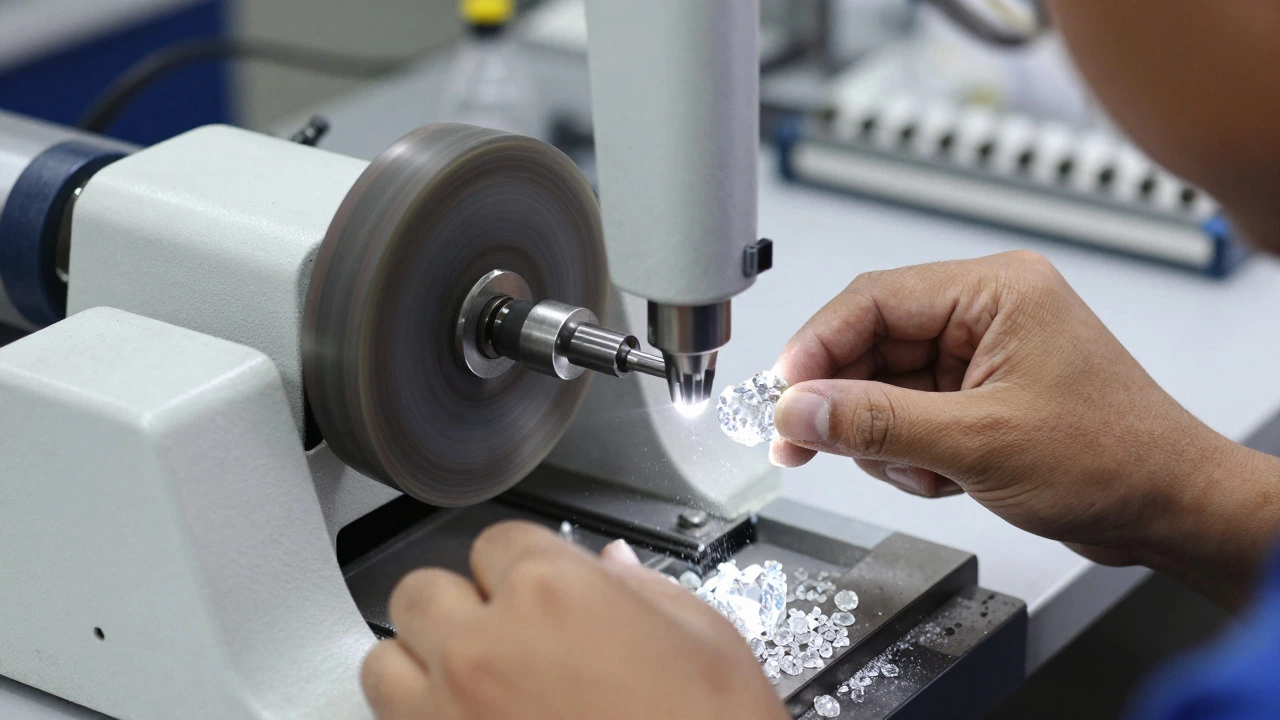
If Golconda represents the past, Surat is a major industrial city in Gujarat, recognized globally as the center of the diamond cutting and polishing industry. represents the present. Located in the state of Gujarat, Surat processes approximately 90% of the world's diamonds by volume.
This shift happened because while India stopped mining diamonds, it perfected the art of turning rough stones into brilliant gems. In the 1960s and 70s, Indian traders began importing rough diamonds from places like Botswana, Russia, and Canada. They realized that their skilled labor force could cut these stones more efficiently and affordably than anywhere else.
Today, the journey of a typical diamond looks like this:
- A rough diamond is mined in Botswana (De Beers) or Russia (Alrosa).
- It is shipped to Surat, India.
- Skilled artisans use advanced machinery and traditional techniques to cut and polish it.
- The finished stone is sold globally, including back to Western markets or used in jewelry made in India.
This means that when you see 'Made in India' on a diamond ring, it usually refers to the craftsmanship of the cut and the setting, not the origin of the raw material. The precision of Indian cutters is renowned for maximizing the carat weight and brilliance of each stone.
Types of Diamonds Popular in Indian Jewelry
While the industrial story is fascinating, what matters most to buyers is what goes into the jewelry. Indian consumers have distinct preferences compared to Western markets. Here is how diamonds are used in contemporary Indian jewelry:
| Feature | Traditional Indian Preference | Western Standard |
|---|---|---|
| Cut Style | Round Brilliant, Oval, Pear (often smaller sizes) | Round Brilliant (focus on larger carats) |
| Setting | Pavé, Cluster, Jali (openwork), mixed with gold/kundan | Solitaire, Halo, Prong settings |
| Color Grade | Near Colorless (G-H-I) is common and preferred for warmth | Colorless (D-E-F) is highly prized |
| Clarity | Eye-clean VS/SI grades are standard | VVS/IF grades are often targeted |
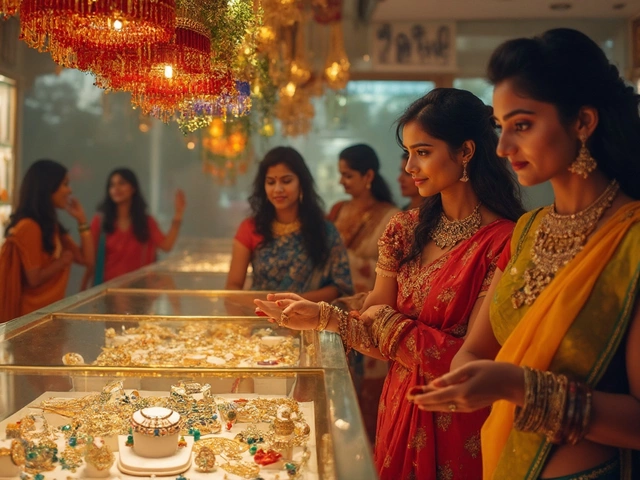
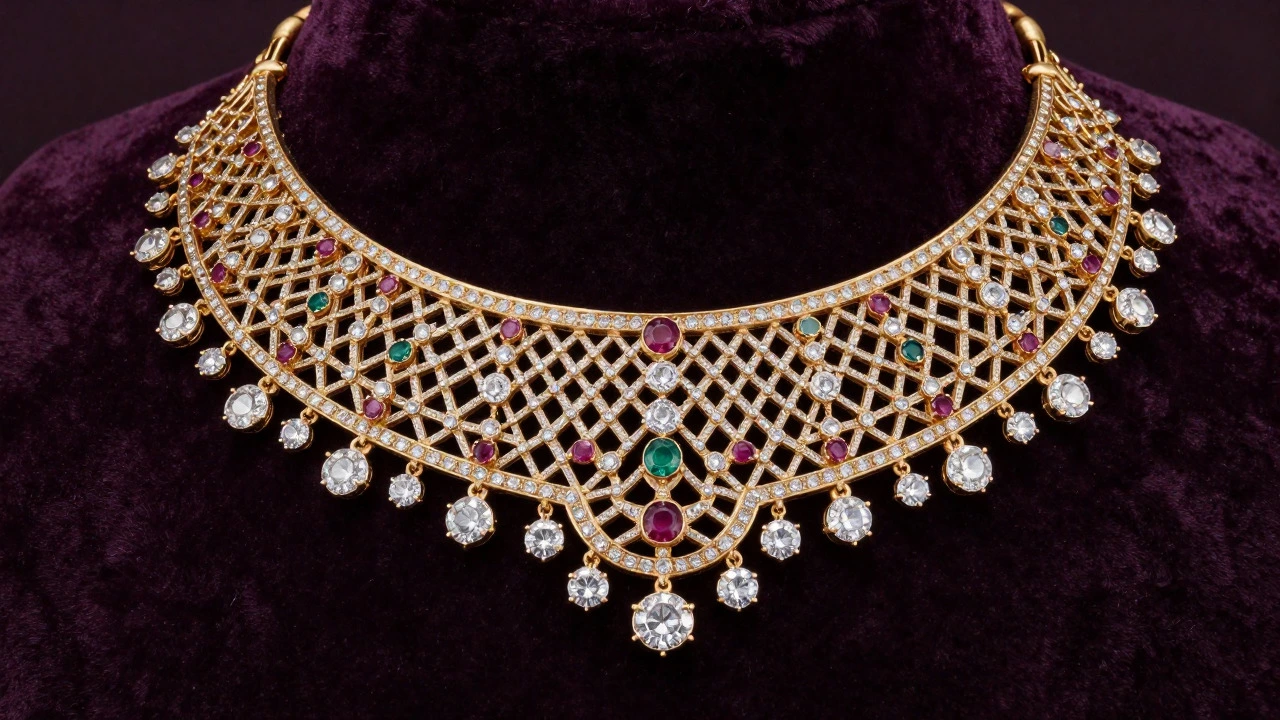
In India, diamonds are rarely worn alone. They are frequently combined with other gemstones like rubies, emeralds, or pearls. A popular style is the 'Polki' or uncut diamond set in heavy gold, which mimics the antique Golconda style but uses modern stones. Another trend is the 'Jali' work, where intricate lattice designs hold small diamonds, creating a delicate yet durable piece suitable for daily wear.
How to Identify Authentic Indian Craftsmanship
Because India is both a major producer and consumer, the market can be confusing. How do you know if you are getting genuine quality? Here are three things to check:
1. Look for BIS Hallmarking: Since 2021, gold jewelry in India must be BIS hallmarked. While this applies to the metal, reputable jewelers will also provide certification for the diamonds. Ensure the diamond certificate comes from a recognized lab like GIA, IGI, or HRD Antwerp. Local labs exist, but international certificates offer better resale value.
2. Check the Cut Quality: Indian polishers are excellent, but mass production can sometimes lead to inconsistent cuts. Look for symmetry. If the facets don't align perfectly, the diamond won't sparkle as much. A well-cut diamond should reflect light evenly without dark spots.
3. Understand the 'Make': In India, the cost of making (labor and design) is separate from the cost of the stone. High-end brands charge significantly more for their brand name and design complexity. If you are buying from a local jeweler in Surat or Jaipur, you might get the same diamond quality for a lower price because you are paying less for the 'brand premium.'
The Future of Indian Diamonds
The industry is evolving. With the rise of lab-grown diamonds, India is once again at the forefront. Surat is now one of the largest producers of lab-grown diamonds in the world. These stones are chemically identical to natural diamonds but are created in laboratories using High Pressure High Temperature (HPHT) or Chemical Vapor Deposition (CVD) methods.
For the average buyer, this means access to larger, higher-quality diamonds at a fraction of the cost. Whether you prefer the historical romance of a Golconda-style cut or the affordability of a lab-grown stone polished in Surat, India remains the heart of the diamond world.
So, to answer the question directly: India is famous for the Golconda diamonds of history and the polished diamonds of today. When you buy a diamond ring in India, you are participating in a legacy that spans centuries, from the rivers of Telangana to the factories of Gujarat.
Are diamonds still mined in India?
Commercial diamond mining in India has largely ceased. The famous Golconda mines were exhausted centuries ago. While small-scale artisanal mining exists in some remote areas, the vast majority of rough diamonds processed in India are imported from countries like Botswana, Russia, and Canada.
What is a Golconda diamond?
A Golconda diamond is a diamond mined from the Golconda region in southern India between the 12th and 18th centuries. These stones are typically Type IIa, meaning they are extremely pure and often have a blue-white tint. Famous examples include the Koh-i-Noor and the Hope Diamond.
Is Surat the best place to buy diamonds?
Surat is the best place to buy diamonds if you are looking for competitive prices due to its status as the global hub for cutting and polishing. However, for retail buyers, it is crucial to verify certifications (like GIA or IGI) and ensure the jeweler is reputable, as the market includes both high-end manufacturers and smaller workshops.
What is the difference between natural and lab-grown diamonds in India?
Natural diamonds are formed underground over billions of years, while lab-grown diamonds are created in weeks using technology that mimics natural conditions. Chemically and physically, they are identical. India is a leading producer of lab-grown diamonds, offering them at significantly lower prices than natural stones.
Which diamond cut is most popular in India?
The Round Brilliant cut is the most popular globally and in India. However, oval, pear, and cushion cuts are also widely used in Indian jewelry, especially in cluster settings and engagement rings. Traditional styles often feature smaller diamonds in intricate pavé or jali settings rather than large solitaires.