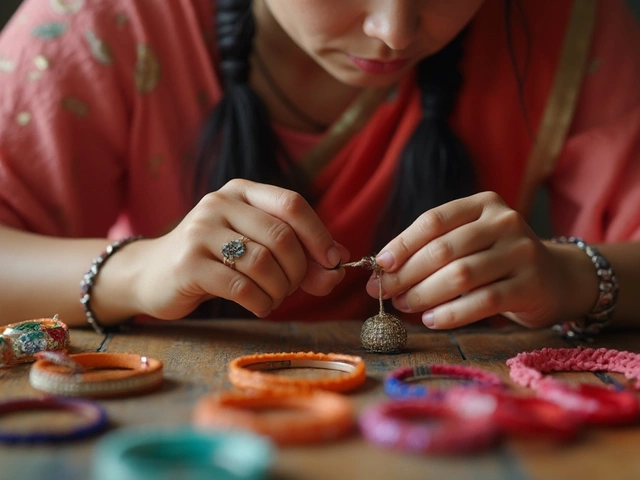
Bangle Colors Meaning: What Each Hue Represents in Indian Tradition
When you think of bangle colors, the vibrant hues worn on the wrists in Indian culture, often tied to rituals, identity, and celebration. Also known as kangan, they’re more than jewelry—they’re silent storytellers. Every shade carries weight. Red isn’t just bold—it’s the color of marriage, worn by brides across North India to signal new beginnings. Green, often seen in glass or lac bangles, stands for fertility and growth, especially in weddings and festivals like Karva Chauth. White, sometimes paired with gold, speaks of purity and is common in South Indian bridal sets. Even black, often misunderstood, is used to ward off evil in many communities, especially when combined with red or gold.
These colors don’t just look good—they’re chosen with intention. Yellow bangles, common in Bengali and Oriya traditions, represent joy and are worn during Durga Puja. Purple, once rare, is now popular among younger women as a symbol of individuality and modern royalty. The shade you wear can say whether you’re celebrating a festival, mourning a loss, or simply dressing up for a Sunday brunch. And it’s not just about culture—your skin tone matters too. Warm skin tones pop with gold, coral, and terracotta; cool tones shine with silver, navy, and deep emerald. There’s no rule that says you must follow tradition, but knowing the meaning lets you wear your choice with confidence.
What you see in the posts below is a collection of real, practical insights from Indian households, artisans, and modern wearers. You’ll find guides on matching bangle colors to outfits, why certain hues are reserved for brides, how regional styles differ from Tamil Nadu to Punjab, and why some women stack ten bangles while others wear just one. There’s no fluff here—just clear, honest answers about what those colors mean, who wears them, and why they still matter today.
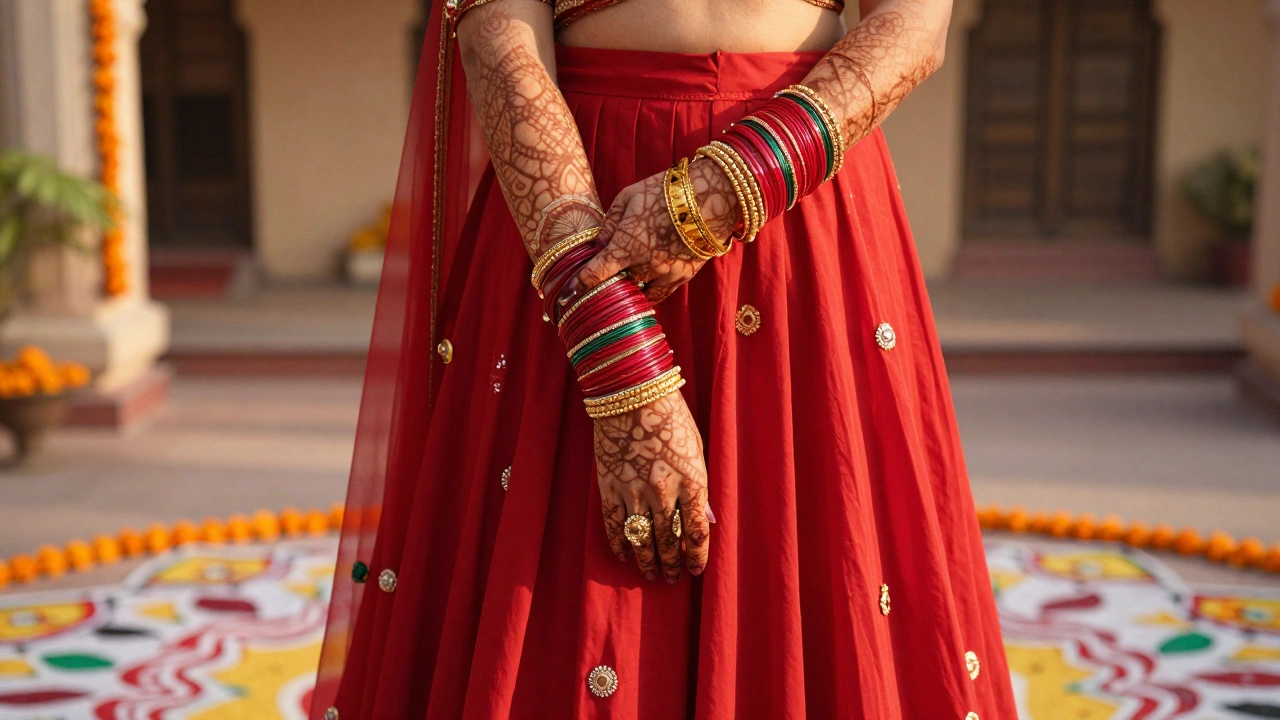
What Do the Colors of Bangles Mean in Indian Tradition?
The colors of Indian bangles carry deep cultural meanings-red for marriage, green for fertility, gold for wealth, and white for mourning. Learn what each hue signifies in tradition and how modern women wear them today.

Can an Unmarried Girl Wear Green Bangles? Traditional Rules and Modern Truths
Can an unmarried girl wear green bangles? The answer is yes-tradition varies by region, but today it’s a personal choice. Green bangles symbolize growth and joy, not just marriage.