Indian Traditional Jewelry: Origins, Styles, and What Really Matters
When you think of Indian traditional jewelry, handcrafted ornaments rooted in centuries of regional rituals, symbolism, and artistry. Also known as heritage jewelry, it's not just worn—it's passed down, prayed over, and worn as identity. This isn't fashion. It's a language. Every piece—from the temple jewelry, sacred designs forged by artisans in Tamil Nadu and Andhra Pradesh, often inspired by deities and temple architecture to the mangalsutra, the sacred black bead and gold necklace symbolizing marital commitment across India—carries meaning deeper than metal and stone.
Take gold toe rings, traditionally worn by married women on the second toe, believed to regulate blood flow and honor marital status. Today, many wear them for style alone, but the tradition still holds weight. Same with bangles, stacked glass, gold, or lacquer bands that signal celebration, fertility, or regional identity. In the North, they’re often bright red and green for weddings. In the South, temple gold bangles with intricate engravings are heirlooms. These aren’t random accessories. They’re tied to body, belief, and birthplace.
What makes Indian traditional jewelry different from global styles? It’s the connection to ritual. A mangalsutra, the sacred black bead and gold necklace symbolizing marital commitment across India, isn’t bought for its sparkle—it’s chosen for its weight, length, and the way it sits against the collarbone. Temple jewelry isn’t mass-produced—it’s carved by hand, often in family workshops where the same motifs have been passed down for generations. And while diamonds and platinum get attention in ads, real Indian tradition still runs on gold, silver, and natural stones like coral and pearl.
There’s a reason these pieces still matter. They don’t just look beautiful—they tell stories. Who wore it? When? Why? A nose pin on the right side, black beads in a mangalsutra, the number of beads in a bracelet—all carry silent rules and meanings. You don’t need to follow every rule, but knowing them helps you choose pieces that feel right, not just trendy.
Below, you’ll find real stories from people who wear this jewelry daily, artisans who make it, and guides that cut through the noise—whether you’re looking to buy, make, or simply understand why Indian traditional jewelry still holds power in a fast-changing world.
What Type of Jewelry Is India Known For? The Truth Behind Temple Jewelry
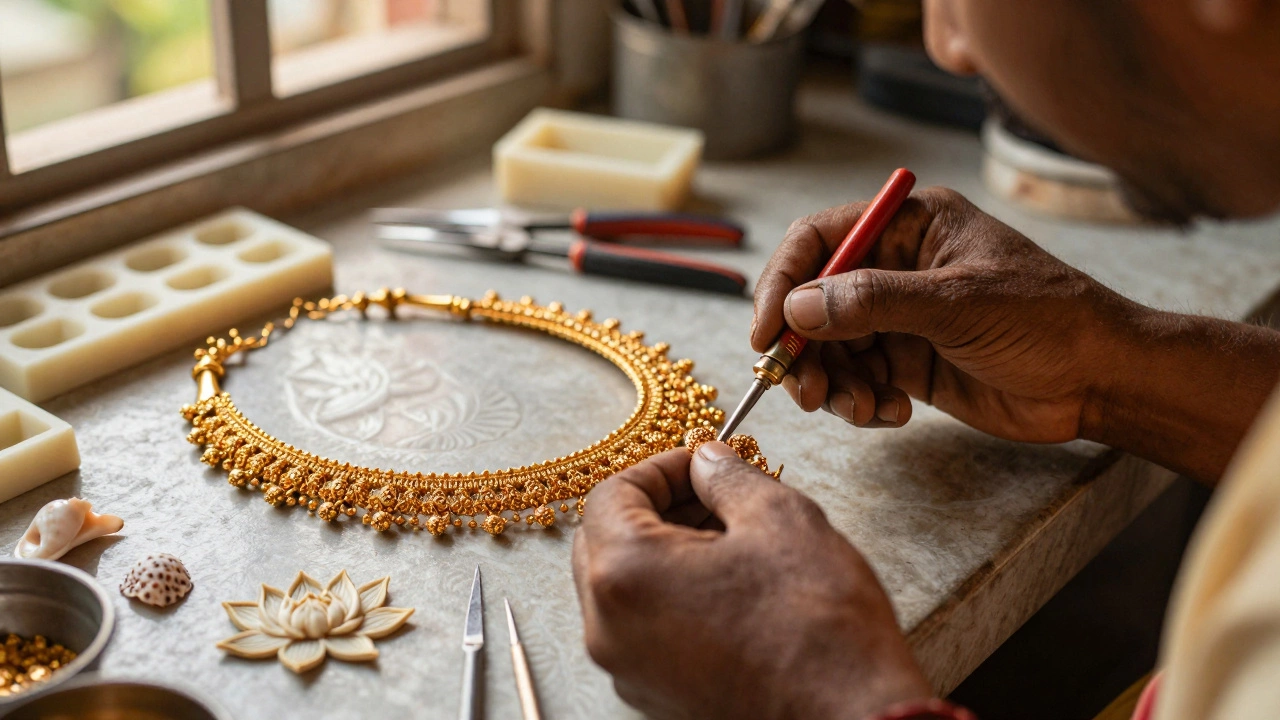
India is best known for temple jewelry - intricate, sacred gold pieces crafted for deities and worn during rituals. Born in South Indian temples, this art form blends spirituality, history, and unmatched craftsmanship that still thrives today.

What is the gold trend in jewelry in India in 2024? Temple Jewelry Leads the Revival
In 2024, temple jewelry is leading India's gold trend, blending ancient craftsmanship with modern style. More young women are choosing hand-hammered gold pieces with kempu stones for everyday wear, reviving a centuries-old art form.