Mangalsutra Knots: Meaning, Styles, and What They Really Signify
When you think of a mangalsutra, a sacred necklace worn by married Hindu women in India, often featuring black beads and gold pendants. Also known as vivaha sutra, it's more than jewelry—it's a symbol of commitment passed down through generations. But what about the knots? Those small, tightly woven loops holding the chain together? They’re not just functional. In many regions, the number and style of knots carry deep meaning, tied to family tradition, local customs, and even astrological beliefs.
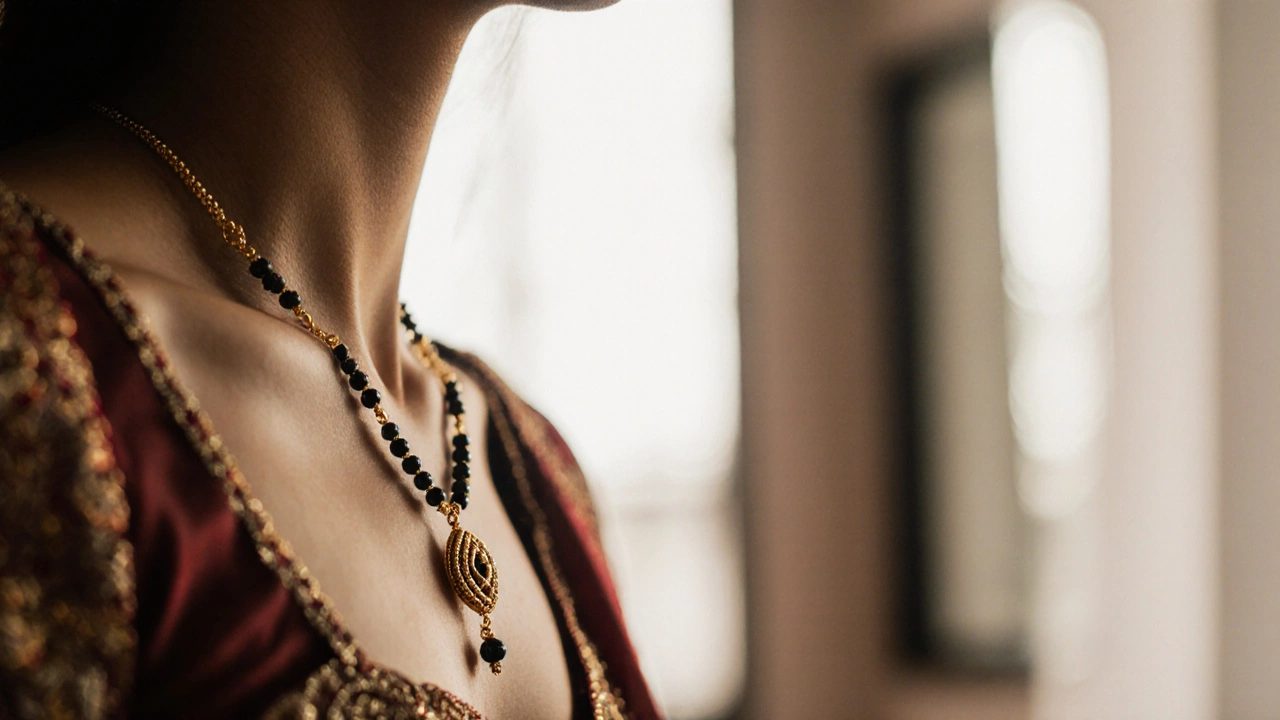
The black beads, typically made from jet, glass, or hardened resin, used in mangalsutra designs to ward off negative energy. Also known as kala dora, they’re not randomly placed—they’re threaded between gold elements in specific patterns, often tied with knots that match the bride’s family lineage. Some families use three knots to represent body, mind, and spirit. Others use five, each tied during a different ritual in the wedding ceremony. In Tamil Nadu, the knots are often hidden under the pendant, while in Maharashtra, they’re visible and braided into the chain itself. These aren’t fashion choices—they’re inherited practices. And while modern designs simplify the look, many women still choose traditional knots to honor their roots.
The mangalsutra length, the standard measurement of the chain, usually between 16 to 18 inches, designed to rest just below the collarbone for comfort and visibility. Also known as mangalsutra size, it’s not arbitrary—too short and it feels tight; too long and it loses its symbolic presence near the heart. That’s why adjustable chains are now popular. But even with modern twists, the knots stay. They’re the quiet anchor of the piece. Whether you’re wearing it daily or saving it for festivals, those knots hold more than metal and beads—they hold stories.
What you’ll find below is a collection of real, practical insights about mangalsutra knots and the jewelry around them. From why black beads are used, to how length affects comfort, to what other Indian brides wear instead. No fluff. Just what matters when you’re choosing, wearing, or understanding this piece of tradition.
Why Are There Three Knots in Mangalsutra? The Meaning Behind the Design
The three knots in a mangalsutra symbolize commitment, family, and self-preservation in marriage. Rooted in ancient tradition, they’re more than decoration-they’re a living promise. Discover what they truly mean and how modern women are redefining their significance.