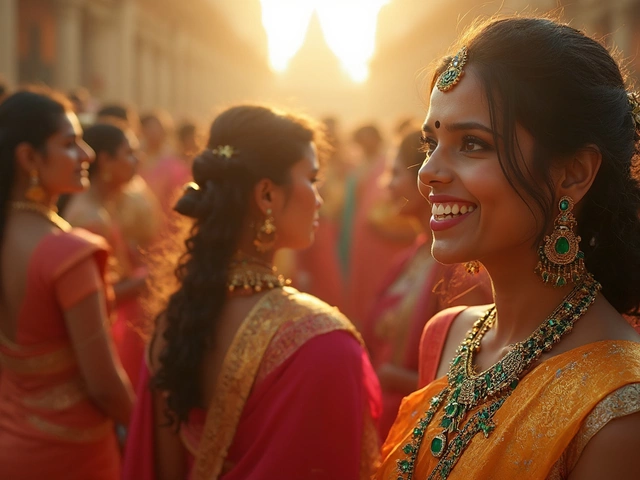
Married Woman Bangles: Traditions, Meanings, and Modern Styles
When you think of a married woman bangles, decorative wristwear worn by married women in Indian culture, often made of gold, lacquer, or glass, and tied to marital status and regional customs. Also known as kangan, they’re not just jewelry—they’re a daily reminder of commitment, family, and identity. These bangles aren’t bought for fashion alone. In many parts of India, they’re given during weddings, worn every morning, and passed down like heirlooms. Their sound, their shine, their weight—they all carry meaning.
What makes these bangles different from others? It’s the rules—and the reasons behind them. Traditionally, gold bangles, solid gold wristpieces worn by married women, especially in North and West India, symbolizing prosperity and enduring marriage are the most valued. They’re heavy, often plain, and rarely removed. In contrast, lac bangles, colorful, fragile bangles made from hardened resin, commonly worn in weddings and festivals, especially in Eastern and Northern India come in bright reds, greens, and yellows. They’re meant to break over time—a sign of a long, happy marriage. Then there are bridal bangles, elaborate sets worn during wedding ceremonies, often paired with chooda and including glass, gold, and sometimes pearls, which can number up to 21 pieces. These aren’t just accessories; they’re part of the ritual.
But things are changing. Young women today wear bangles not because they’re married, but because they love how they look. A working mom in Bangalore might wear a single gold bangle with her office suit. A college student in Pune stacks colorful plastic ones with her jeans. The old rules—"only married women," "never remove them," "must be gold"—are fading. What stays is the emotional weight. A bangle isn’t just worn on the wrist. It’s worn in memory, in pride, in quiet rebellion.
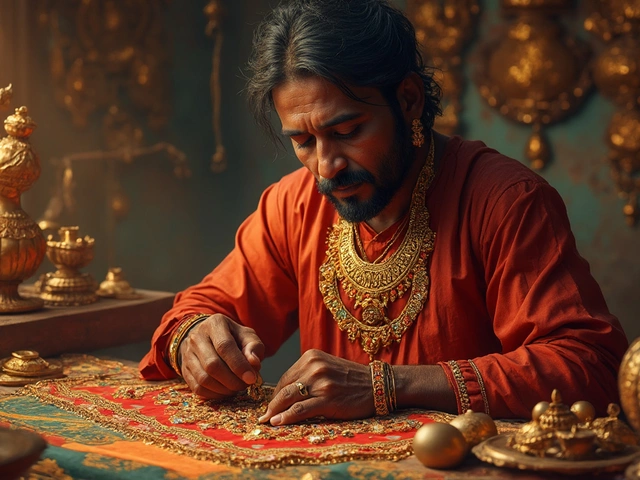
What you’ll find in the posts below isn’t a list of where to buy them. It’s a look at how they’re made, why they matter, and who still wears them—and why. From the temple artisans in Tamil Nadu who hand-carve gold bangles to the modern brides choosing minimalist designs, this collection untangles the stories behind the sound of bangles on skin. You’ll learn how color choices reflect region and mood, why some women avoid green bangles even if they’re married, and how toe rings and mangalsutras connect to the same cultural thread. These aren’t just jewelry pieces. They’re living traditions, quietly reshaped by each new generation.
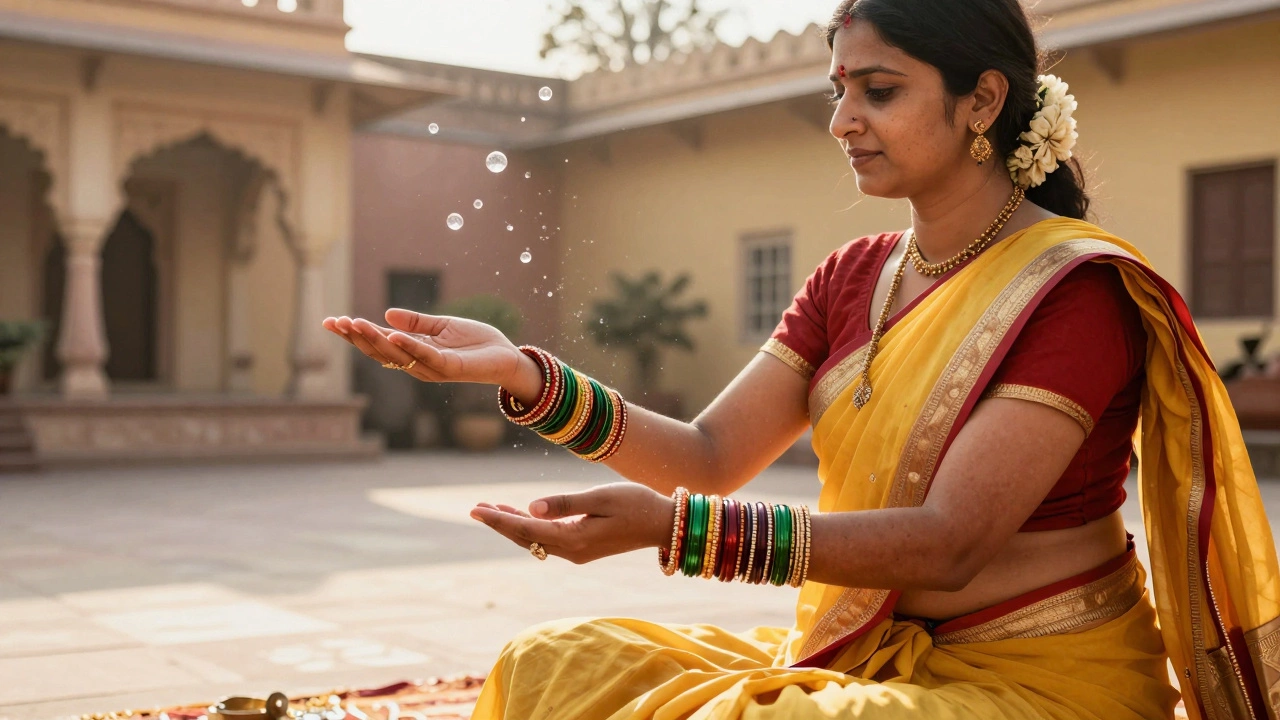
How Many Bangles Should a Married Woman Wear in Traditional Indian Culture?
There's no fixed number of bangles a married woman should wear in India-it's shaped by region, family, and personal meaning. Glass, gold, and tradition all play a role in this deep cultural symbol.