Temple Jewelry Kerala: Origins, Styles, and Why It’s Making a Comeback
When you think of temple jewelry, a centuries-old form of Indian gold adornment inspired by Hindu temple sculptures and rituals. Also known as devadasi jewelry, it’s not just decoration—it’s wearable heritage. While Chettinad gold from Tamil Nadu gets most of the attention, temple jewelry Kerala has its own distinct voice: heavier gold, deeper carvings, and a love for kempu stones that glow like embers.
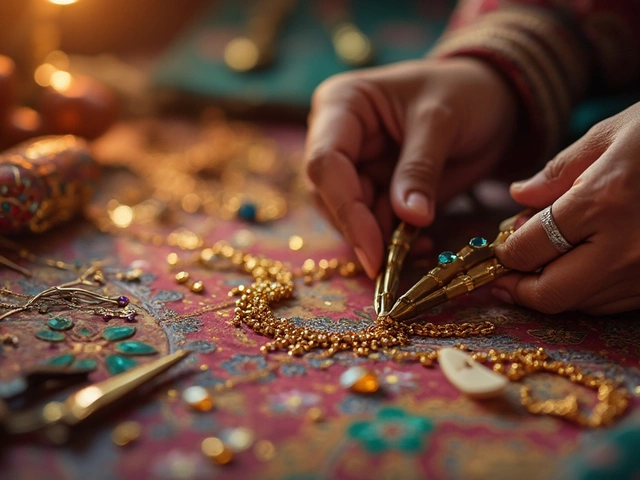
Kerala’s temple jewelry doesn’t follow the same rules as its southern neighbors. It’s less about intricate floral patterns and more about bold, sculpted deities—Lord Krishna with his flute, Goddess Lakshmi with lotus flowers, or Nandi the bull—all hammered into gold by artisans in small workshops around Thrissur and Kottayam. These pieces were once worn only during temple festivals or weddings, passed down like family heirlooms. Today, younger women are wearing them to office parties, brunches, and even casual outings. Why? Because the craftsmanship feels real, and the weight tells a story you can’t buy from a mass-produced chain.
What sets Kerala temple jewelry apart? First, the gold. It’s almost always 22-karat, rarely polished to a shine—matte finishes are preferred to honor tradition. Second, the stones. Kempu stones, a local red gemstone, replace diamonds. They’re not expensive, but they carry meaning: red for protection, for energy, for the divine feminine. Third, the shapes. Unlike Tamil Nadu’s delicate jhumkas, Kerala pieces favor large, rounded pendants, wide bangles with temple motifs, and nose rings shaped like miniature deities. You won’t find these in malls. They come from families who’ve been making them for five generations.
There’s a quiet rebellion here. While global trends push for minimalist gold studs, women in Kerala are choosing jewelry that demands attention. It’s not about showing off—it’s about carrying a legacy. A woman wearing a Kerala temple necklace isn’t just accessorizing; she’s honoring her grandmother’s rituals, her mother’s wedding day, and the temple bells that rang when she was born.
And it’s not just about aesthetics. This jewelry connects to deeper traditions—the way a mangalsutra’s knots hold meaning, how bindi colors shift across regions, why green bangles aren’t just for brides. Temple jewelry Kerala fits right into that conversation: deeply cultural, deeply personal, and deeply alive.
Below, you’ll find real stories and facts about how this jewelry is made, who wears it today, and why it’s more than just gold and stones. Whether you’re curious about the materials, the artisans behind it, or how to spot authentic pieces, these posts give you the full picture—no fluff, no myths, just what matters.

What Is the Black Gold of Kerala? The Truth Behind Temple Jewelry
The black gold of Kerala refers to traditional temple jewelry made with gold and blackened silver, used in Bharatanatyam dance and temple rituals. It's handcrafted by artisans using ancient techniques and holds deep cultural value.