Chettinad Jewelry: Traditional South Indian Gold Craft with Deep Cultural Roots
When you think of Chettinad jewelry, a distinctive form of South Indian gold ornamentation originating from the Chettinad region of Tamil Nadu, known for its bold temple-inspired designs and heavy craftsmanship. Also known as Kara jewelry, it’s not just adornment—it’s heritage worn on the body, passed down through generations of artisan families. Unlike delicate North Indian pieces, Chettinad jewelry is built to last: thick gold bands, raised floral patterns, and embedded kempu stones create a look that’s both regal and grounded in temple architecture.
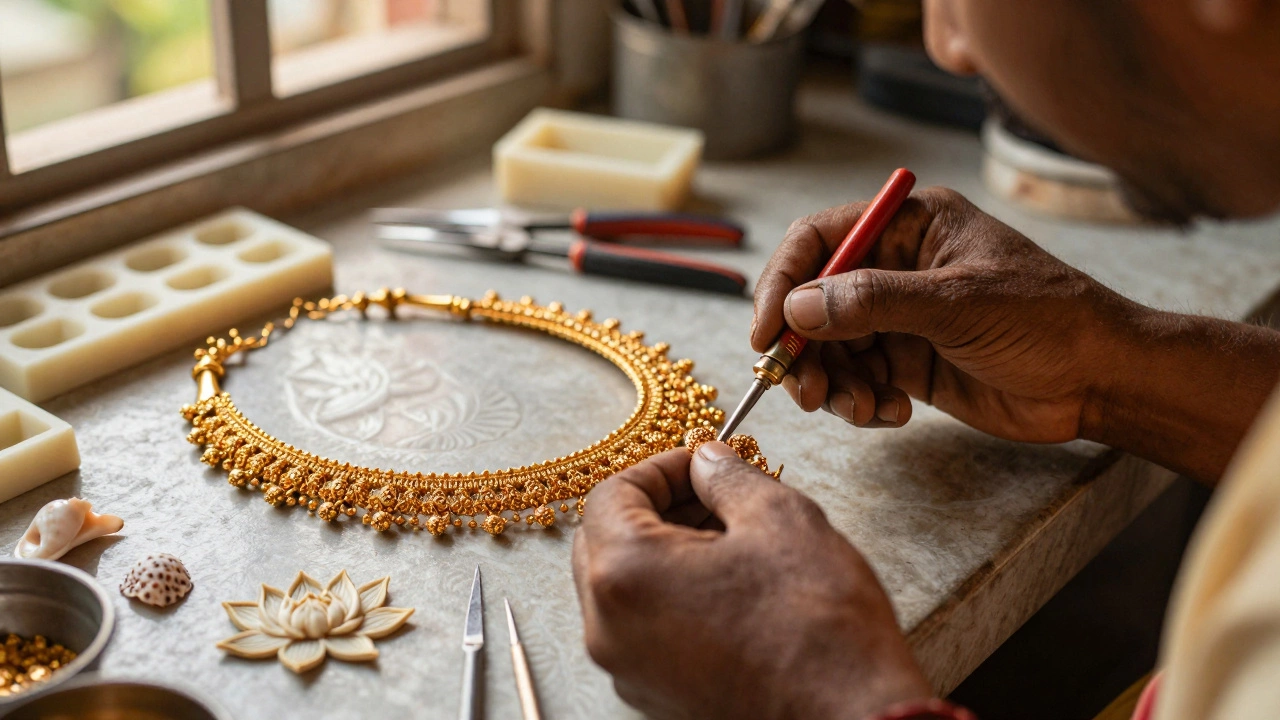
This style is deeply tied to temple jewelry, a category of Indian gold ornaments originally made for deities and later adapted for human wear, especially in South India. Artisans in Karaikudi and surrounding villages still use centuries-old techniques—hand-hammering, filigree work, and stone setting without modern machinery. The result? Pieces that carry the weight of tradition, not just metal. These designs often feature deities like Lakshmi or Nataraja, lotus motifs, and peacock feathers, echoing the carvings found in 17th-century temples. While South Indian jewelry, a broad term covering styles from Tamil Nadu, Andhra Pradesh, and Karnataka, each with unique regional signatures includes lighter pieces like nose pins and bangles, Chettinad stands out for its scale and symbolism. It’s worn by brides, elders, and now, young women reclaiming their roots—because this isn’t just fashion, it’s identity.
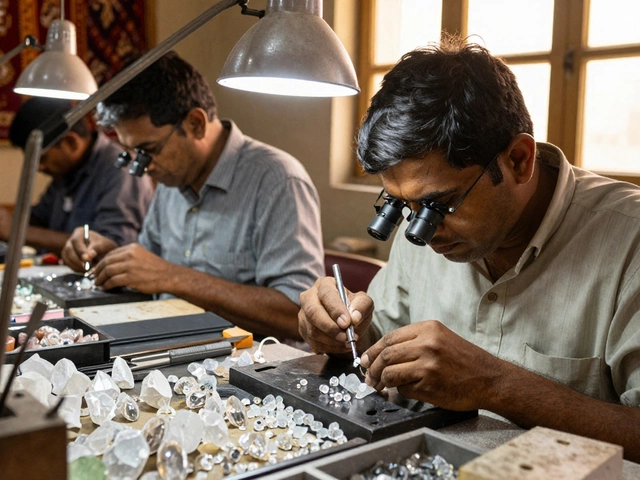
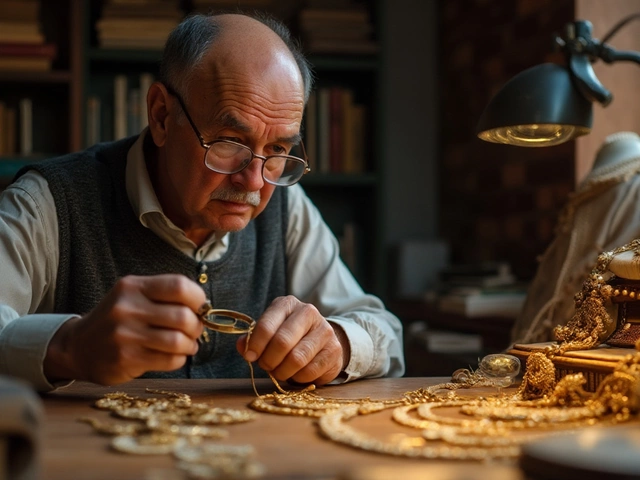
What makes Chettinad jewelry special isn’t just its look—it’s how it’s made. Unlike mass-produced gold pieces, each item is crafted in small workshops where one artisan might spend weeks on a single set of earrings or a mangalsutra. The gold used is often 22-karat, and the kempu stones (red coral or garnet) are chosen for their spiritual meaning, not just color. You won’t find these in big mall chains—you’ll find them in family-run ateliers, at temple fairs in Madurai, or passed from mother to daughter. That’s why resale value isn’t the point. These pieces hold emotional weight, cultural memory, and artistry you can’t replicate.
Today, Chettinad jewelry is having a revival. Designers are blending its boldness with modern silhouettes—think chokers with temple motifs, or minimalist gold cuffs inspired by traditional anklets. Young women in Bangalore and Delhi are pairing them with jeans and crop tops, not just lehengas. And while you might see copies online, the real stuff? It still comes from the same villages where it’s always been made. If you’re looking for jewelry that tells a story, not just sparkles, Chettinad is where the story begins.
Below, you’ll find real insights into how this jewelry is made, who wears it today, and why it still matters in a world chasing fast trends. From bangles to mangalsutras, the connection to tradition runs deep.
What Type of Jewelry Is India Known For? The Truth Behind Temple Jewelry
India is best known for temple jewelry - intricate, sacred gold pieces crafted for deities and worn during rituals. Born in South Indian temples, this art form blends spirituality, history, and unmatched craftsmanship that still thrives today.
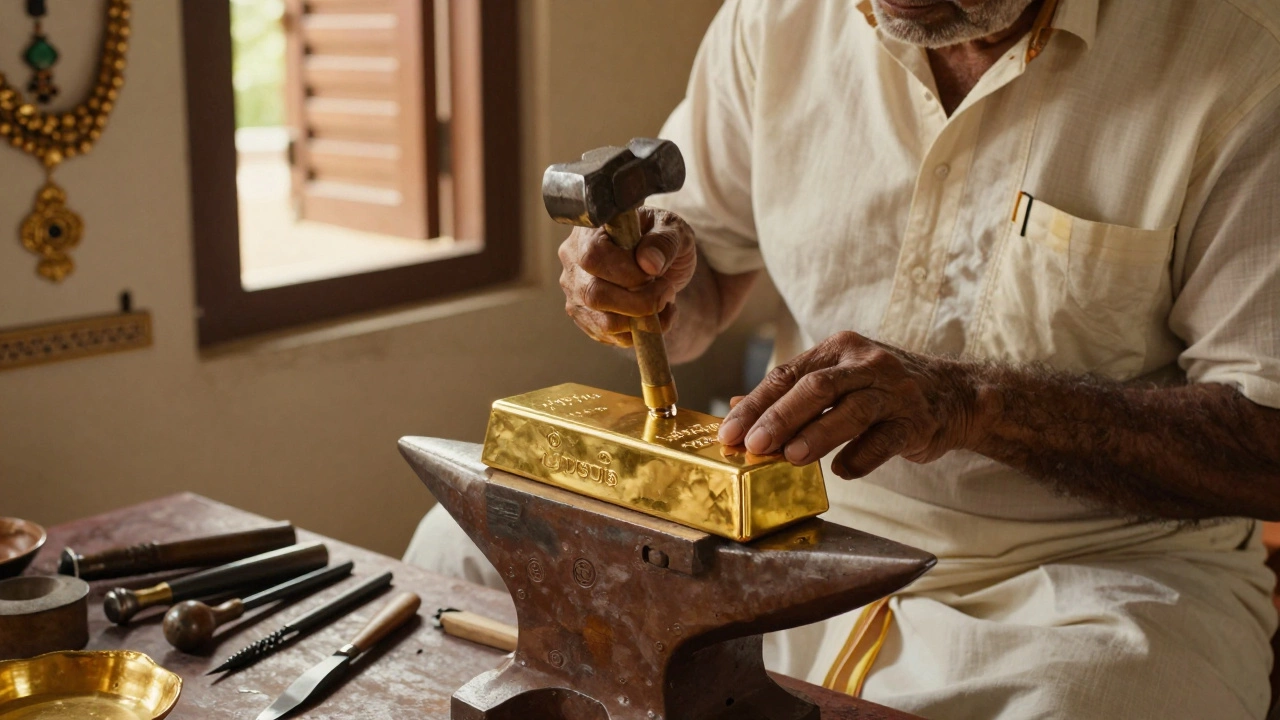
What is Chettinad Gold? The History, Design, and Craft of Traditional Temple Jewelry from Tamil Nadu
Chettinad gold is a centuries-old form of temple jewelry from Tamil Nadu, known for its heavy 22-karat gold, hand-carved temple motifs, and matte finish. Made by skilled artisans, it’s worn during rituals and passed down through generations.